The Ultimate Travel Guide to Uzbekistan: The World’s Best-Kept Travel Secret
This has got to be the world’s most underrated country. I’m talking about a place where you can literally step back in time to some of the oldest cities on Earth, a destination so rich in history, beauty and soul that I’m honestly shocked more people don’t talk about it.
When most people think of epic ancient architecture and once-in-a-lifetime culture, they picture Egypt, Turkey, Morocco… but what if I told you there’s a place that has all of that and is as cheap as chips? A country with jaw-dropping mosques, storybook bazaars, kind locals, and flavours you’ll crave long after you leave, without the crowds or the price tag?
Welcome to Uzbekistan, the heart of Central Asia.
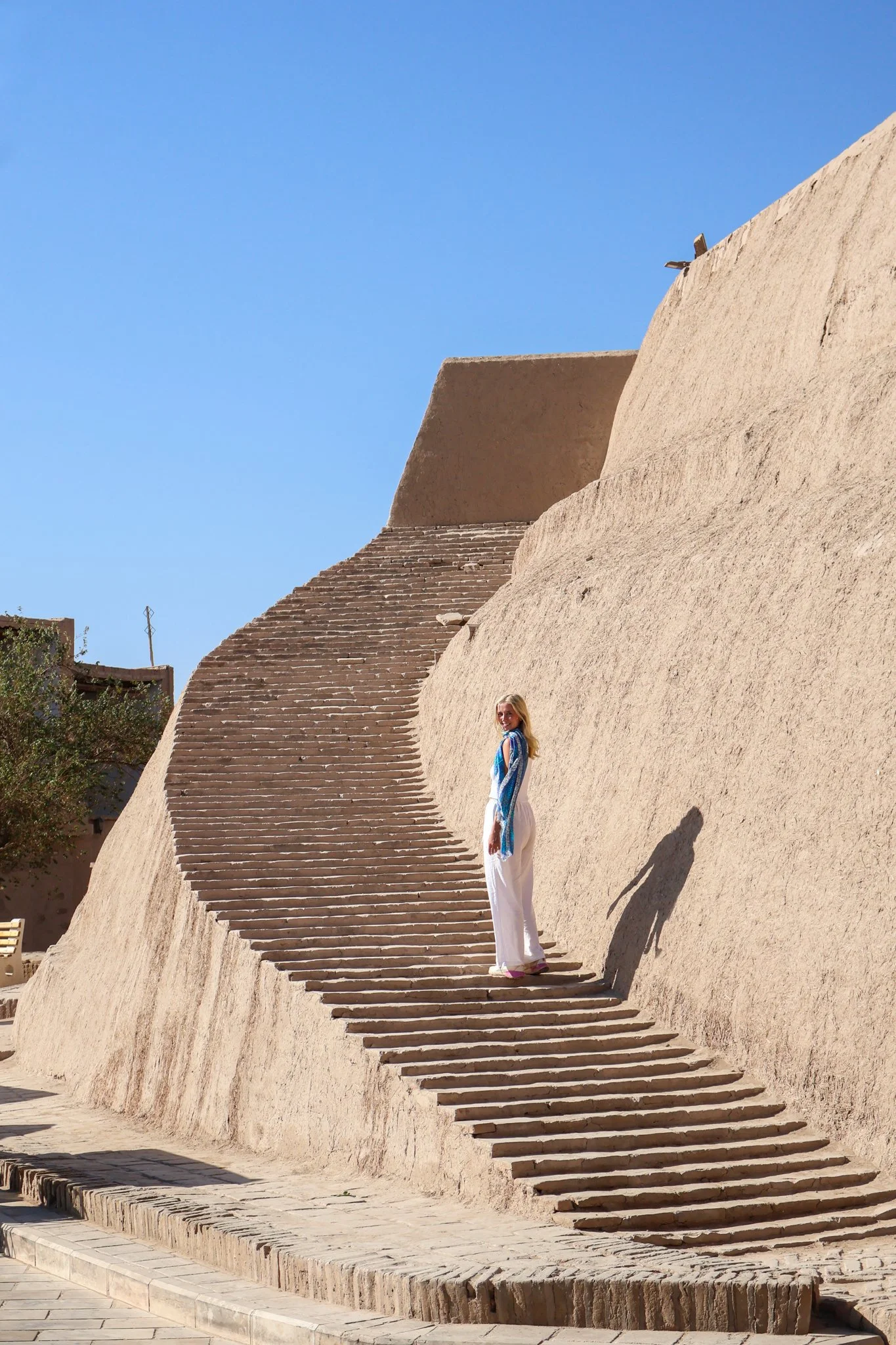
Once part of the former Soviet republic, but its story stretches far beyond that. For thousands of years it was shaped by the legendary Silk Road - the ancient trade route that connected China to the Mediterranean, where ideas, cultures, and treasures from around the world collided.
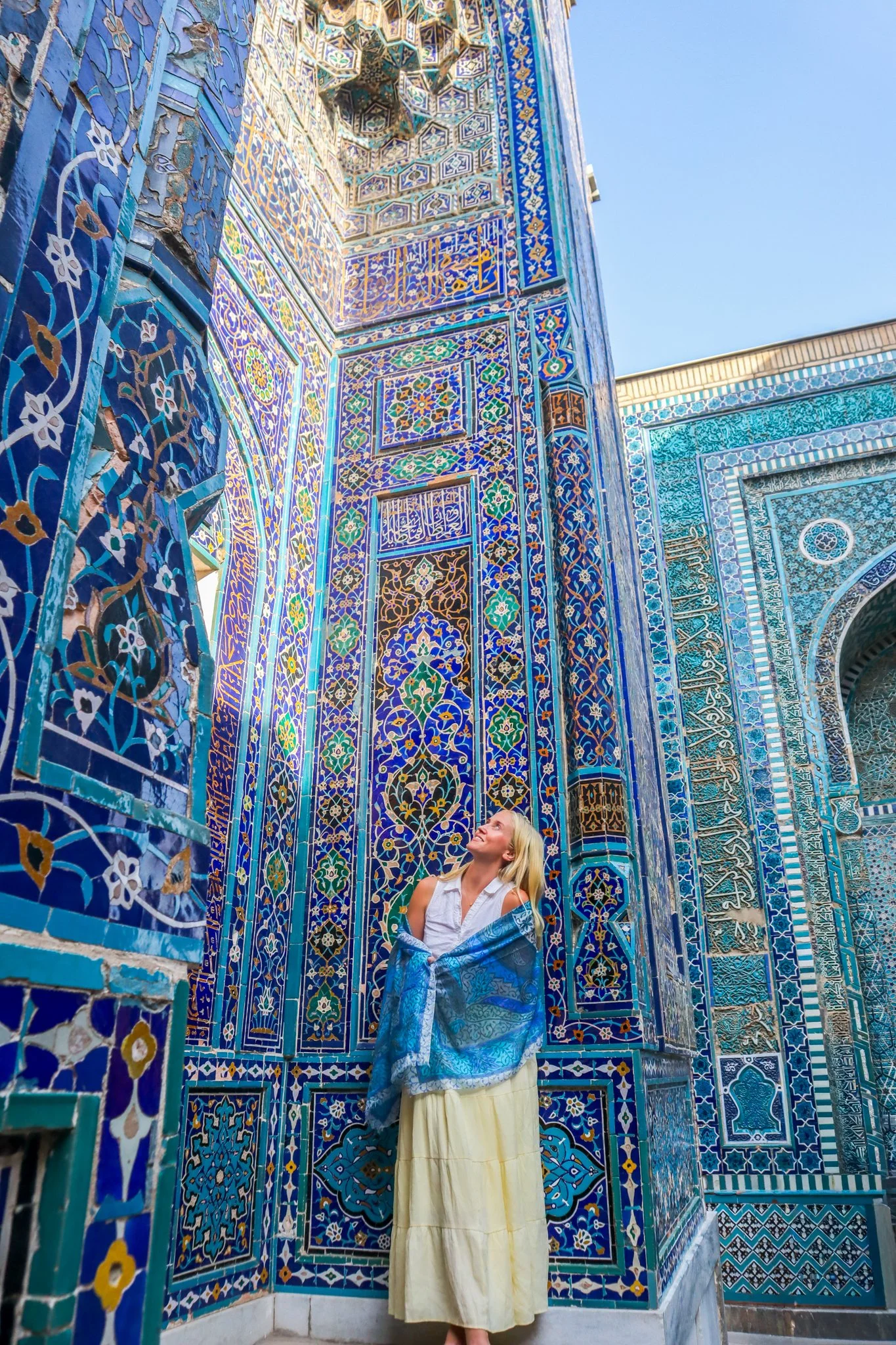
The architecture here is on another level: turquoise domes glowing in the sun, intricate mosaics that look hand-painted by the gods, desert fortresses, ancient minarets and cities so well-preserved it feels like someone hit pause on history.
Uzbekistan is a place that until recently, barely appeared on the average traveller’s radar. From 1991 until around 2016, it was one of the world’s least-visited countries but everything changed after 2018, when the government introduced e-visas, relaxed entry requirements for over 90 countries and began promoting its incredible Silk Road heritage to the world. Now, Uzbekistan is quietly becoming one of the fastest growing destinations in Central Asia.
In this blog, I’m diving deep into everything you need to know: the full travel guide, city breakdowns, essential tips and exactly how to plan your own trip to one of the most fascinating places on Earth.
My recommended route for an 8-10 day trip
Travel tips & FAQ’s
Budget: How much do you need to travel Uzbekistan?
The MUST visit locations for your itinerary, things to do in each location & where to stay
Local delicacies to try
Is Uzbekistan Safe?
Short answer: yes. A lot of people assume otherwise because it’s close to Afghanistan, but I felt completely safe the entire time. The locals are incredibly kind, curious, and welcoming, the type of people who genuinely want to help you, chat with you, and share their culture. It’s a place where you feel looked after, even as a solo traveller.
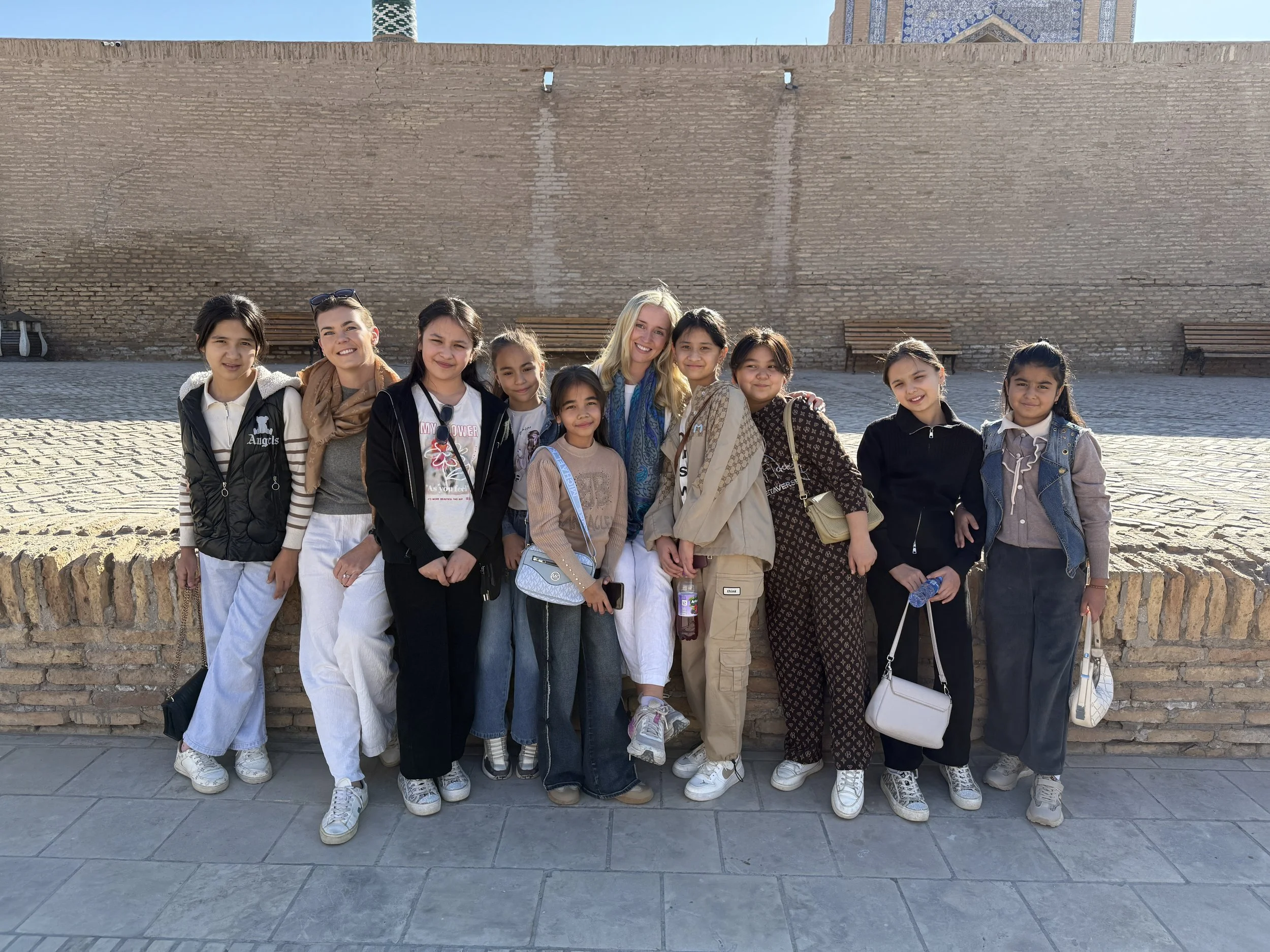
Can we take a moment for the beautiful Uzbek girls above? They were so kind and so excited to practice their English with us!
How to Get Around Uzbekistan?
Getting around is surprisingly easy and honestly, train travel was one of the highlights. The train system is fast, comfortable, and affordable, making it the best way to get between cities like Tashkent, Samarkand, Bukhara, and Khiva. Travelling by rail gives you time to soak up the scenery and slip into the slower rhythm of the Silk Road. Uzbekistan’s train system is fast, clean, and incredibly affordable:
Short on time? I highly recommend flying into Tashkent (the capital), flying direct to Khiva, then fly from from Tashkent and then making your way back on the trains from Khiva - Bukhara - Samarkand - Tashkent.
High-speed trains go between (Tashkent → Samarkand → Bukhara): $10–$25 AUD (€6–€15) per trip.
Sleeper trains (to Khiva): $20–$40 AUD (€12–€24)
Top Tip: Book trains in advance, they book up super fast.
Recommended Route
Want to experience the best of Uzbekistan? This is the perfect route - efficient, scenic, and designed so you’re not backtracking across the country.
1. Fly into Tashkent (the Capital)
From here, you have two options to reach Khiva:
Flight: 1.5–2 hours (highly recommended if short on time)
Overnight train: ~13 hours (a slower, but authentic option)
Tip: Flying direct to Khiva saves you the long overnight train at the start and lets you dive straight into the Silk Road adventure.
2. Khiva → Bukhara
Travel time: 6–7 hours (usually on a slower or overnight train; there’s no high-speed train yet on this section)
Recommended stay: 2 nights
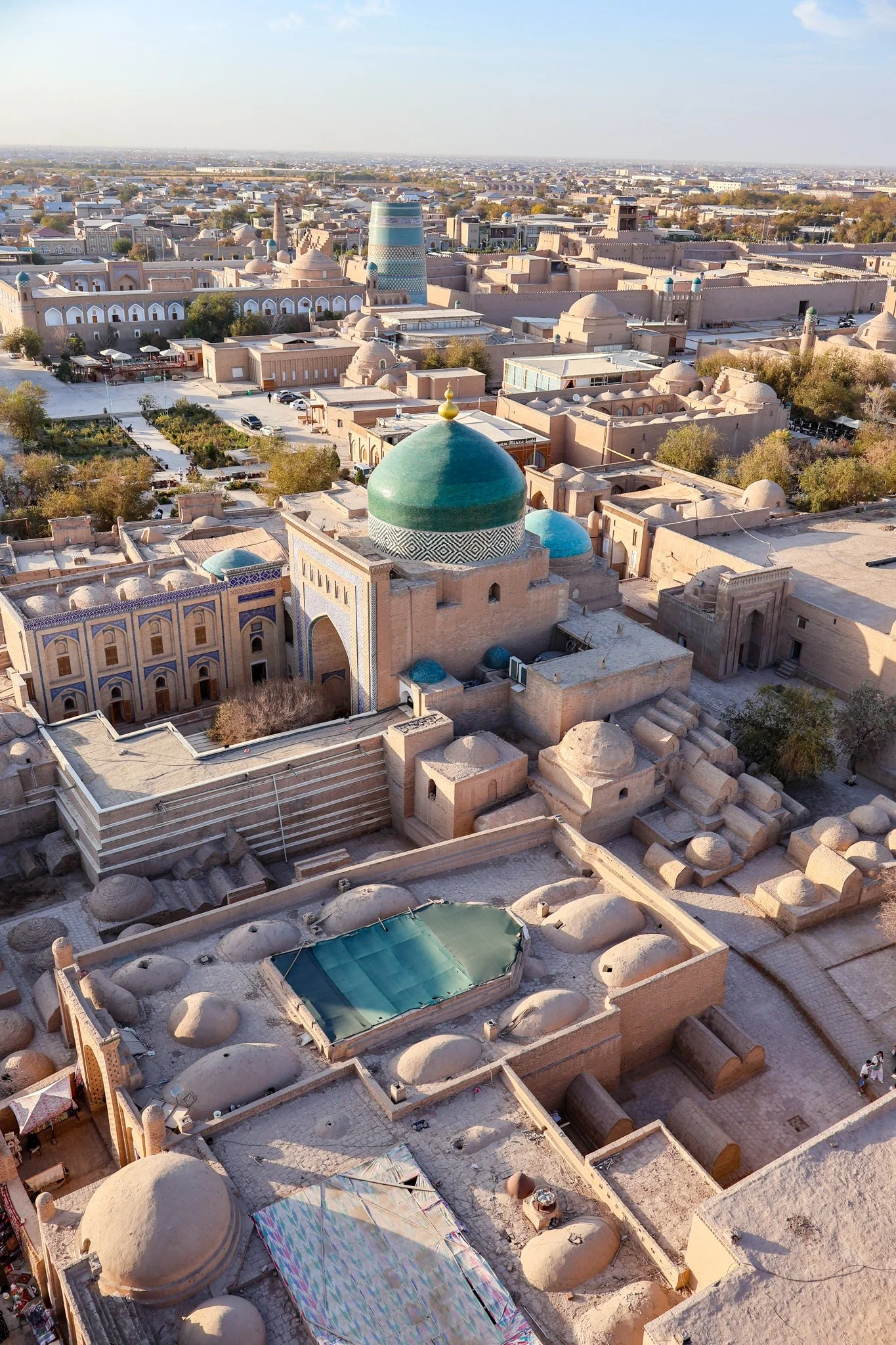
Khiva is a perfectly preserved desert city: UNESCO-listed, full of history, and magical for sunset strolls over the mud-brick rooftops.
3. Bukhara → Samarkand
Travel time: 1.5–2 hours on the high-speed Afrosiyob train
Recommended stay: 2 nights
Bukhara is the soul of Uzbekistan, wander quiet alleys, climb the Ark Fortress, and sip tea under mulberry trees. Then head to Samarkand, the jewel of the Silk Road, home to Registan Square and stunning turquoise domes.
4. Samarkand → Tashkent
Travel time: 2–2.5 hours on the high-speed Afrosiyob
Recommended stay: 1–2 nights
Tashkent, the modern capital, is where Soviet-era architecture meets ancient history. Explore marble metro stations, bustling bazaars, and hidden turquoise-tiled mosques before flying home.
Summary of Suggested Stays
Khiva: 2 nights
Bukhara: 2 nights
Samarkand: 2-3 nights
Tashkent: 1–2 nights
This route lets you experience the Silk Road cities in the most magical order, from the desert charm of Khiva to the historic heart of Bukhara, the architectural wonders of Samarkand, and finally the vibrant modernity of Tashkent.
Travel Tips
Here are the absolute must know tips before travelling to Uzbekistan!
Download the Yandex app, this is Uzbekistan’s version of Uber and it’s super reliable. If you don’t use Yandex there are taxi’s available however, sometimes it can be overwhelming when you exit a train station as a lot of the taxi drivers will try to get your business. I personally prefer to use an app like Yandex, so just walk with purpose when you approach the herd of taxi drivers trying to get your business and find your yandex.
Cash is king &ATM’s can be tricky.. especially in Khiva. I’d advise getting cash in the captial city Tashkent before you head towards Khiva, Bukhara etc,. I struggled as I wasn’t able to get cash out for a while but luckily I was travelling with a friend and she sorted me out until I could get cash! Cash is widely used in Uzbekistan, cardsare not widely accepted beyond Tashkent and the main tourist areas of Samarkand and Bukhara, and there are limited cash dispensers.
Avoid the extreme cold and heat by tactically choosing when you visit. I highly recommend visiting in Spring or Autumn.
The language barrier: The language barrier in Uzbekistan is definitely something to be aware of but it’s nothing you can’t handle with a bit of patience and a sense of humour. People in Uzbekistan speak a mix of Uzbek and Russian, and each region has its own local dialect, so even locals sometimes switch languages depending on who they’re talking to.
The people are unbelievably warm, welcoming, and patient. Throughout the trip, we had so many sweet moments with strangers. Men constantly offered to help carry our bags and beautiful local children came up to us to practice their english and take photos with us. It was so wholesome and one of those travel memories that stays with it.
Google Translate will be your BEST FRIEND. There were a few moments on my trip where I was totally out of my depth, especially on the trains where English wasn’t commonly spoken. This is where my number one travel tip comes in. The voice-record feature on Google Maps is incredible and makes conversations so much easier, especially when you need directions, train info, or help at stations.
Local delicacies to try
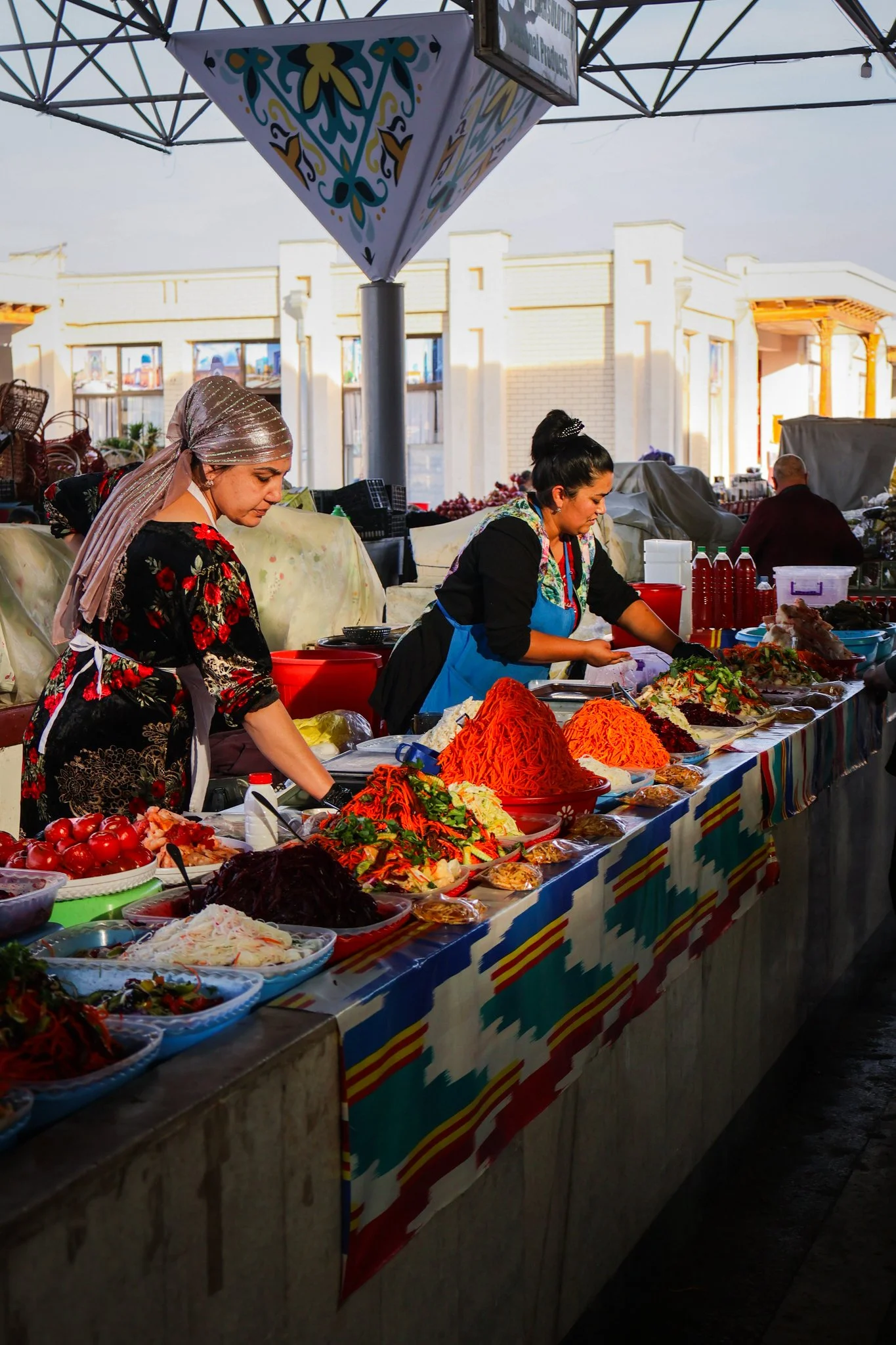
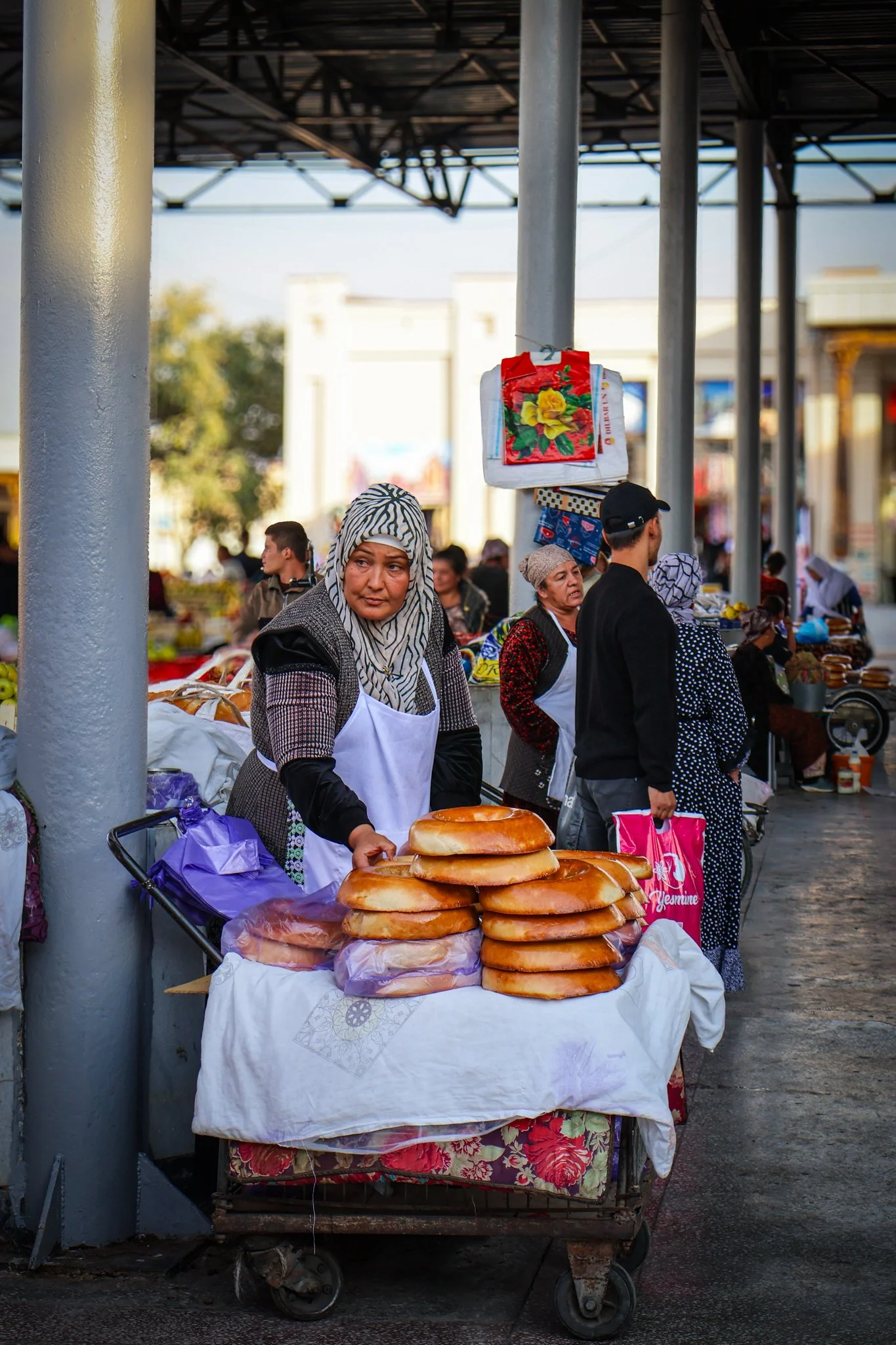
Uzbek Bread is next level. Think freshly baked in clay ovens (tandoor-style). The bread at Siab Bazaar in Samarkand is legendary, soft in the middle, slightly crispy on the outside. Often offered as a gift or with every meal, it’s sacred in local culture!
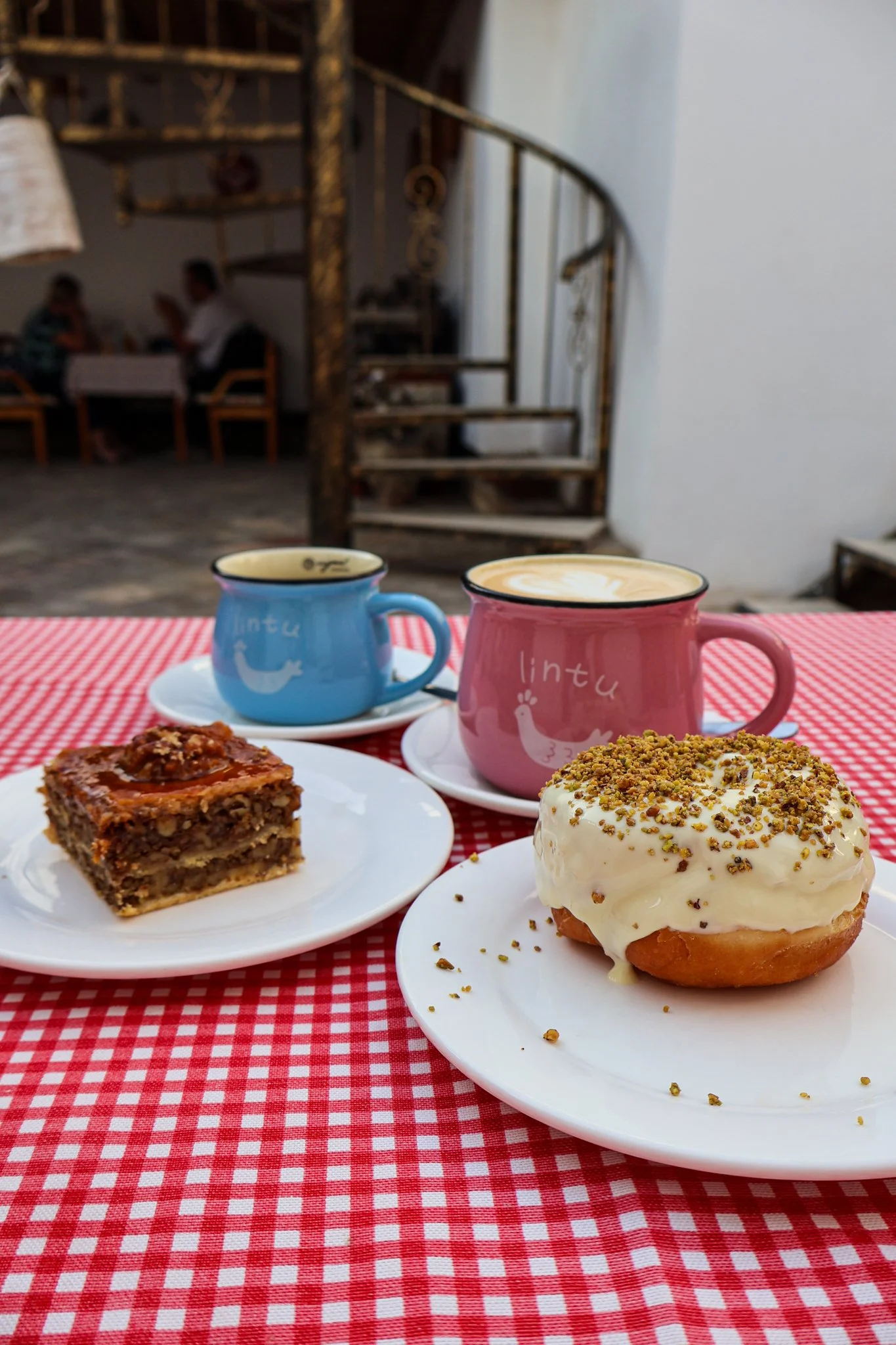
A baklava a day keeps the doctor away? Or maybe that’s just what I’m telling myself after my daily baklava in Uzbekistan. Uzbek baklava (paxlava) is a traditional, sweet, and crispy layered pastry. Think thin dough filled with chopped walnuts or almonds, butter, and soaked in a honey-lemon syrup. I am in love with Uzbek baklava. Do not miss it!
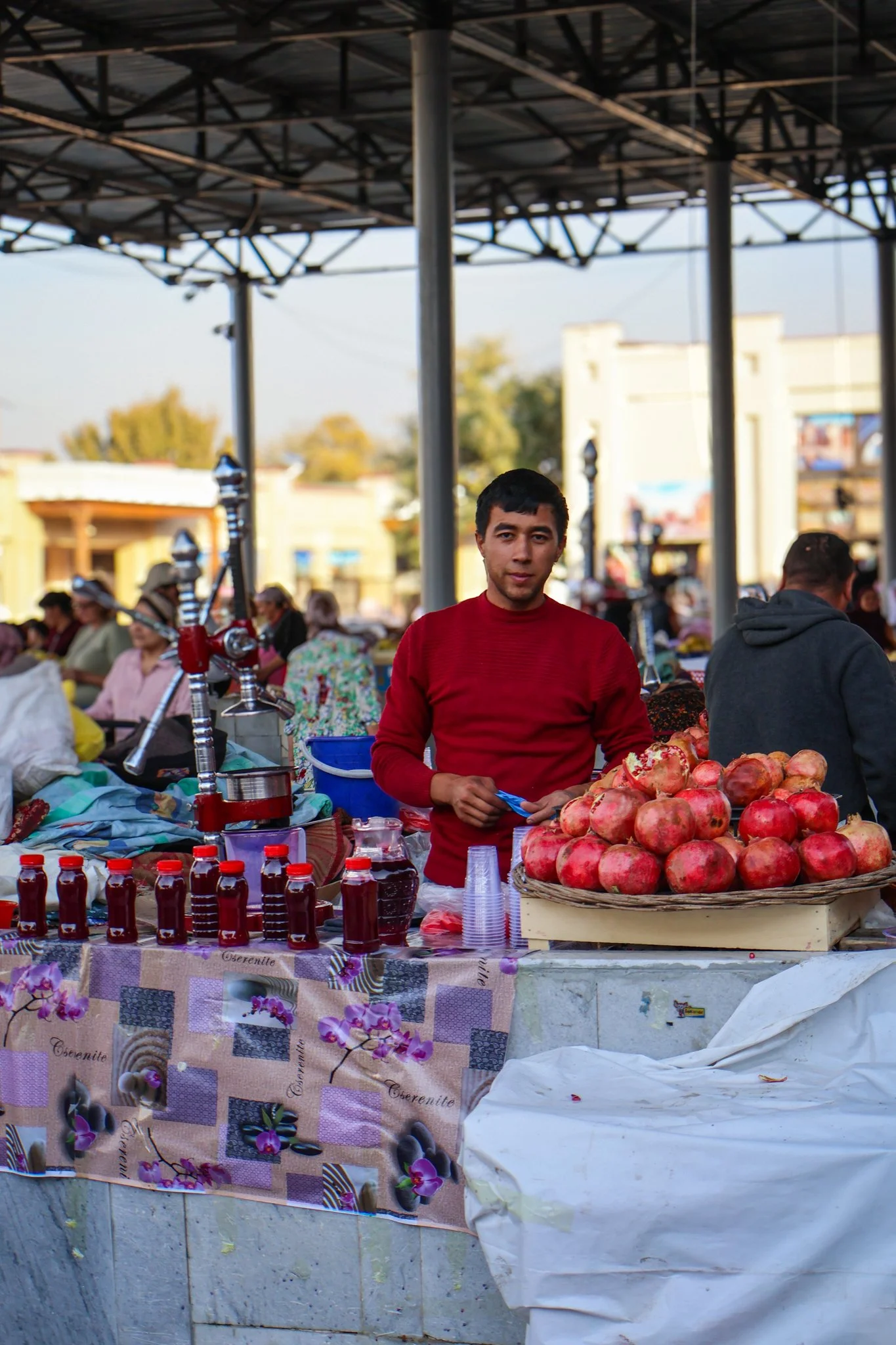
Pomegranate Juice: This street-side fresh juice is divine and surprisingly refreshing, Look for vendors who press it right in front of you, you can’t beat that flavour!
Plov: Uzbekistan’s national dish is a hearty mix of rice, carrots, onions and slow-cooked meat.You can ask for veggie options in certain places. It’s cooked in massive cauldrons at bazaars or special plov restaurants. Each city has its own twist, but Bukhara-style plov is particularly famous.
Samsa: Savoury pastries filled with meat, pumpkin, or potatoes. Baked in clay ovens, crunchy on the outside, soft inside. Perfect for a quick snack while wandering the streets
Lagman Central Asian hand-pulled noodles in a rich meat and vegetable broth found in street stalls and sit-down restaurants. This is comfort food at its best.
Shashlik (Grilled Meat Skewers): Think Central Asian kebabs, usually lamb, beef, or chicken, served with bread and raw onions
Fresh Fruit: Uzbekistan is famous for its melons, grapes, and cherries. Often sold in markets like Siab Bazaar in Samarkand or the bazaars in Bukhara.
Tea (Chai): Green tea is served everywhere, often with meals or just to chat with locals. A great way to experience Uzbek hospitality
When is the best time to visit Uzbekistan?
Uzbekistan experiences a continental climate, which means hot summers and cold winters. The best time to explore the country comfortably is during the shoulder seasons: spring and autumn.
Spring (March - May) is a dreamy time to visit with temps of 15–25°C (59–77°F). The desert and city landscapes come alive with greenery and flowers. This is perfect for walking around the Silk Road cities without overheating!
Autumn (September - November) is the perfect time to visit with temps of 20–25°C (68–77°F). This is harvest season for fruits like pomegranates, melons, and grapes and there are clear skies, fewer tourists, and comfortable sightseeing conditions! This is when I visited and I was surprised by the dreamy autumnal colours.
Avoid Summer or Winter:
Summer (June - August) is when temps soar between 35–45°C (95–113°F) in the desert cities. It can be extremely hot, especially in Khiva and Bukhara. Early mornings and late evenings are the only comfortable times to explore.
Winter (December - February) is a very cold time to visit Uzbekistan with temps of -2 to 10°C (28–50°F). Snow can make for dramatic landscapes, but some smaller towns may be quieter or have reduced services. If you want to experience festivals, local culture, and outdoor sightseeing in comfort, late spring or early autumn is ideal but if you can grin and bear the cold the crowds will be at a minimum during this time and prices will be at their cheapest.
How Much You Need to Budget for Uzbekistan?
One of the biggest surprises about Uzbekistan is just how affordable it is especially compared to Europe, where prices have skyrocketed.
To put it into perspective: A full week in Uzbekistan cost me less than a three-day trip in Europe and that covered everything: food, transport, accommodation, sightseeing, snacks and all the little extras. It’s mega budget traveller friendly. Here’s a breakdown to help you budget:
Transport
Uzbekistan’s train system is fast, clean, and incredibly affordable:
High-speed trains go between (Tashkent → Samarkand → Bukhara):
$10–$25 AUD (€6–€15) per trip.Sleeper trains (to Khiva):
$20–$40 AUD (€12–€24)Local taxis: $1–$4 AUD (€0.60–€2.40) I highly recommend the Yandex app.
Top Tip: Book trains in advance, they book up super fast. Book them here.
Sightseeing & Activities
Most attractions cost:
Entry to monuments & museums: $1–$5 AUD (€0.60–€3)
Guided tours: $10–$30 AUD (€6–€18)
Day trips: $20–$50 AUD (€12–€30)
Accommodation
Guesthouses: $20–$40 AUD (€12–€24) per night
Boutique hotels (often with breakfast): $50–$90 AUD (€30–€55)
Luxury hotels: $120–$200 AUD (€72–€120) per night
Most stays include a traditional Uzbek breakfast.
Food & Drink
Eating out won’t break the bank:
Local meals: $3–$6 AUD (€1.80–€3.60)
Mid-range restaurants: $10–$15 AUD (€6–€9)
Coffee: $2–$4 AUD (€1.20–€2.40)
Street food: often under $2 AUD (€1.20)
Overall Weekly Budget
Here’s what a comfortable trip looks like:
Budget traveller: $250–$400 AUD (€150–€240) per week
Mid-range traveller: $500–$700 AUD (€300–€420) per week
High-end traveller: $900–$1,300 AUD (€540–€780) per week
For what you get: history, architecture, warmth, hospitality, landscapes and food, the value is honestly unbelievable.
Your Guide to Khiva
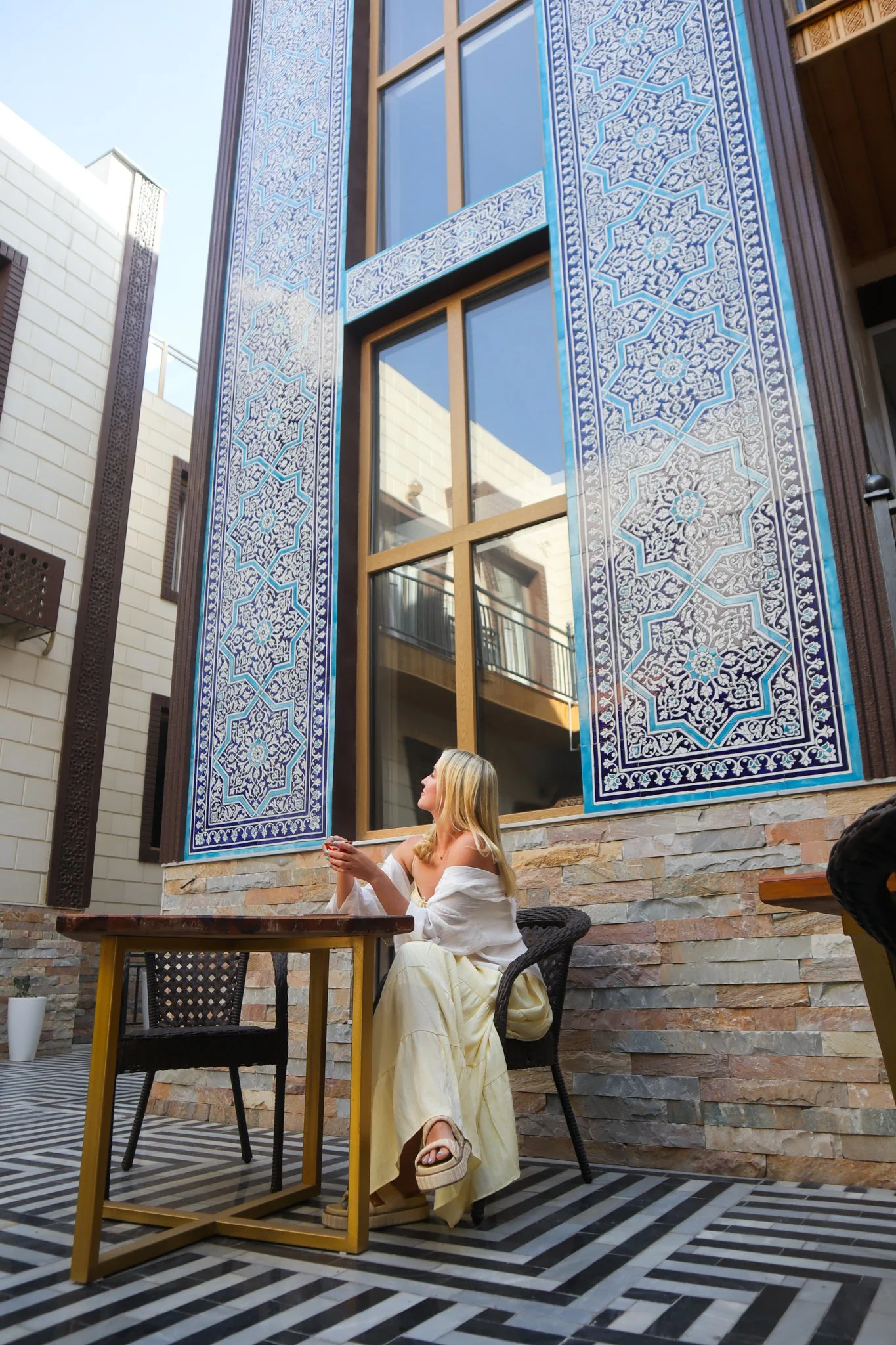
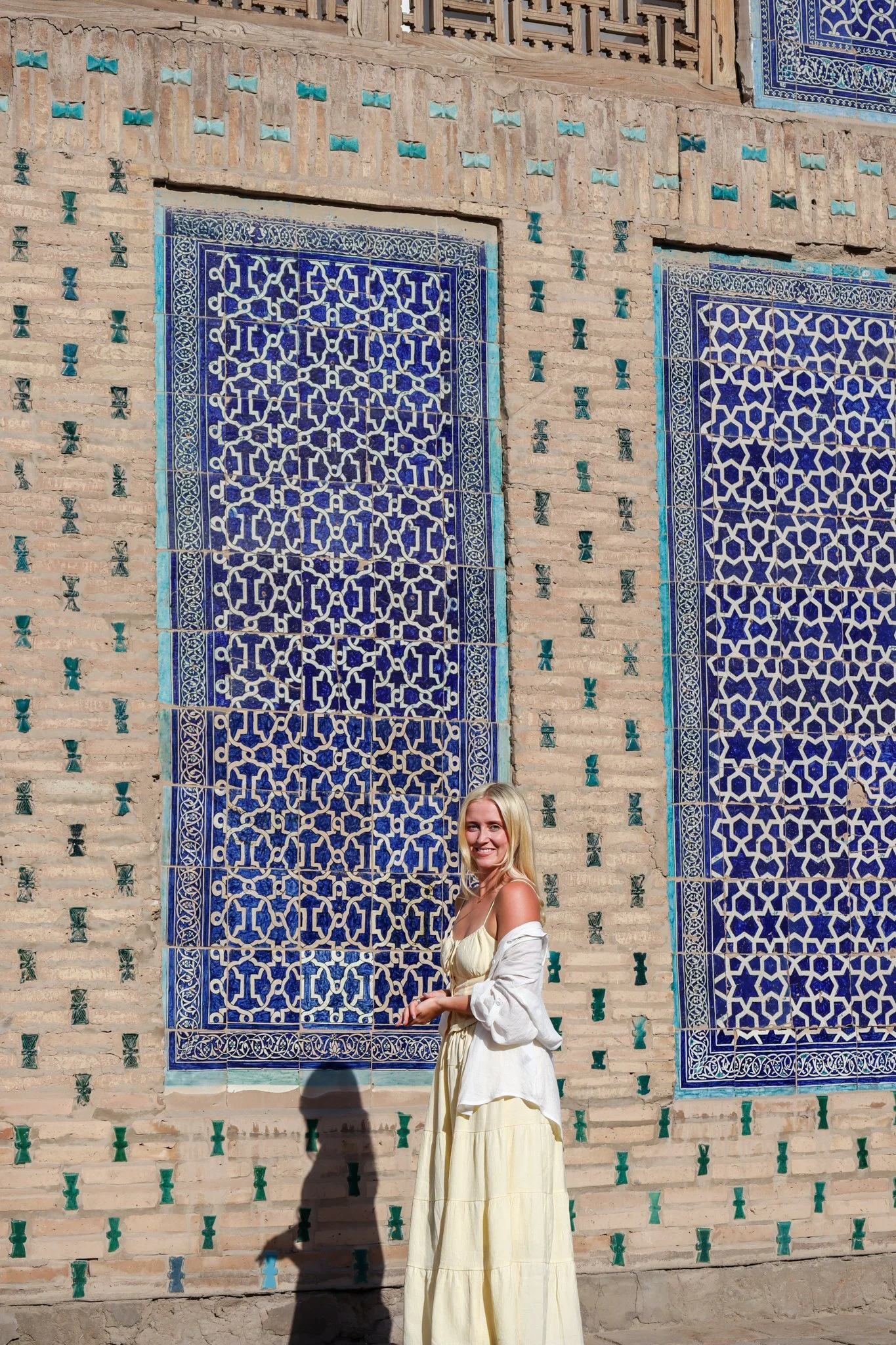
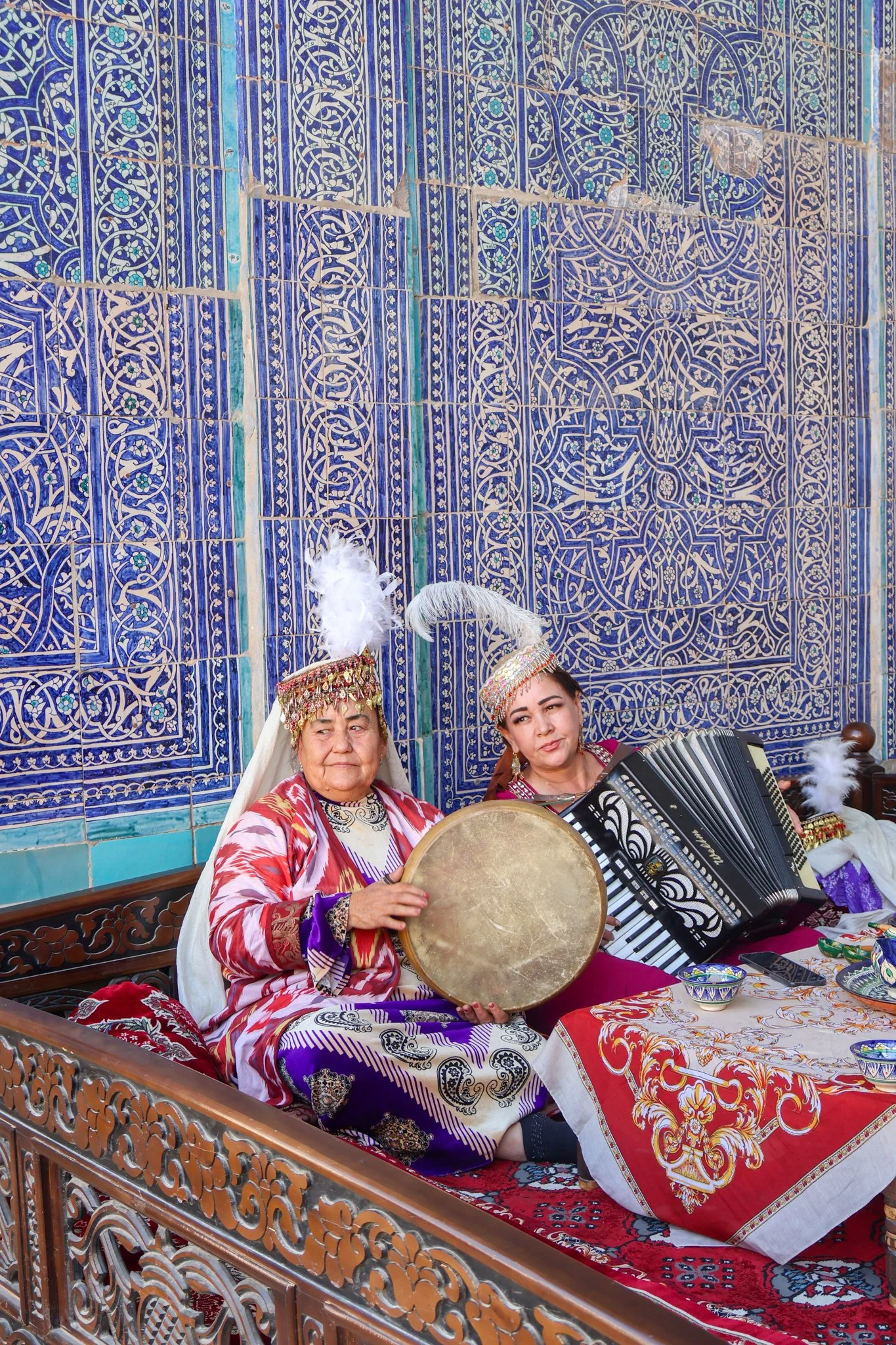
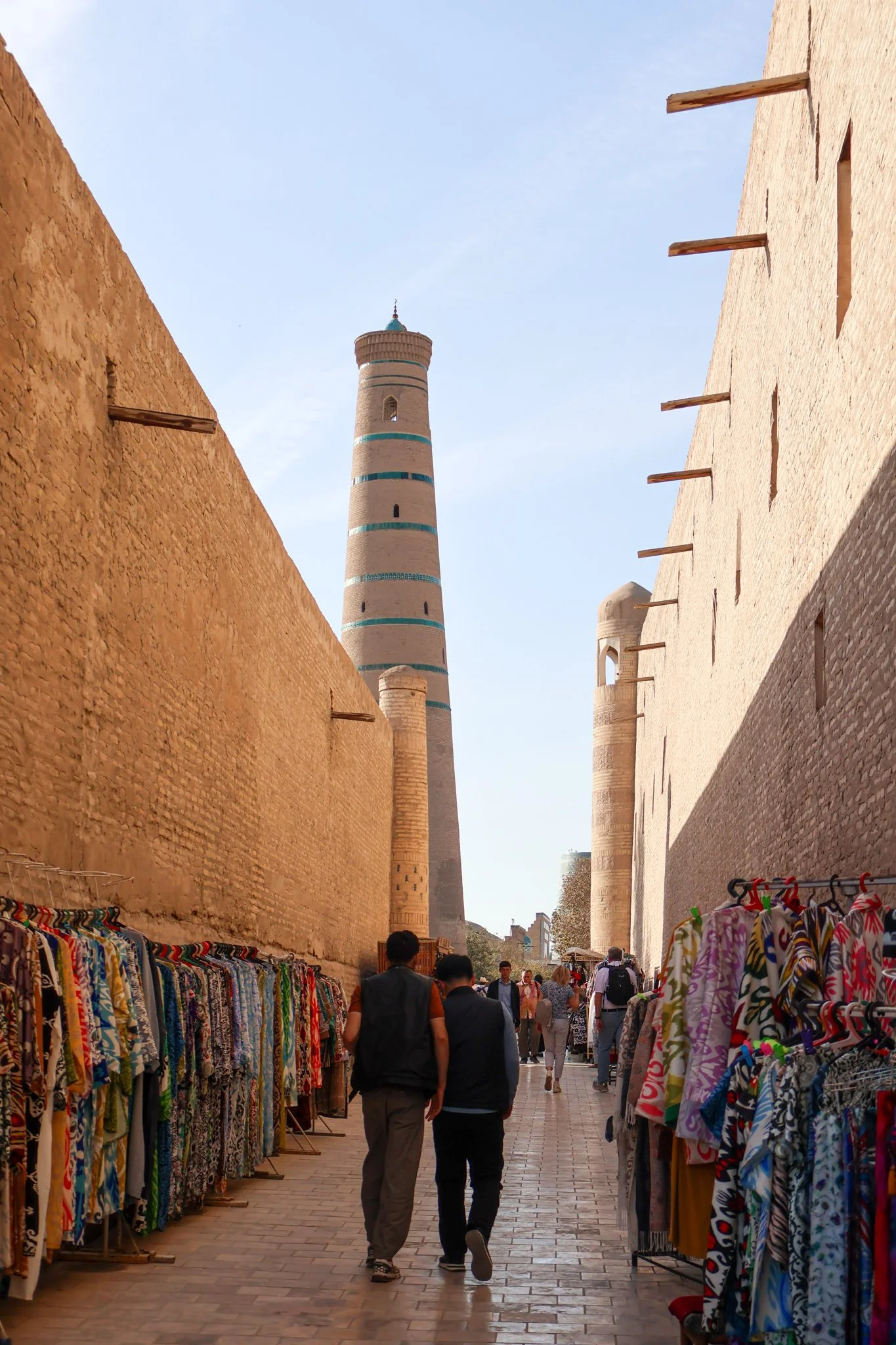
Welcome to the ancient city of Khiva, which dates back to the 6th century. Most travellers skip Khiva when visiting Uzbekistan due to its location but I’m here to tell you that is a huge mistake. Khiva was a major Silk Road city in modern day Uzbekistan known as a centre for trade, culture & science!
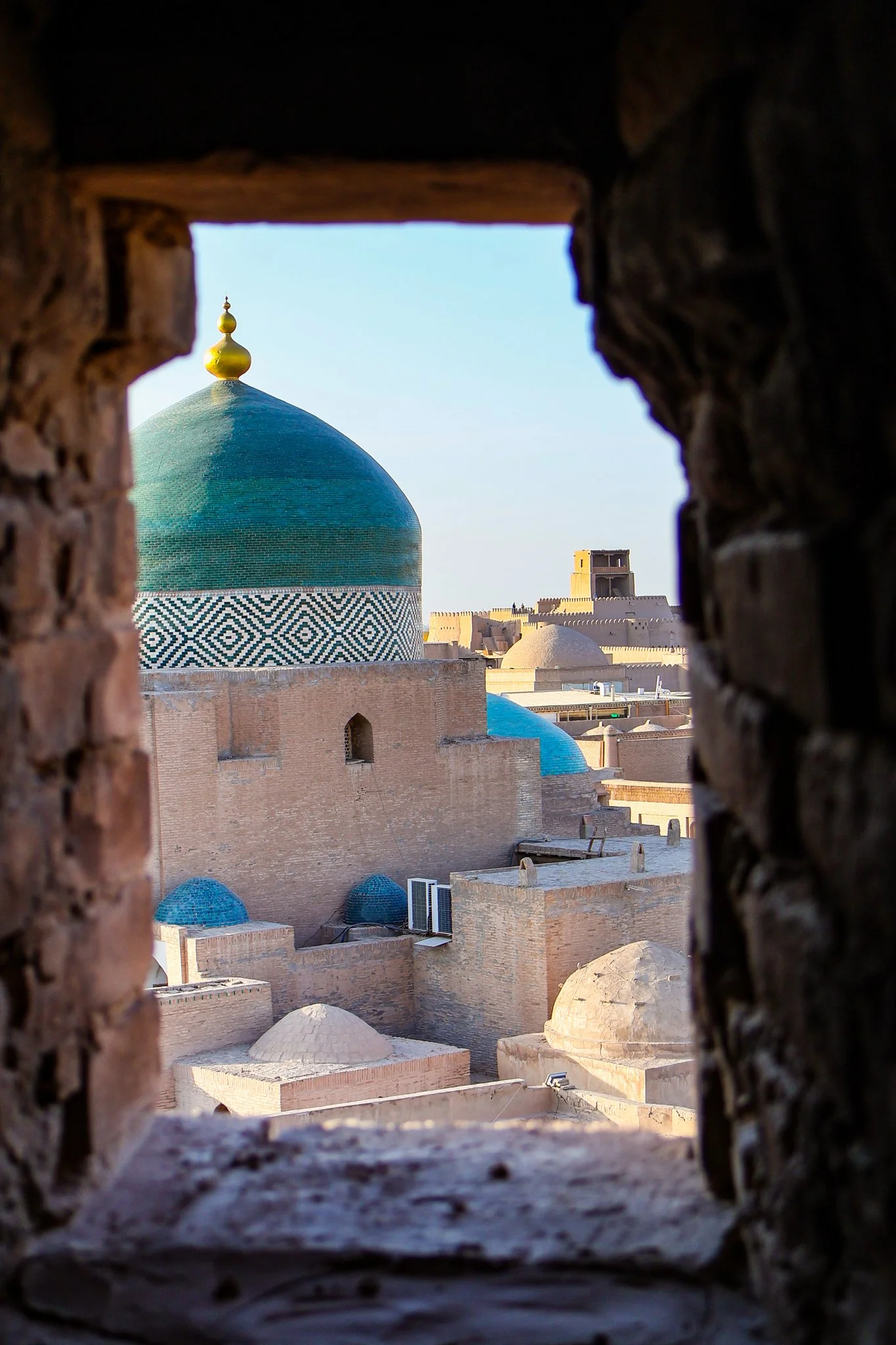
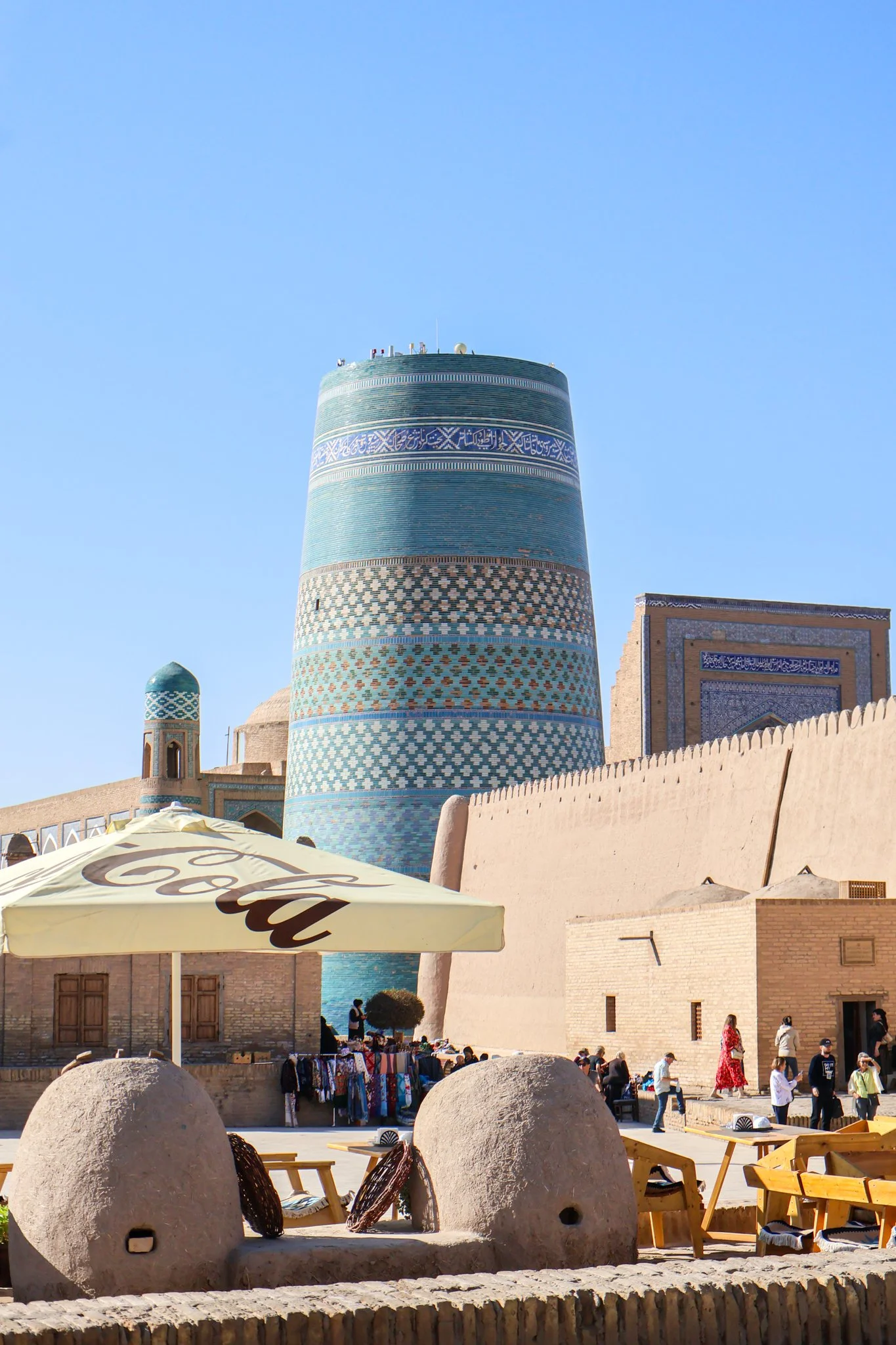
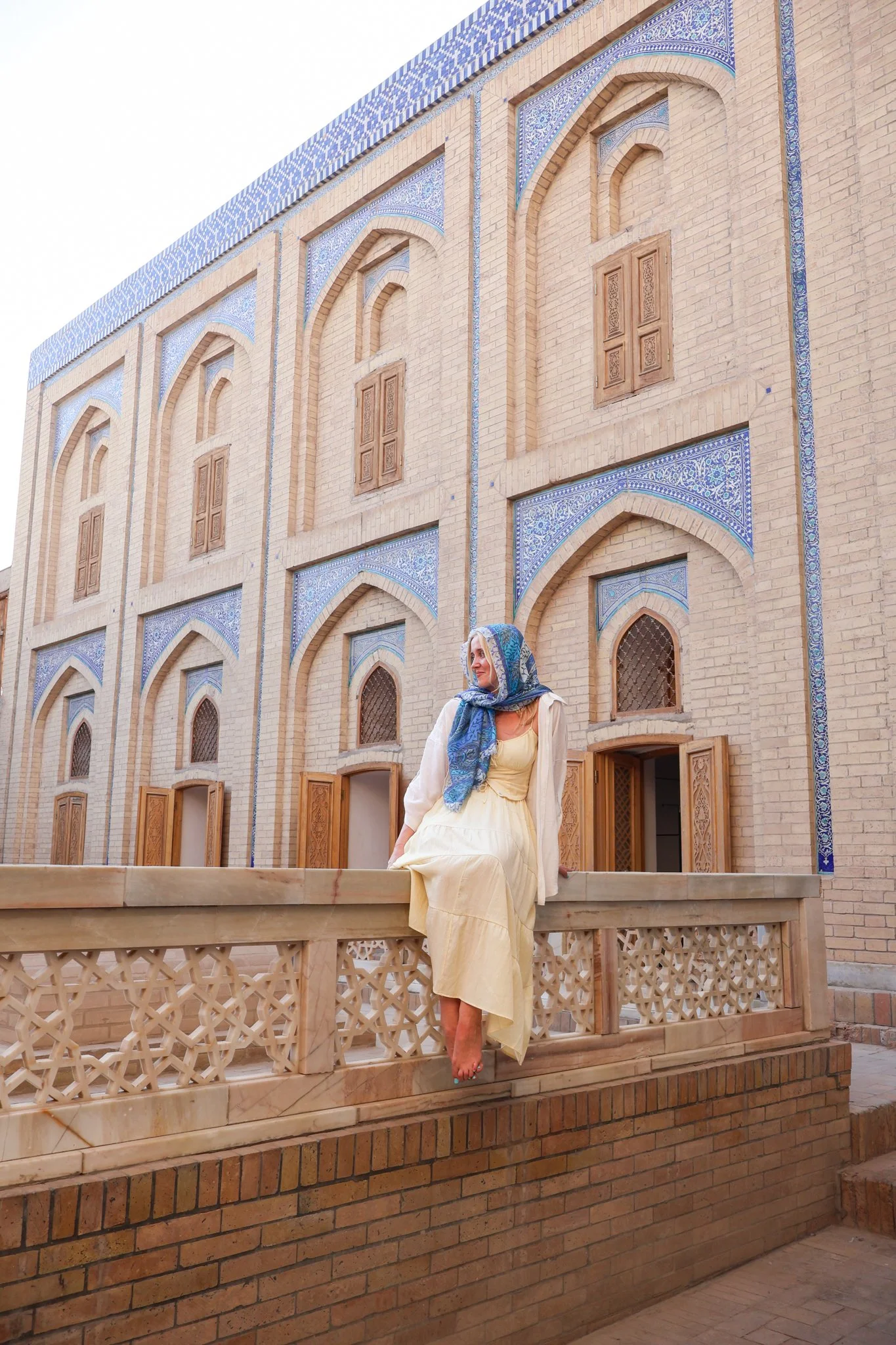
The Ichan Kala is a preserved UNESCO World Heritage site and the historical architecture within these walls are out of this world. Khiva was the Tourism Captial for the Islamic world in 2024 and should absolutely be a MUST on your Uzbekistan itinerary.
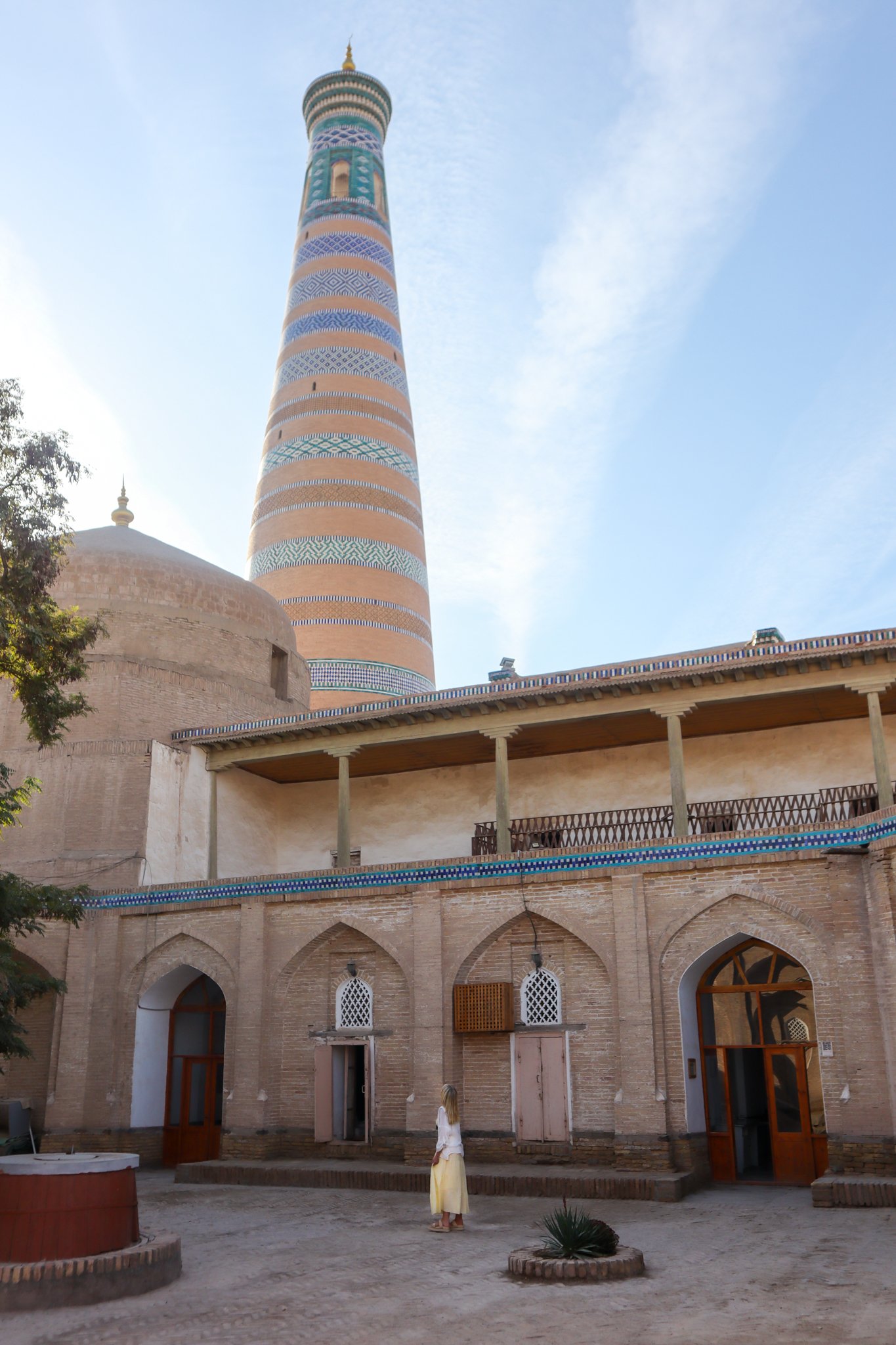
Things to do in Khiva
Get lost in the Itchan Kala: Step inside a perfectly preserved ancient city that feels like walking through a real-life museum.
Book a tour with a local guide: Old Town Walking Tour with History and Culture- this is the best way to uncover Khiva’s hidden stories, architecture, and Silk Road secrets.
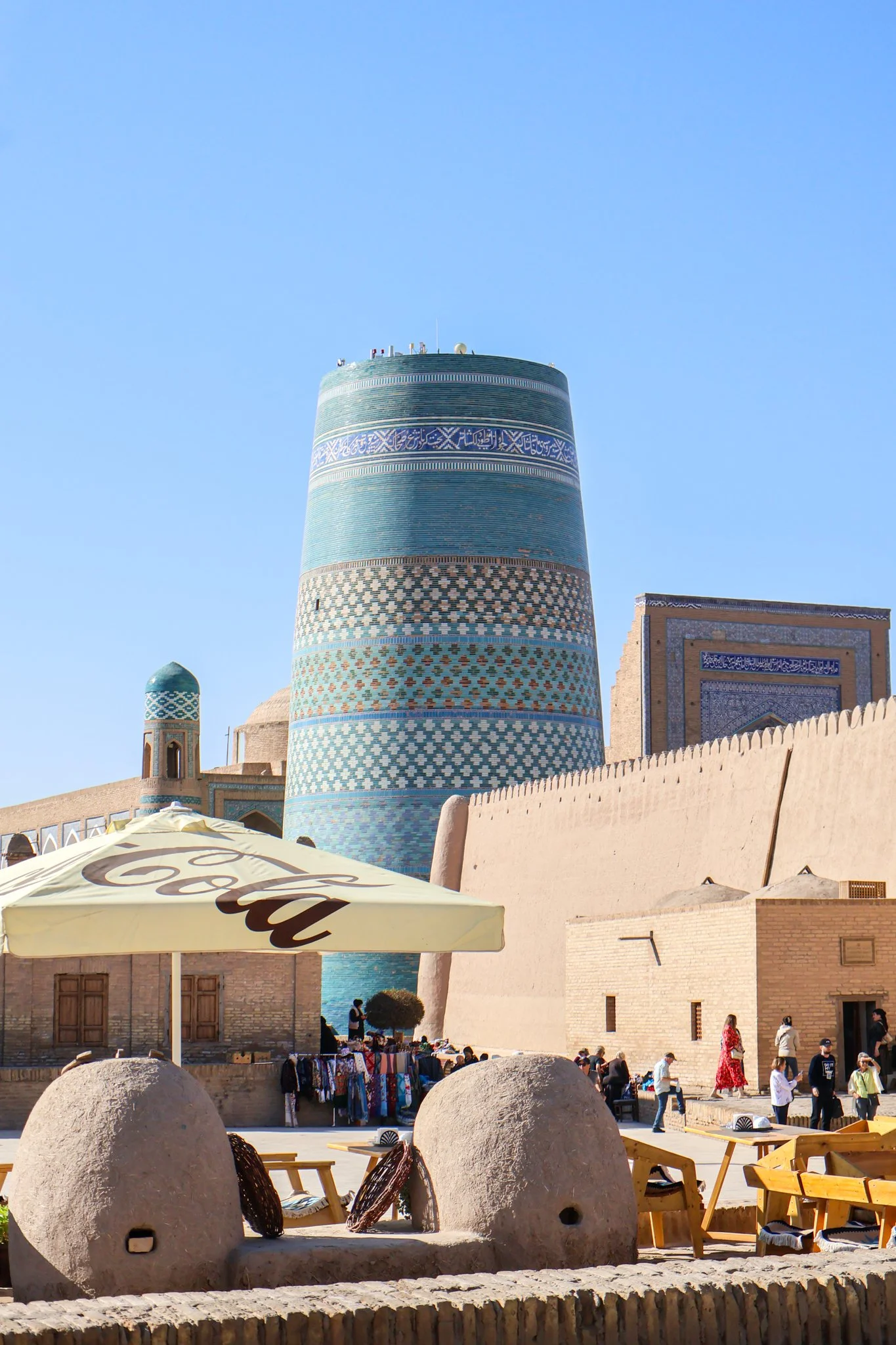
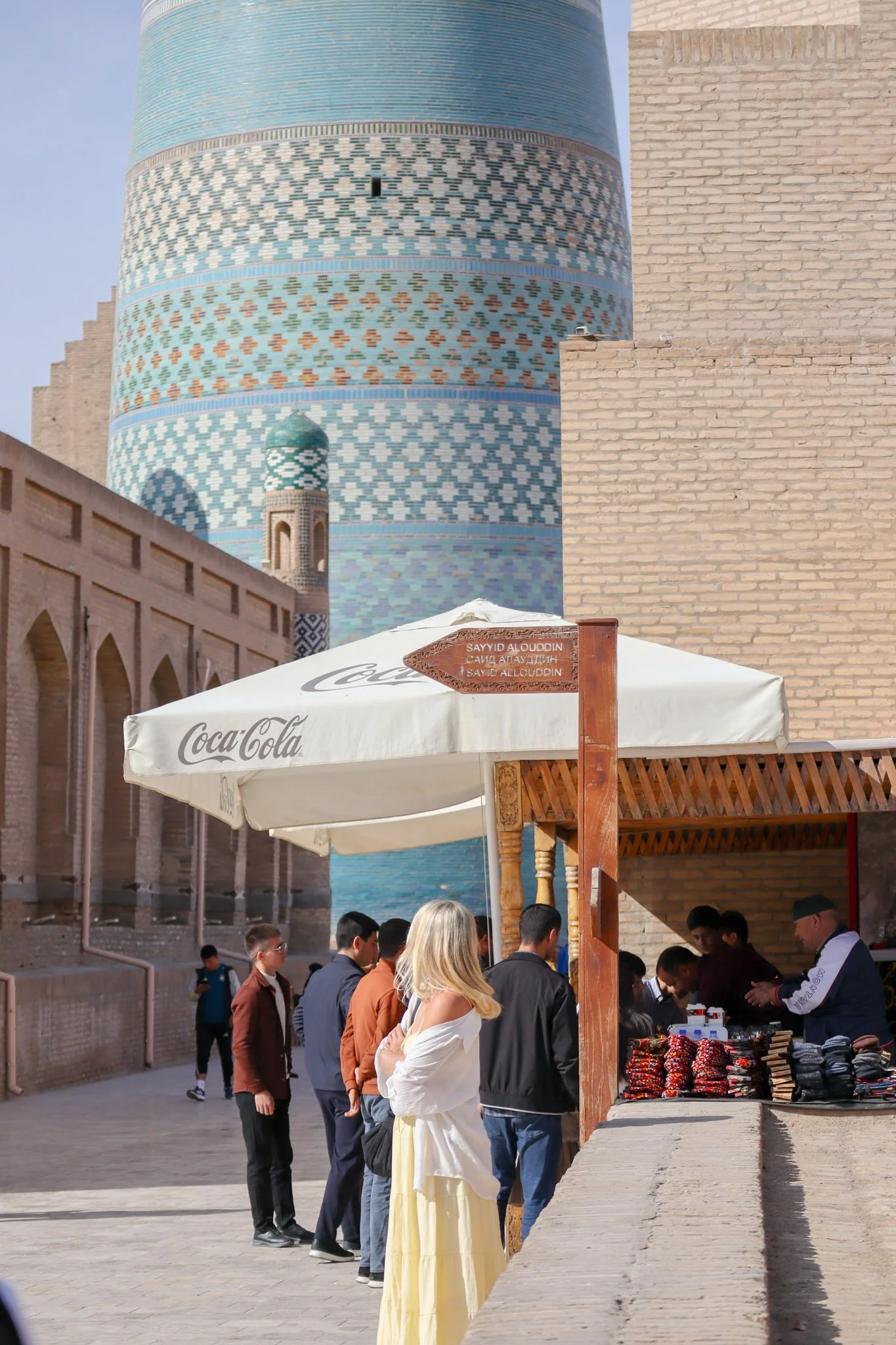
Kalta Minor Minaret: An unfinished yet iconic turquoise tower that’s become the symbol of Khiva.
Kunya Ark: The former residence of Khiva’s rulers, offering a glimpse into royal life.
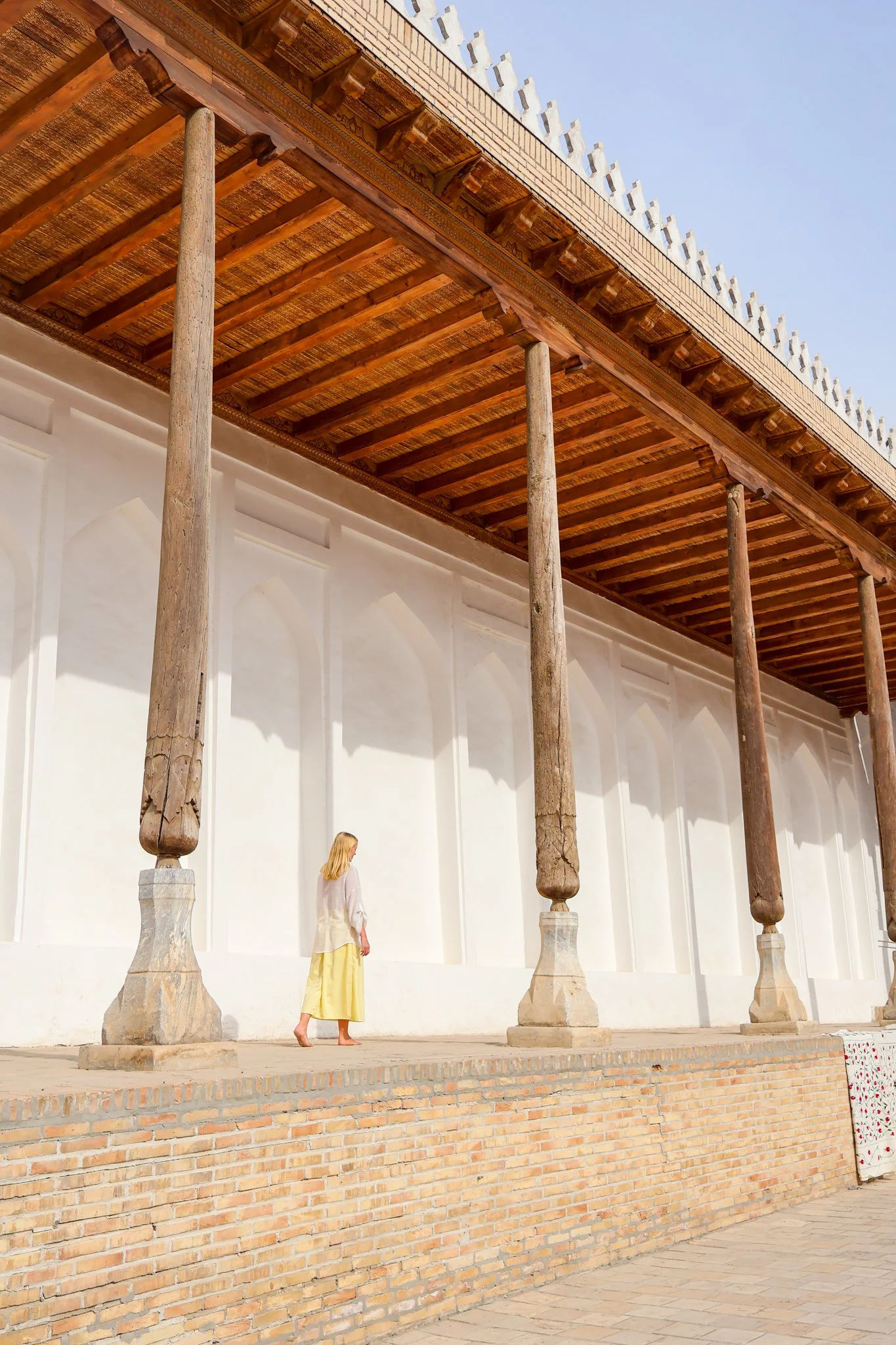
Juma Mosque: A unique 10th-century mosque known for its forest of beautifully carved wooden pillars.
Pahlavon Mahmoud Mausoleum: A sacred site topped with a striking turquoise dome, dedicated to Khiva’s beloved poet and wrestler.
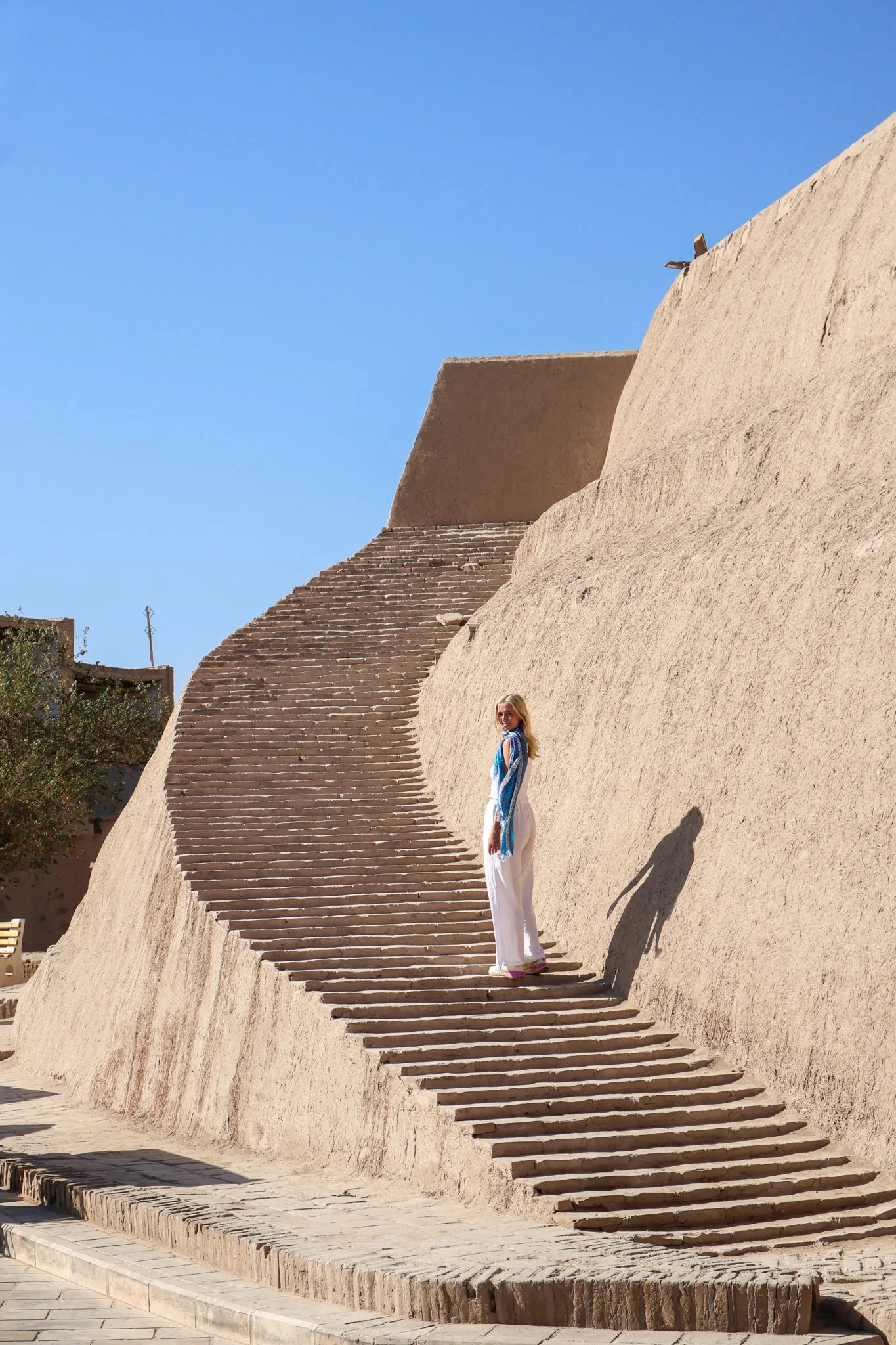
Climb the city wall: For panoramic desert views and a completely different perspective of the old town.
Islam Khoja Minaret: The best viewpoint in Khiva, rewarding you with sweeping views after the climb.
Khiva Bazaar: A lively spot to browse local crafts, textiles, and traditional сувенirs.
Nurullaboy Palace: A lesser-known palace blending traditional design with unexpected European influences.
Learn how to make Uzbek bread: Master Class - Uzbek Bread in KhivaA hands-on cultural experience where you’ll bake traditional non in a clay oven.
Terrassa Restaurant: The ultimate sunset spot for golden hour views, Aperols, and a dreamy dinner (book ahead in peak season!).
Arxi Rooftop Restaurant: A relaxed rooftop perfect for lunch with views over Khiva’s historic skyline.
Where to stay in Khiva?
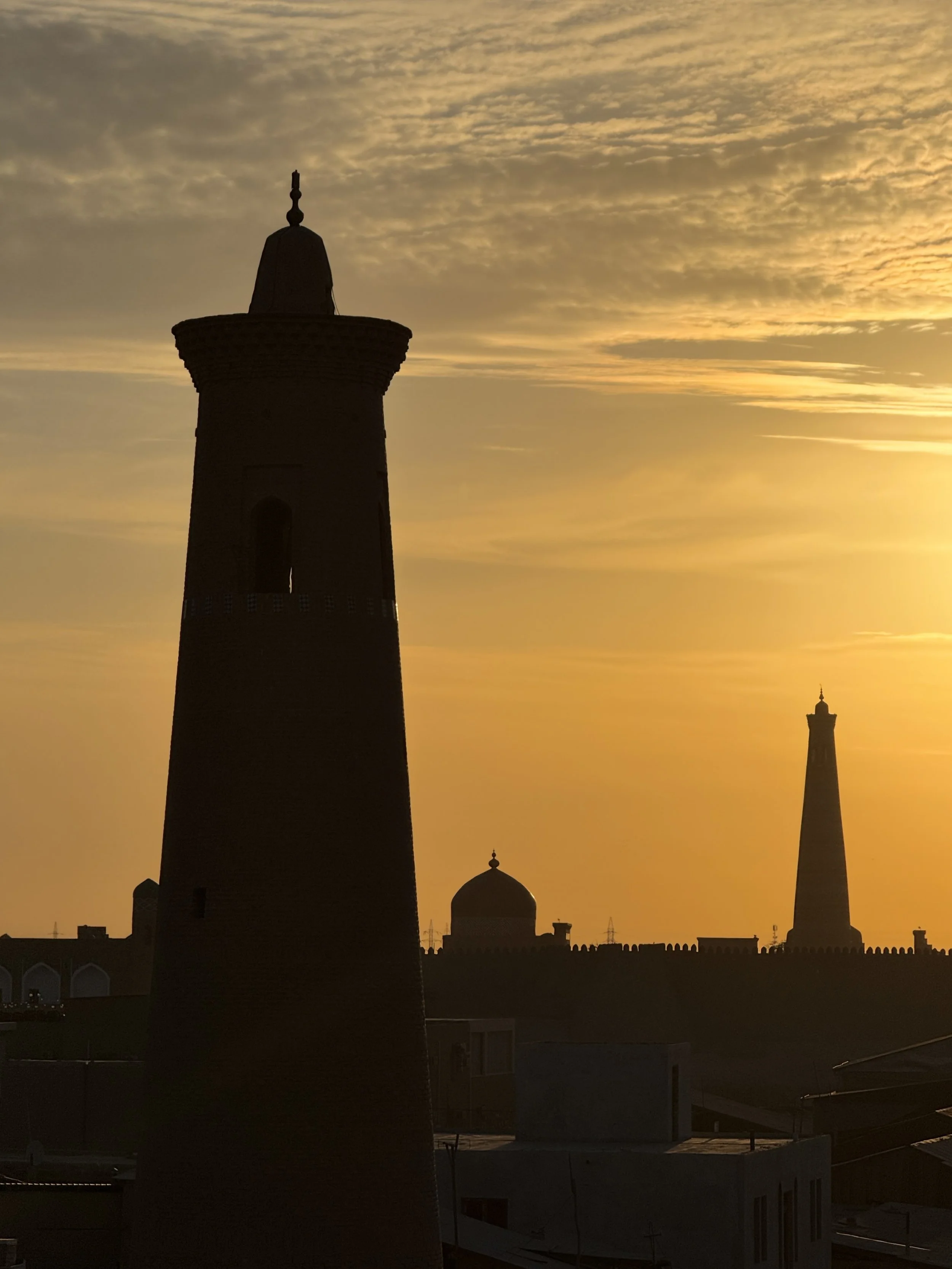
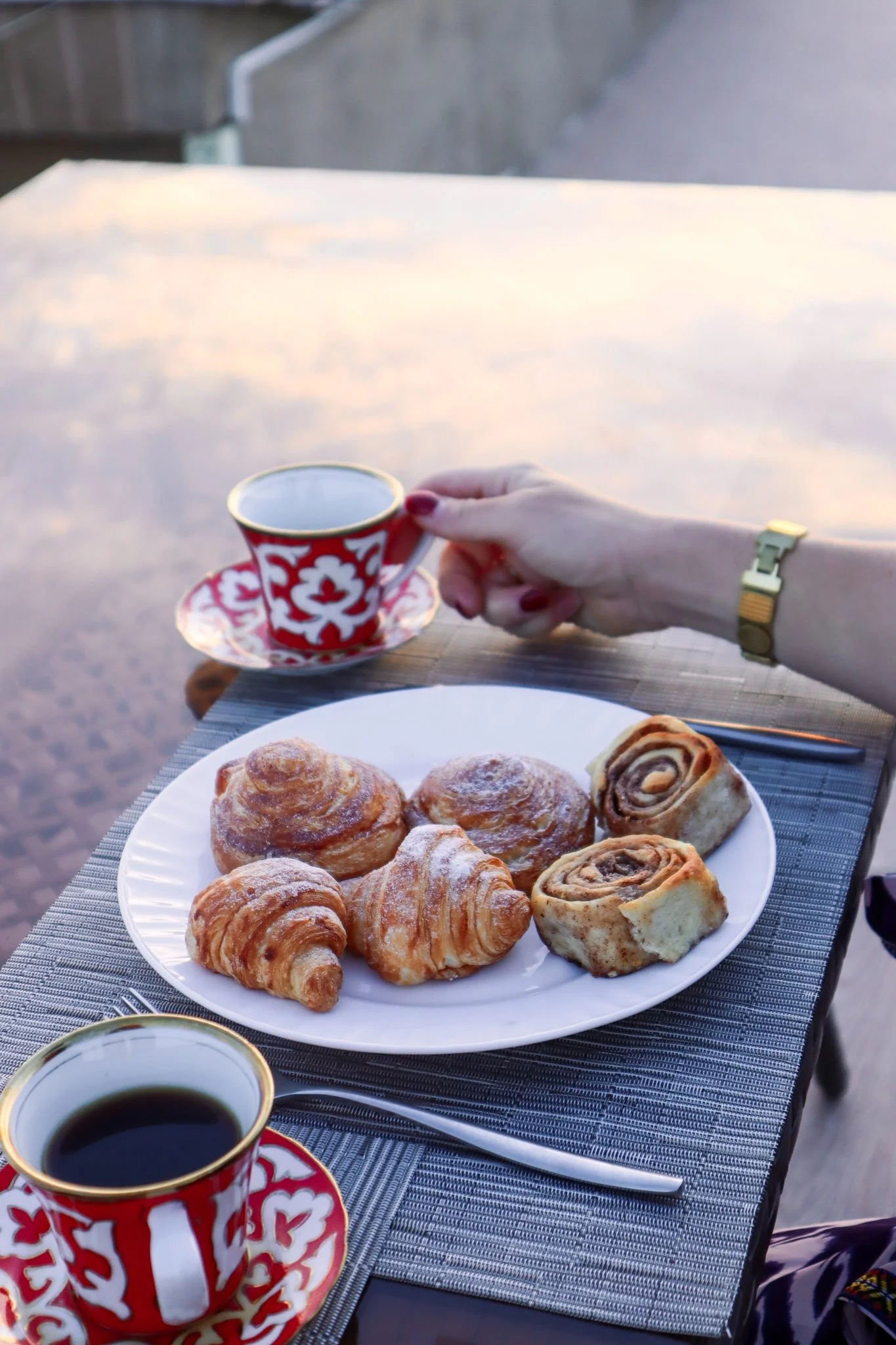
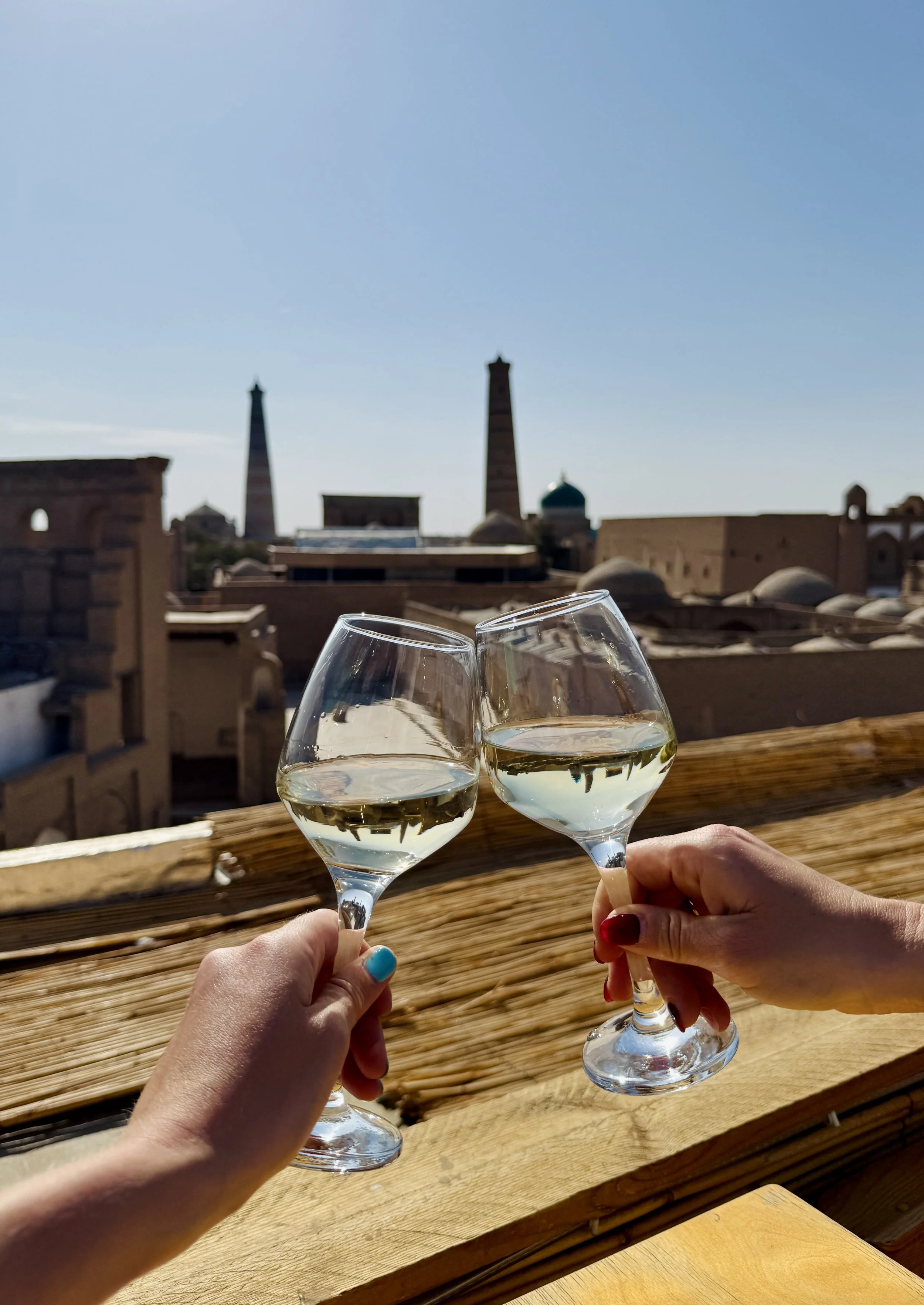
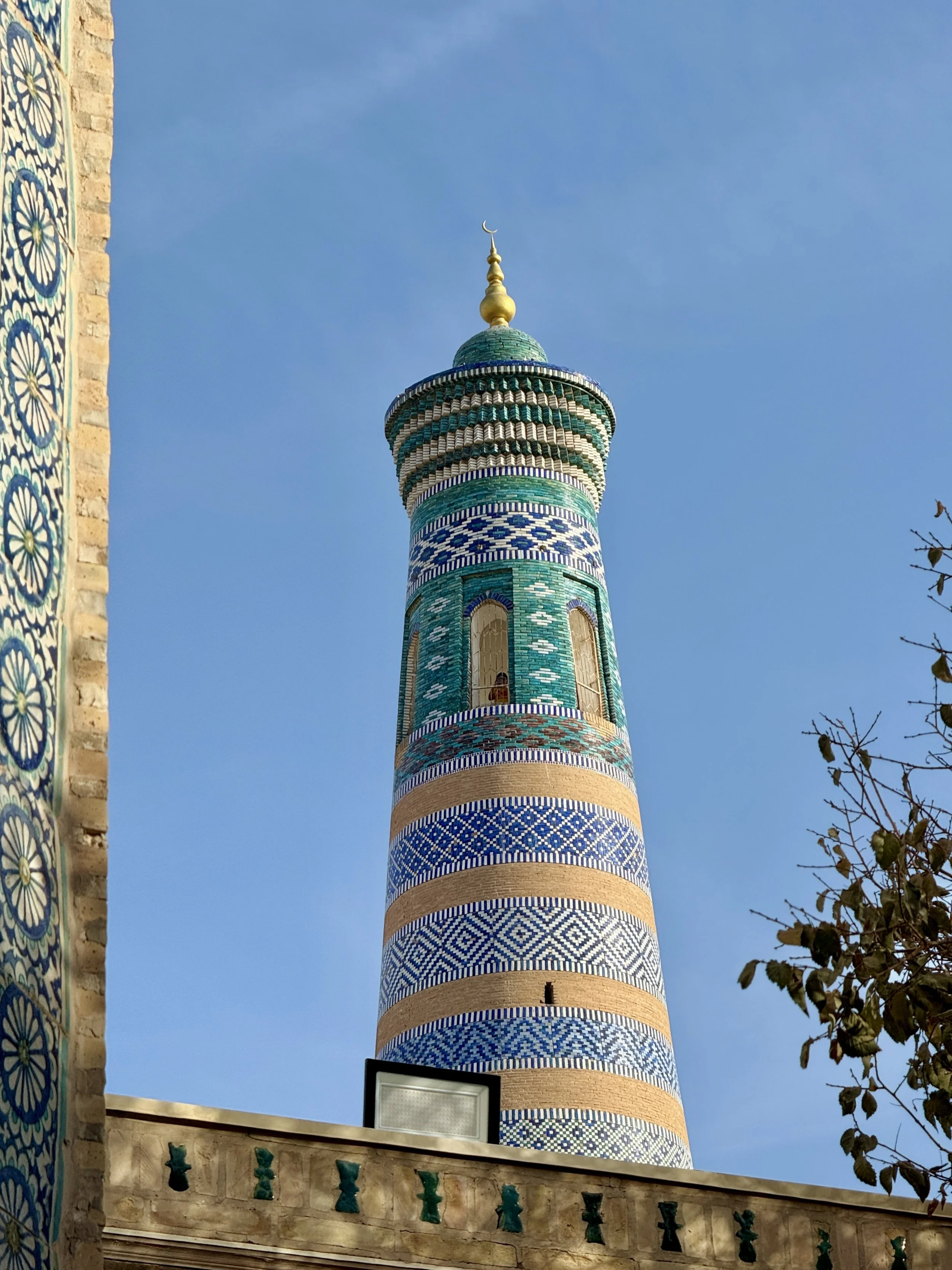
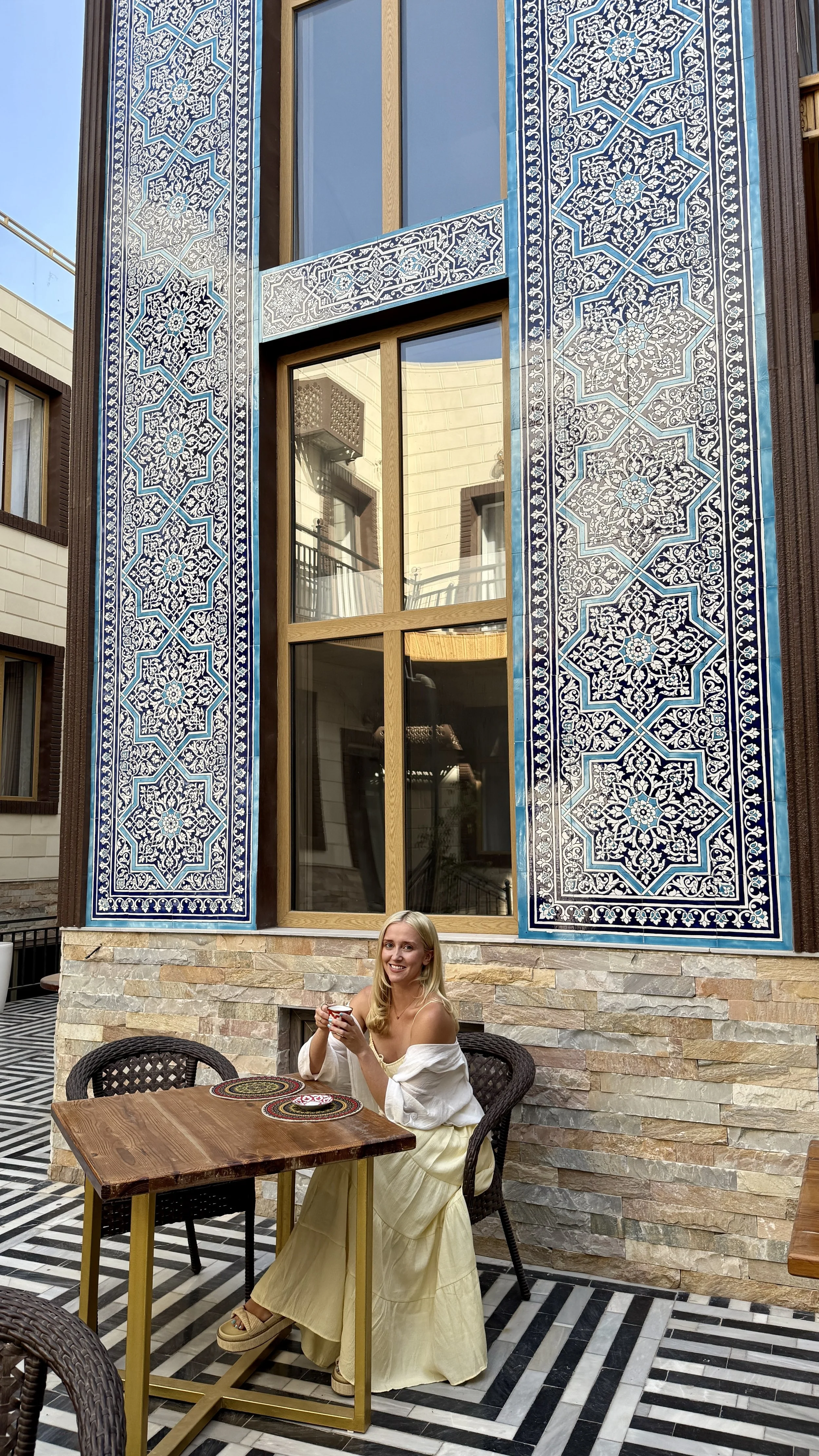
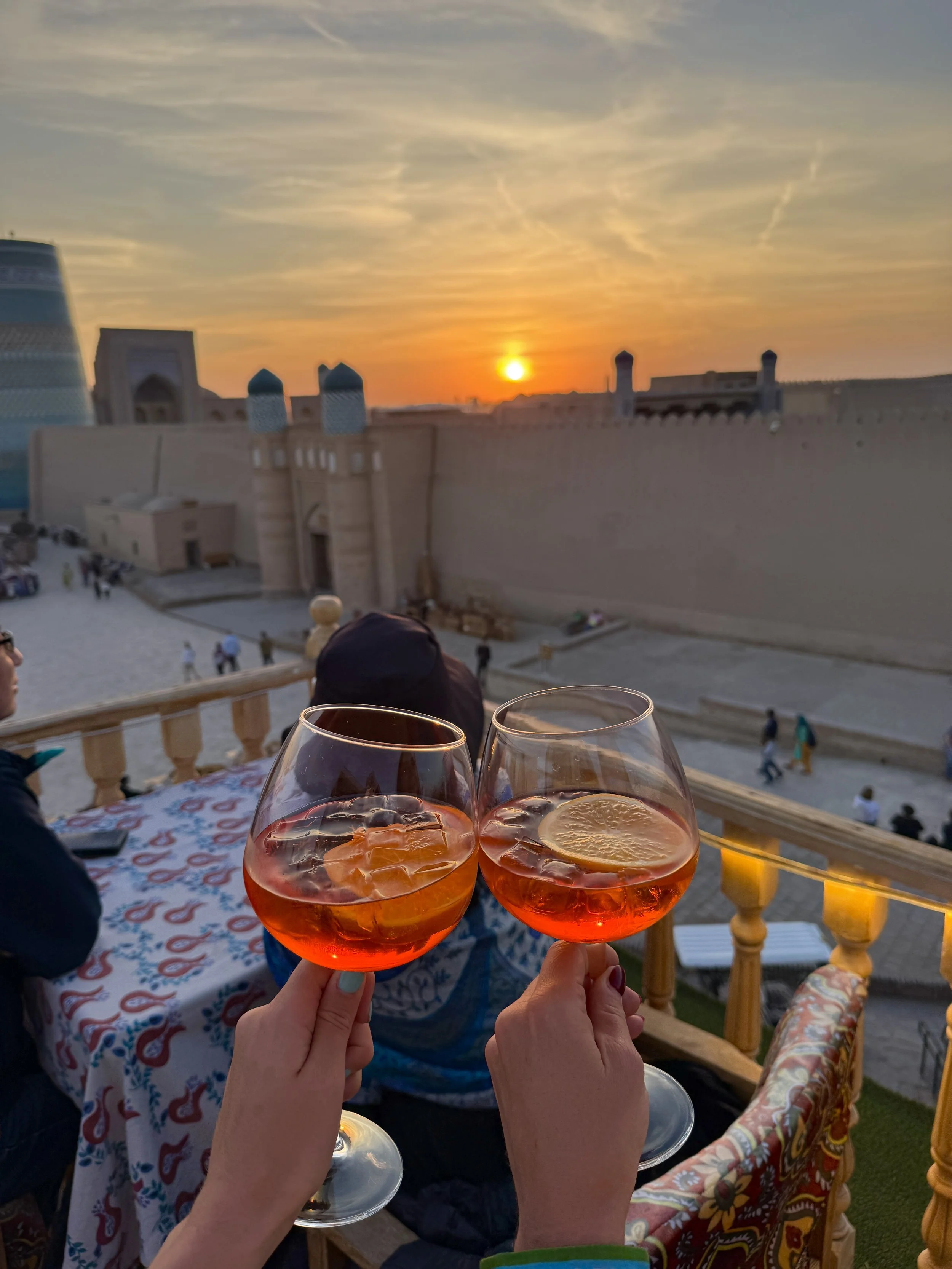
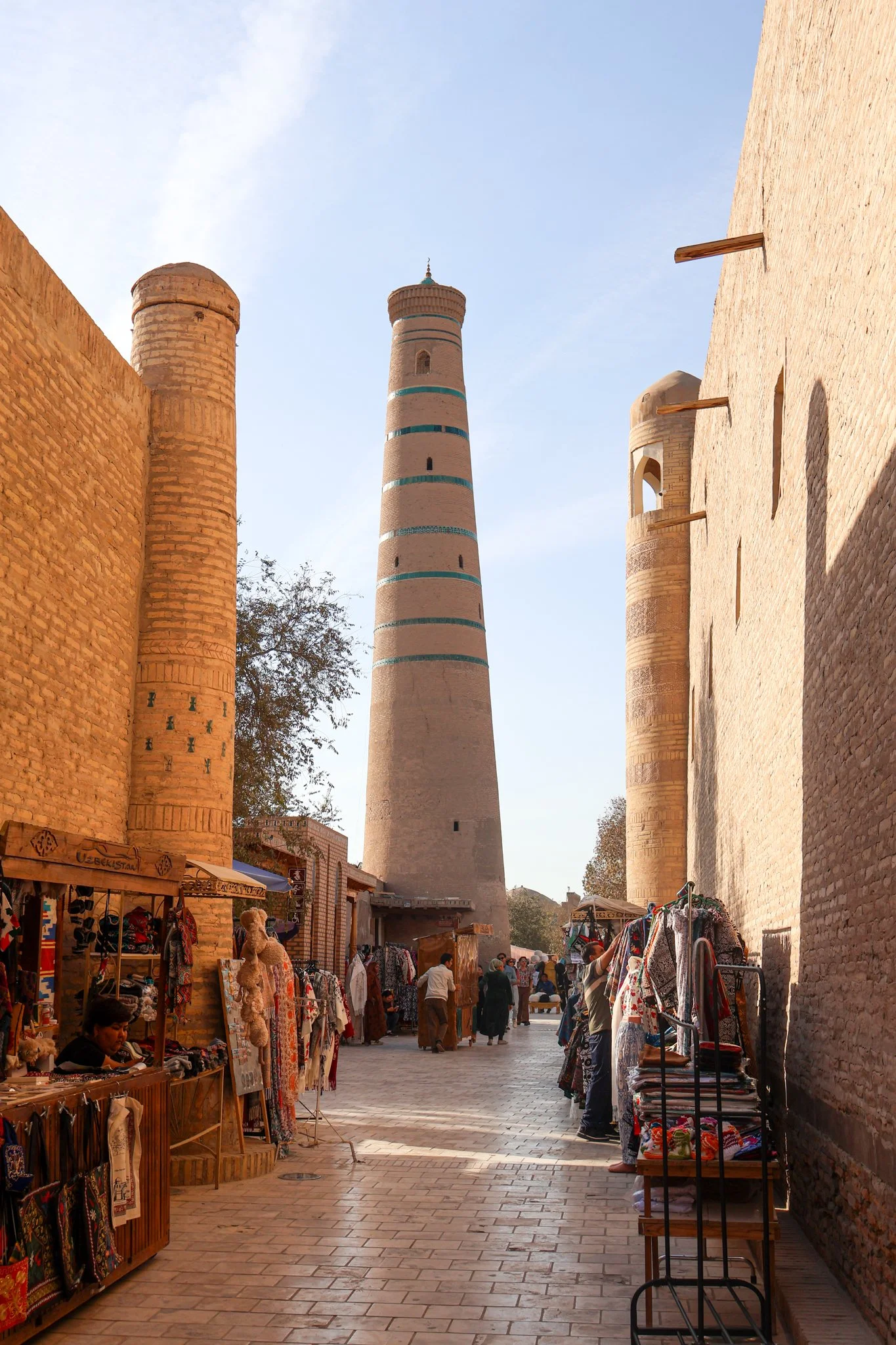
I recommend staying as close to the Ichan Kala as possible. Bankirk Khiva is the most gorgeous hotel only a 4 minute walk from the ancient walled city of Khiva. The hotel is just fabulous and it has a stunning rooftop with incredible views which is great for sunrise.
Your Guide To Bukhara
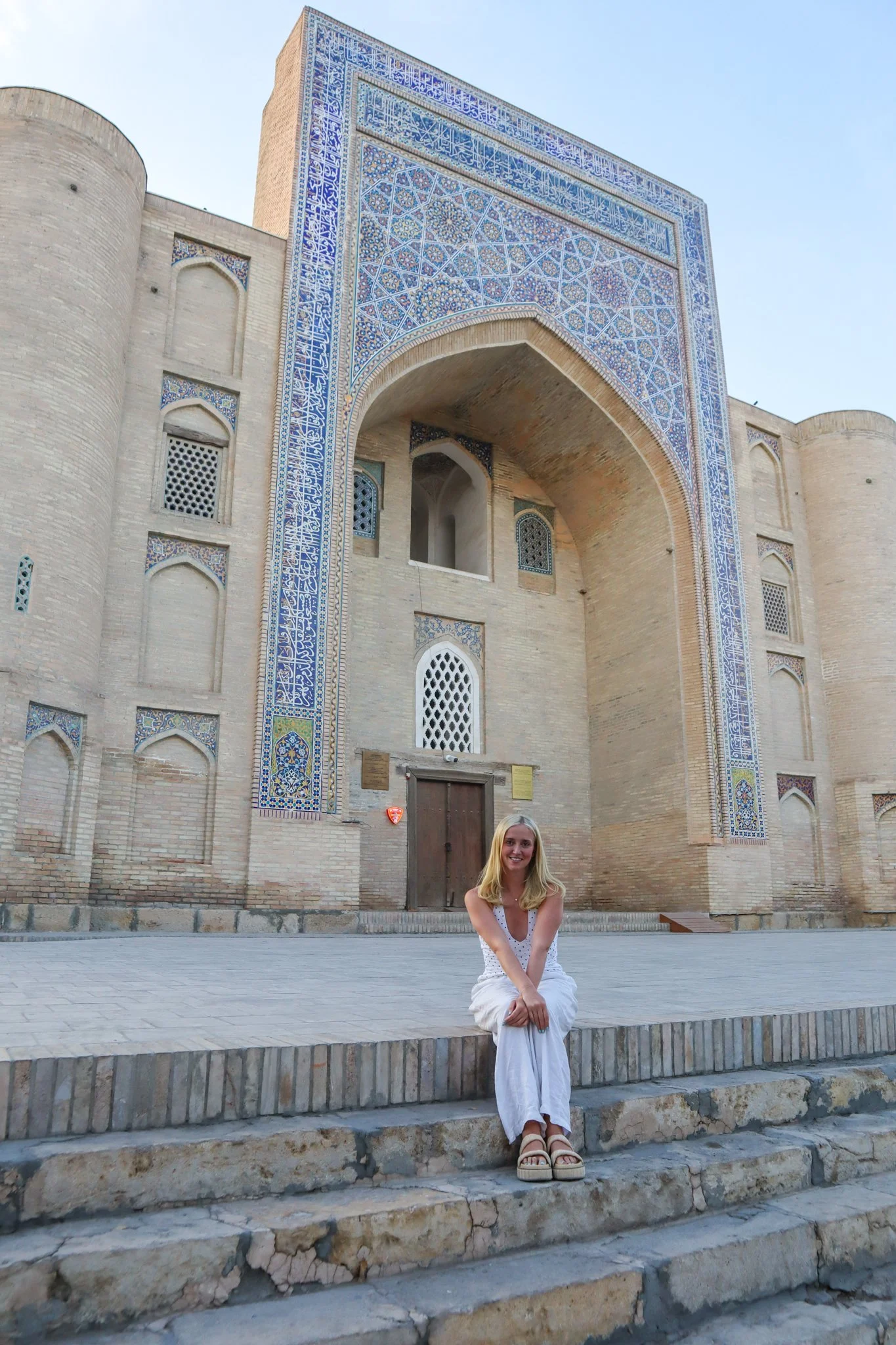
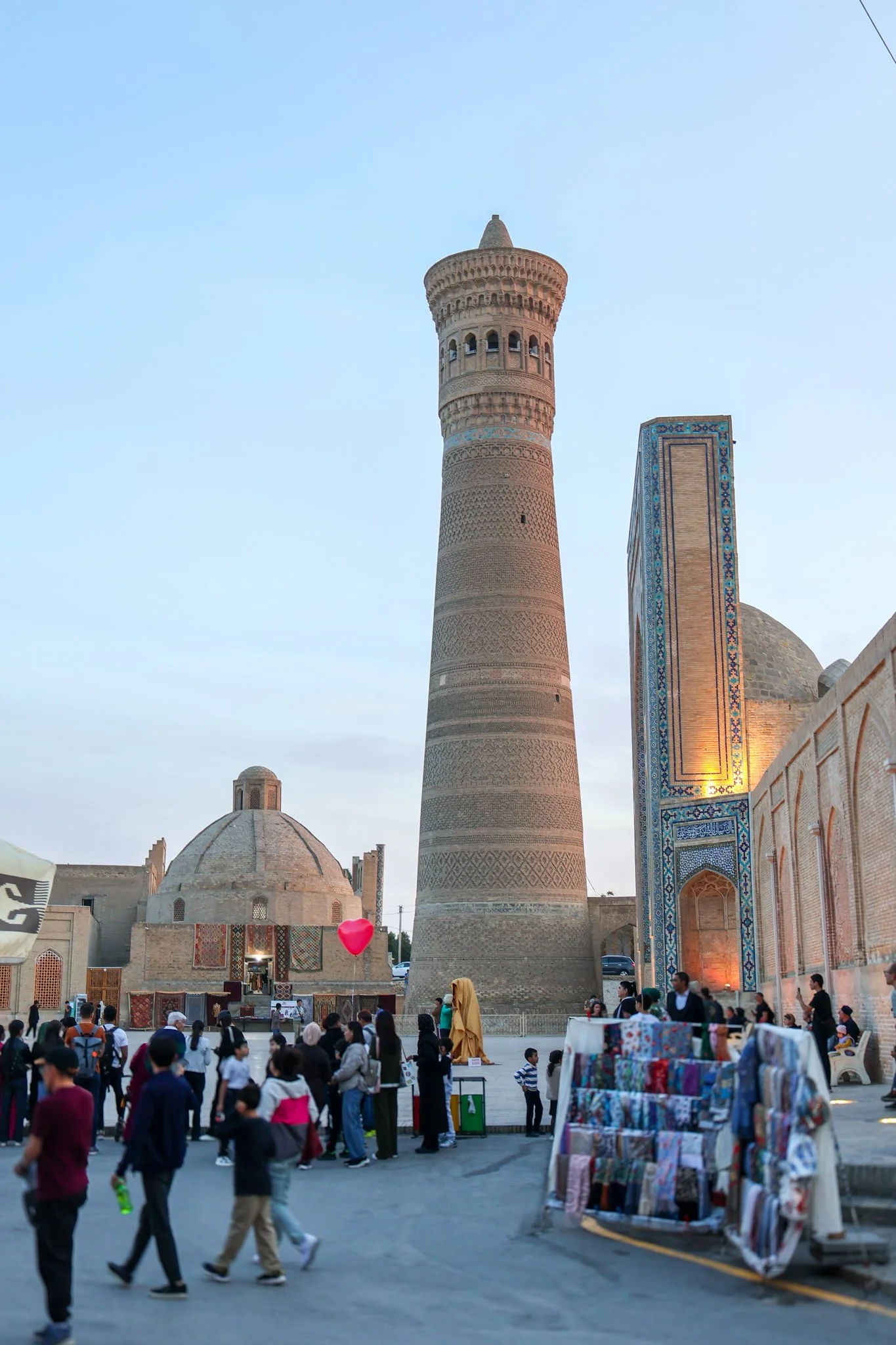
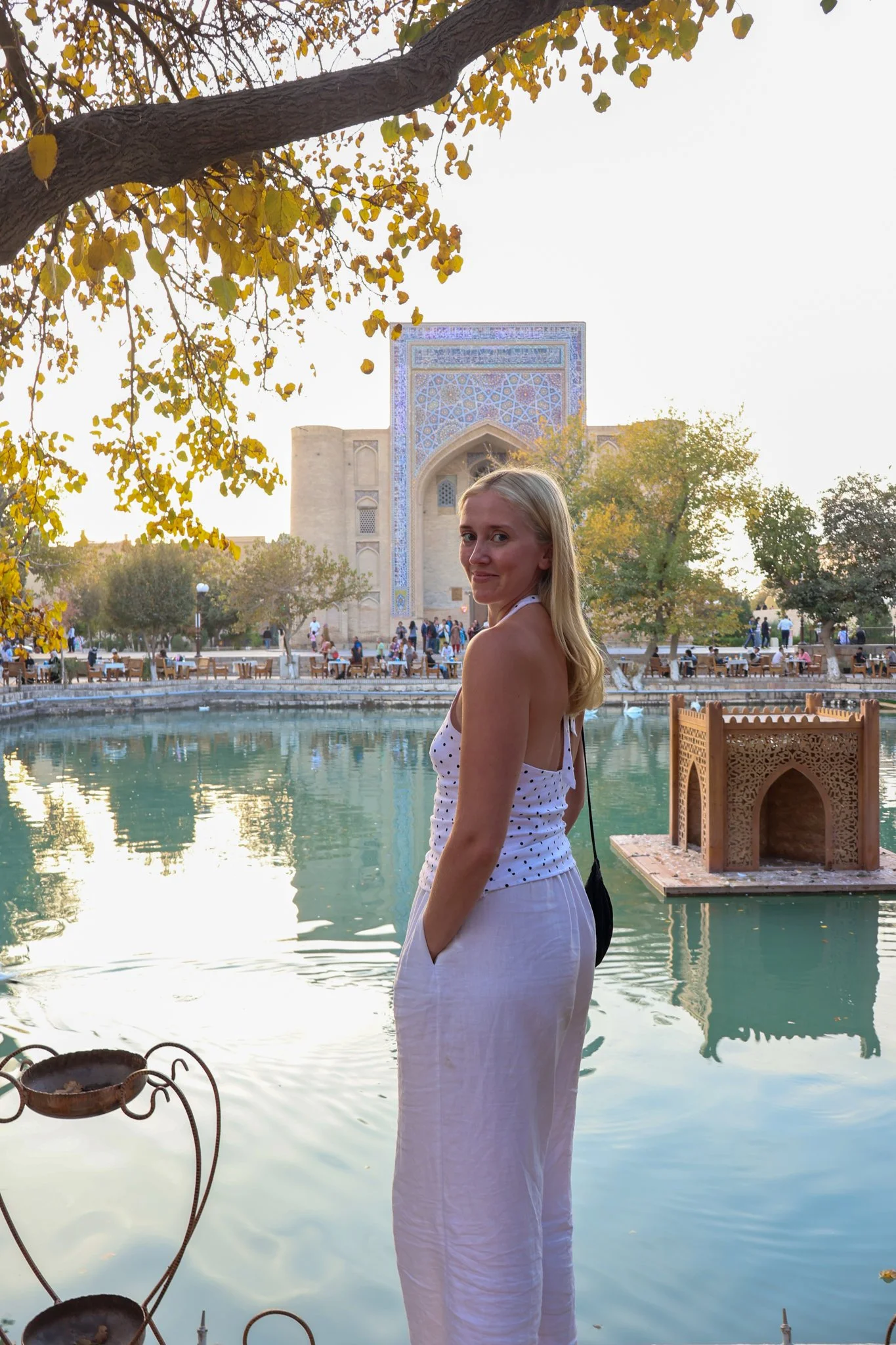
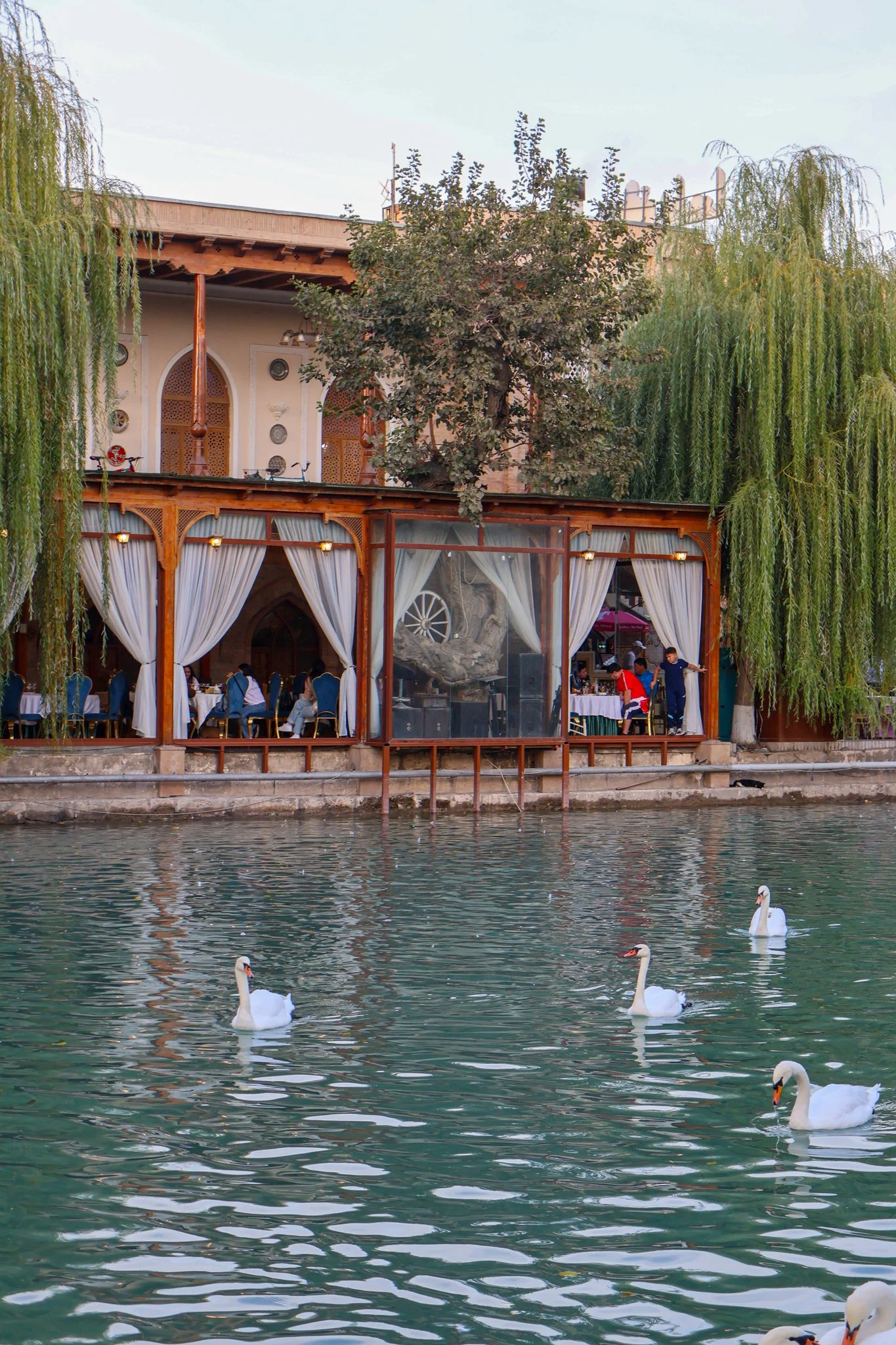
Bukhara is out of this world.. this city is over 2,500 years old and was a major center along the Silk Road. Its skyline is dotted with minarets, mosques & madrasas, many of which are centuries old! This is the soul of Uzbekistan and truthfully the vibes here are unmatched. A must visit on your Uzbekistan journey. You walk down the streets here and it’s absolutely bursting with life! There’s such a gorgeous alfresco culture with everyone out enjoying themselves at cafes, restaurants and particularly around Lyabi Khauz. This city was a major center along the ancient Silk Road. Its skyline is dotted with minarets, mosques & madrasas, many of which are centuries old!
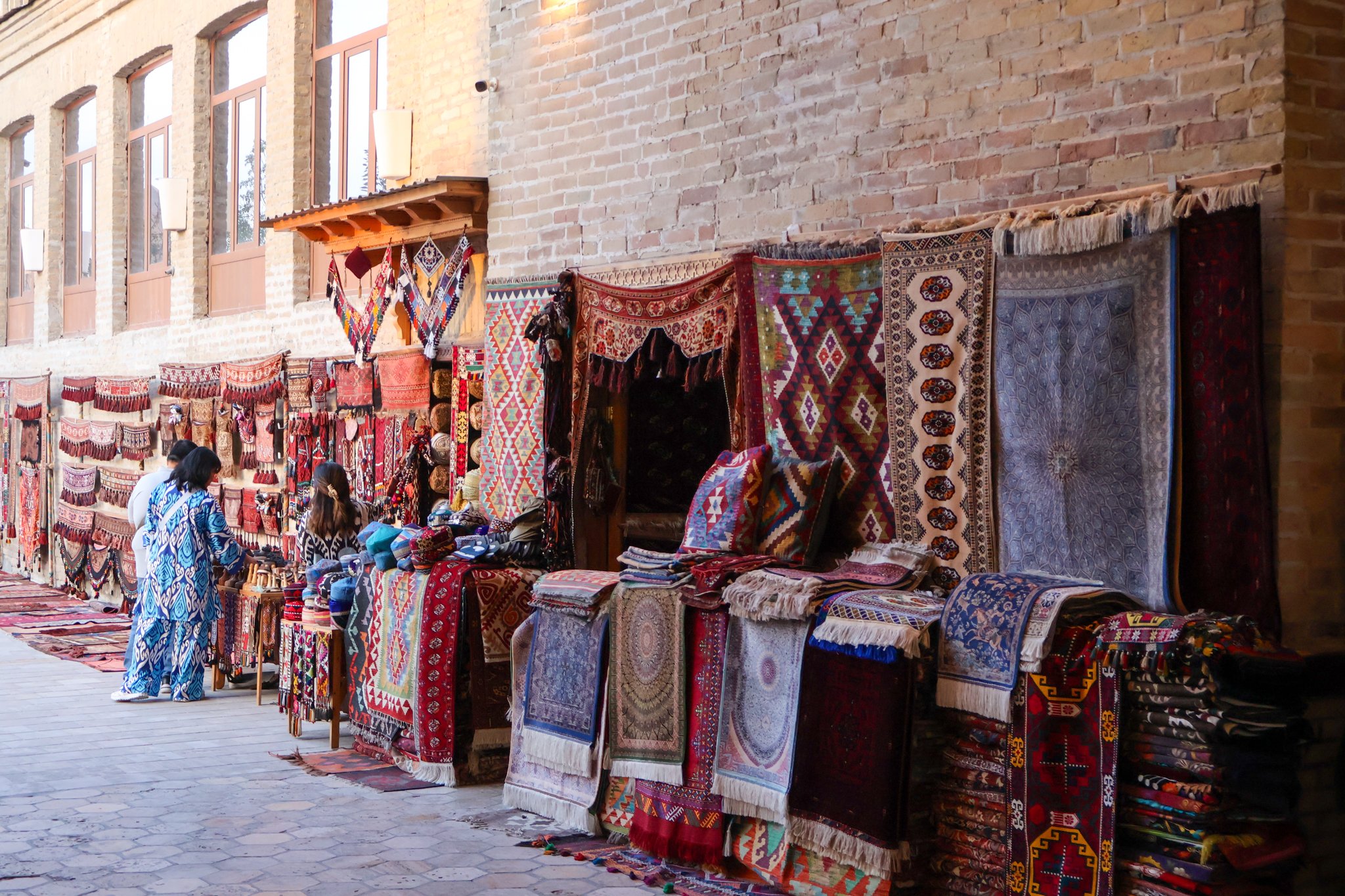
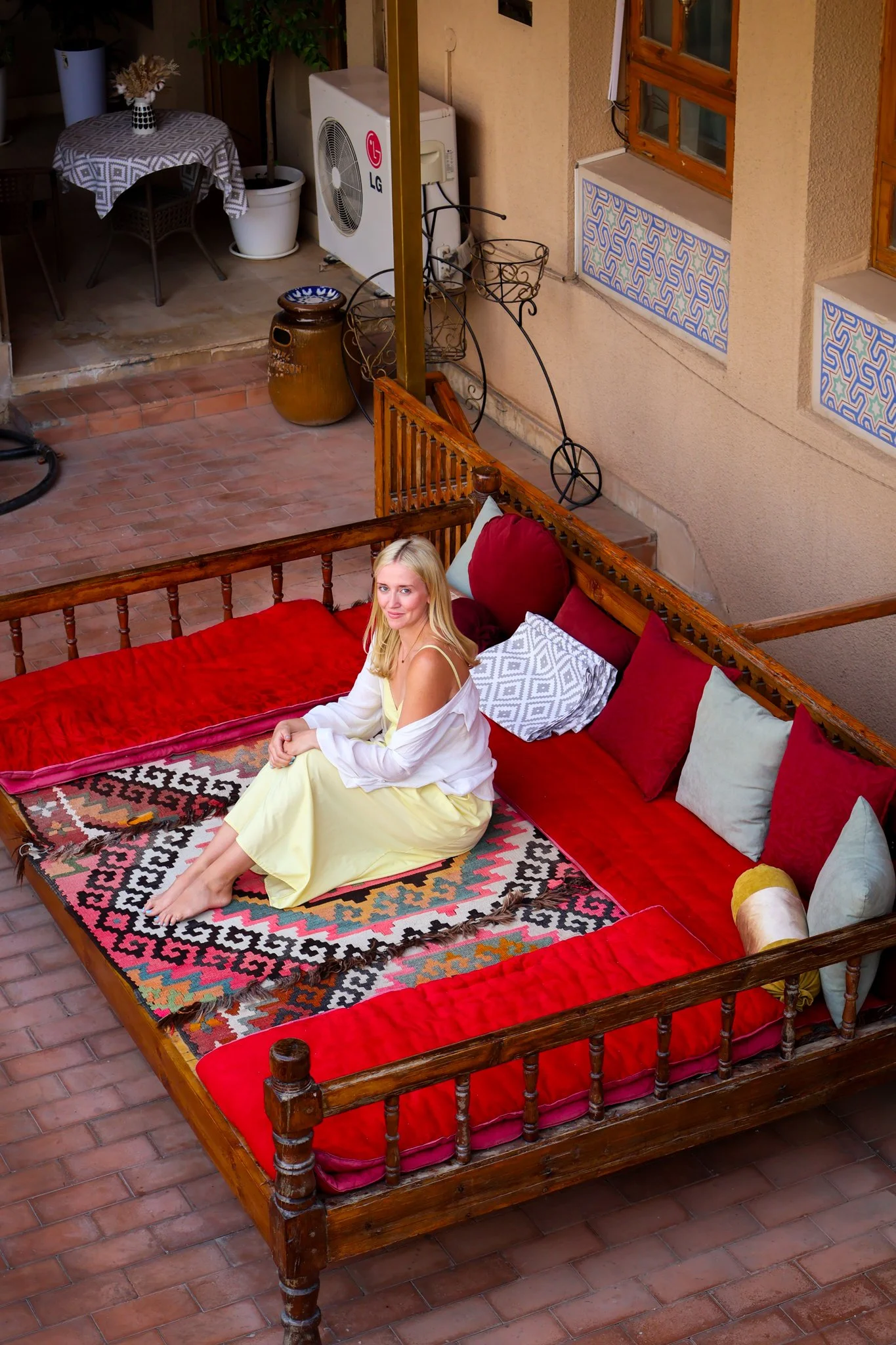
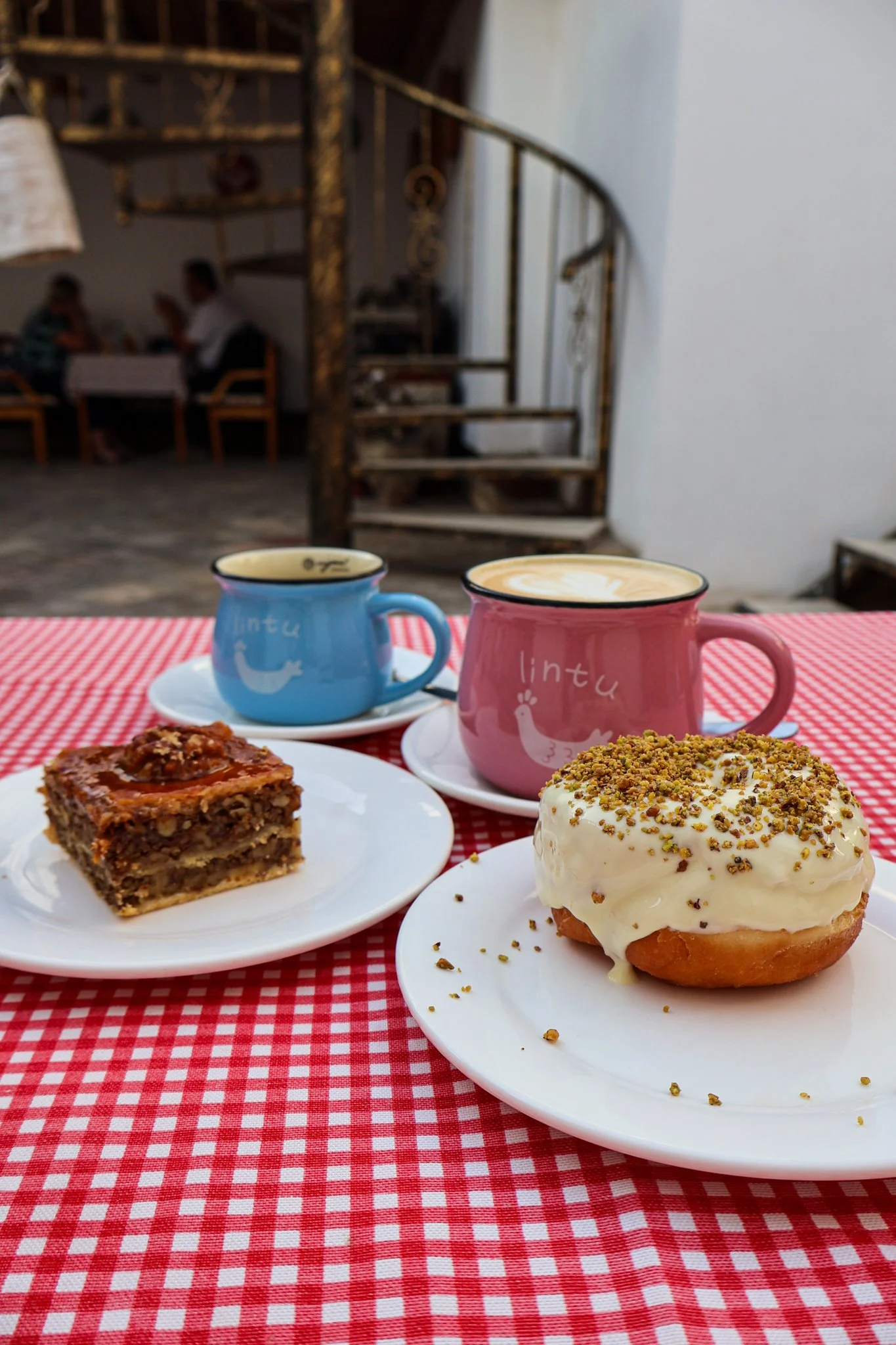
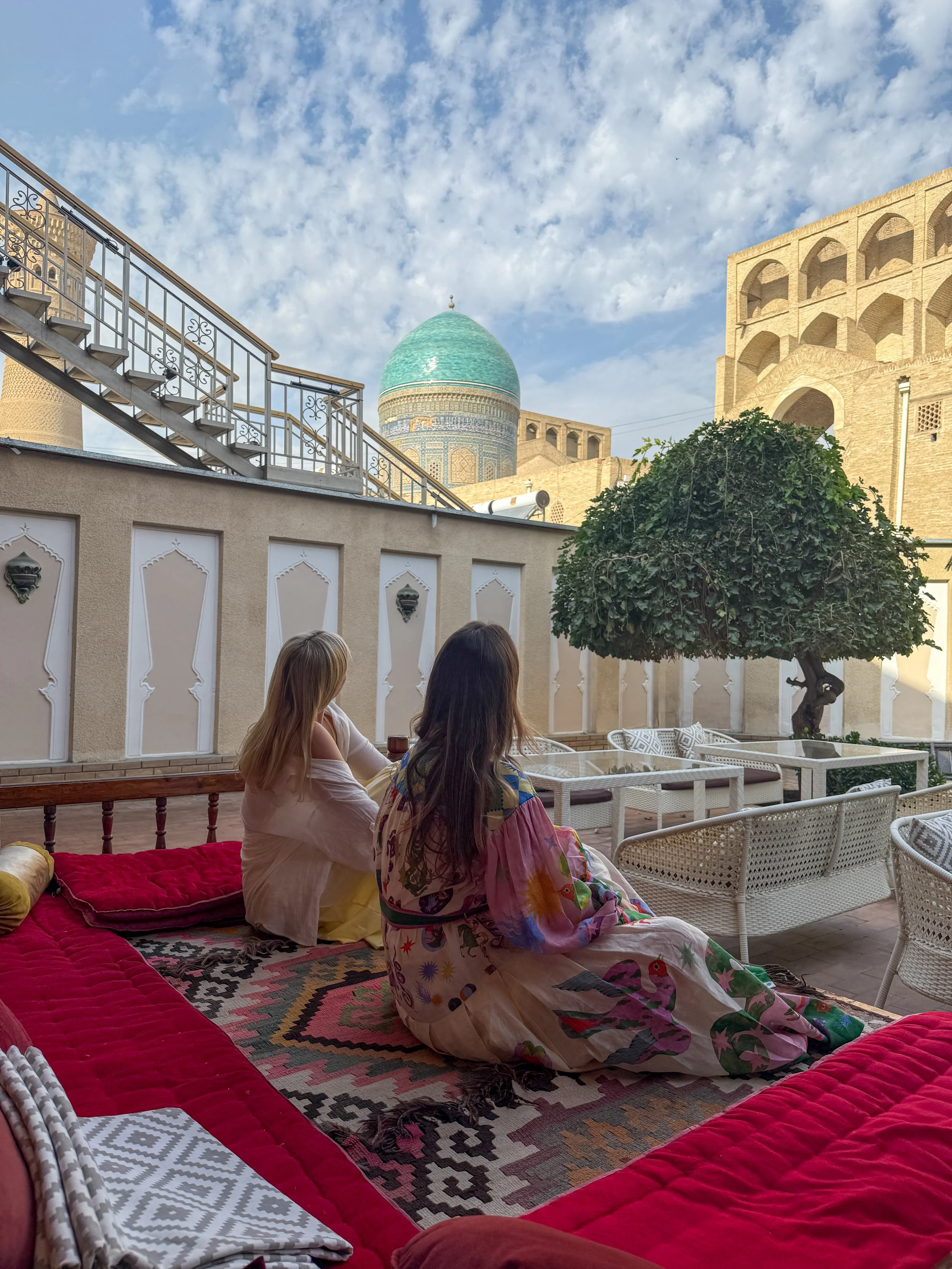
Things to do in Bukhara
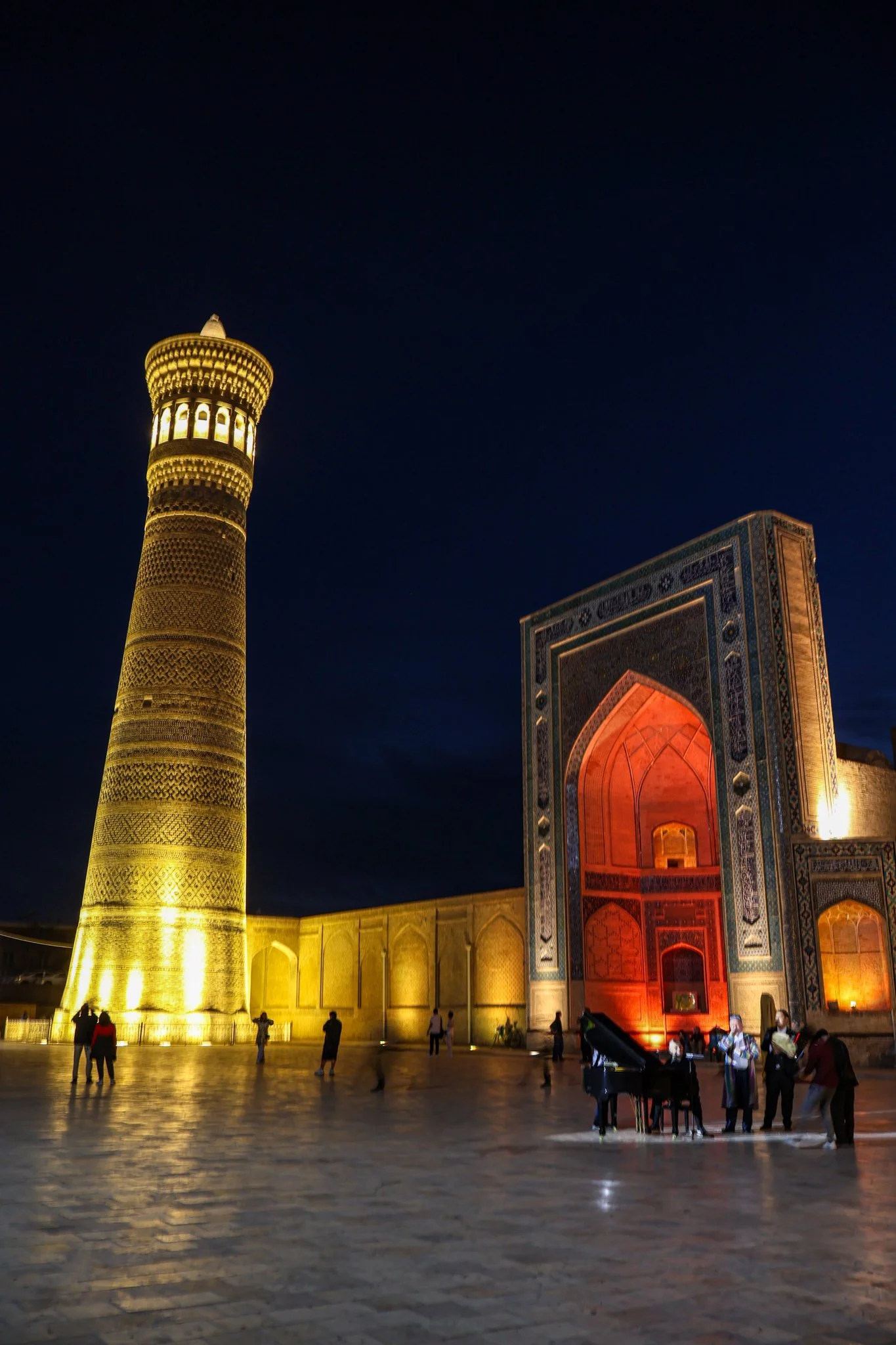
Po-i-Kalyan Complex: The iconic heart of Bukhara, home to its most breathtaking minaret and mosque.
Labi Hovuz: A vibey square where people gather and eat dinner, best experienced as the sun goes down.
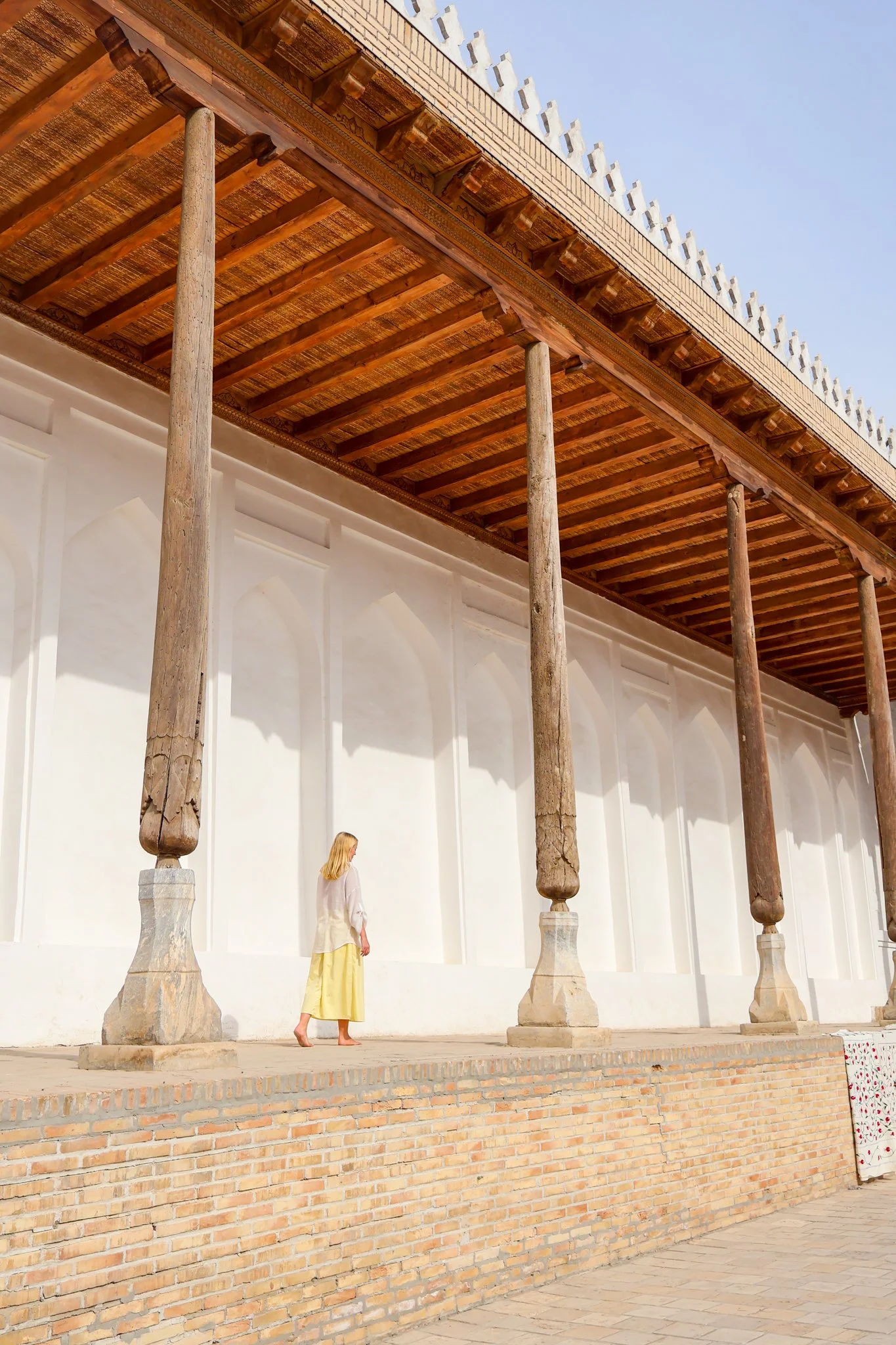
The Ark of Bukhara: A massive ancient fortress that once housed royalty and centuries of history.
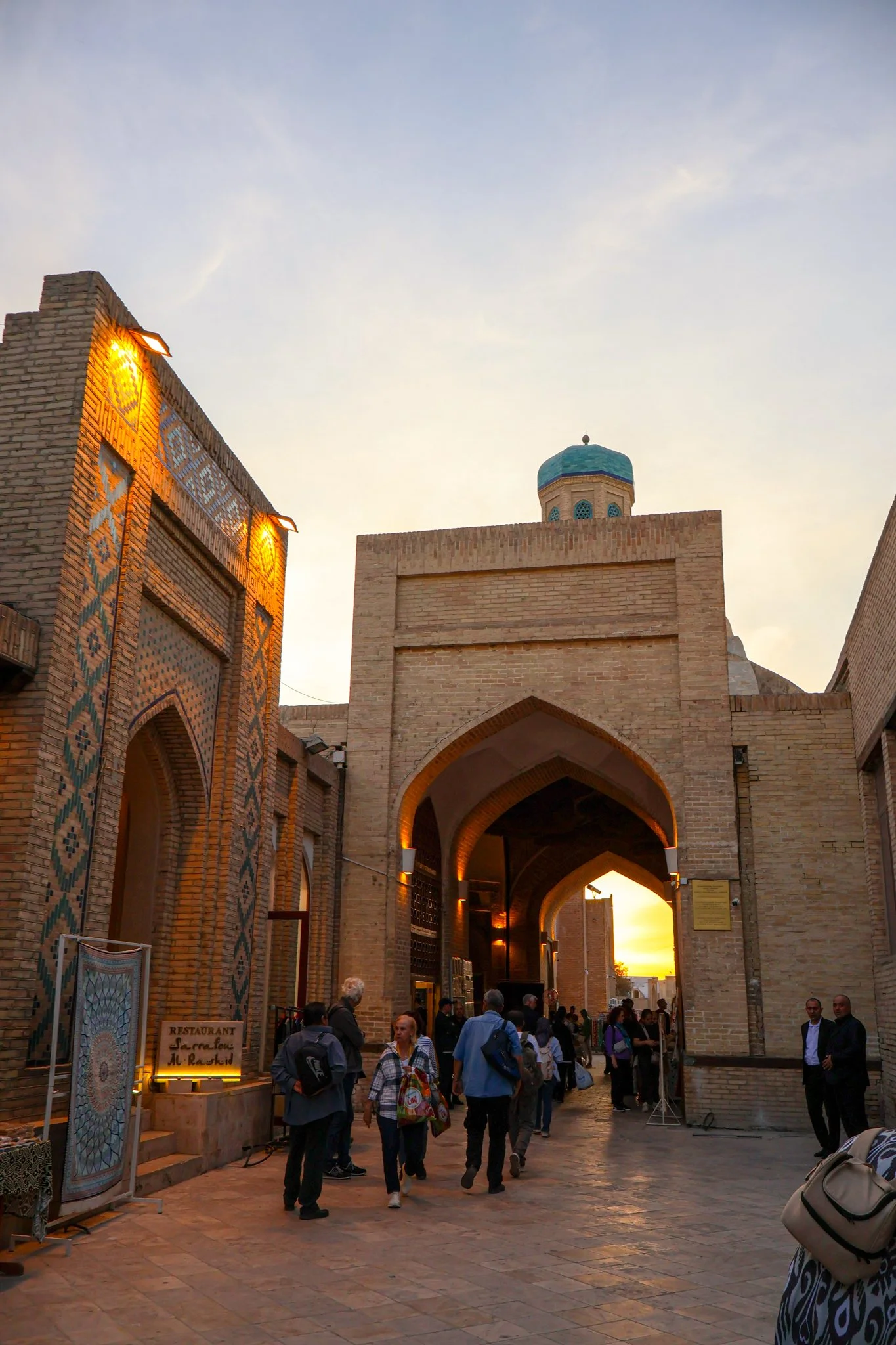
Toqi Telpak Furushon Bazaar: A historic trading dome filled with local crafts, souvenirs, and Silk Road charm.
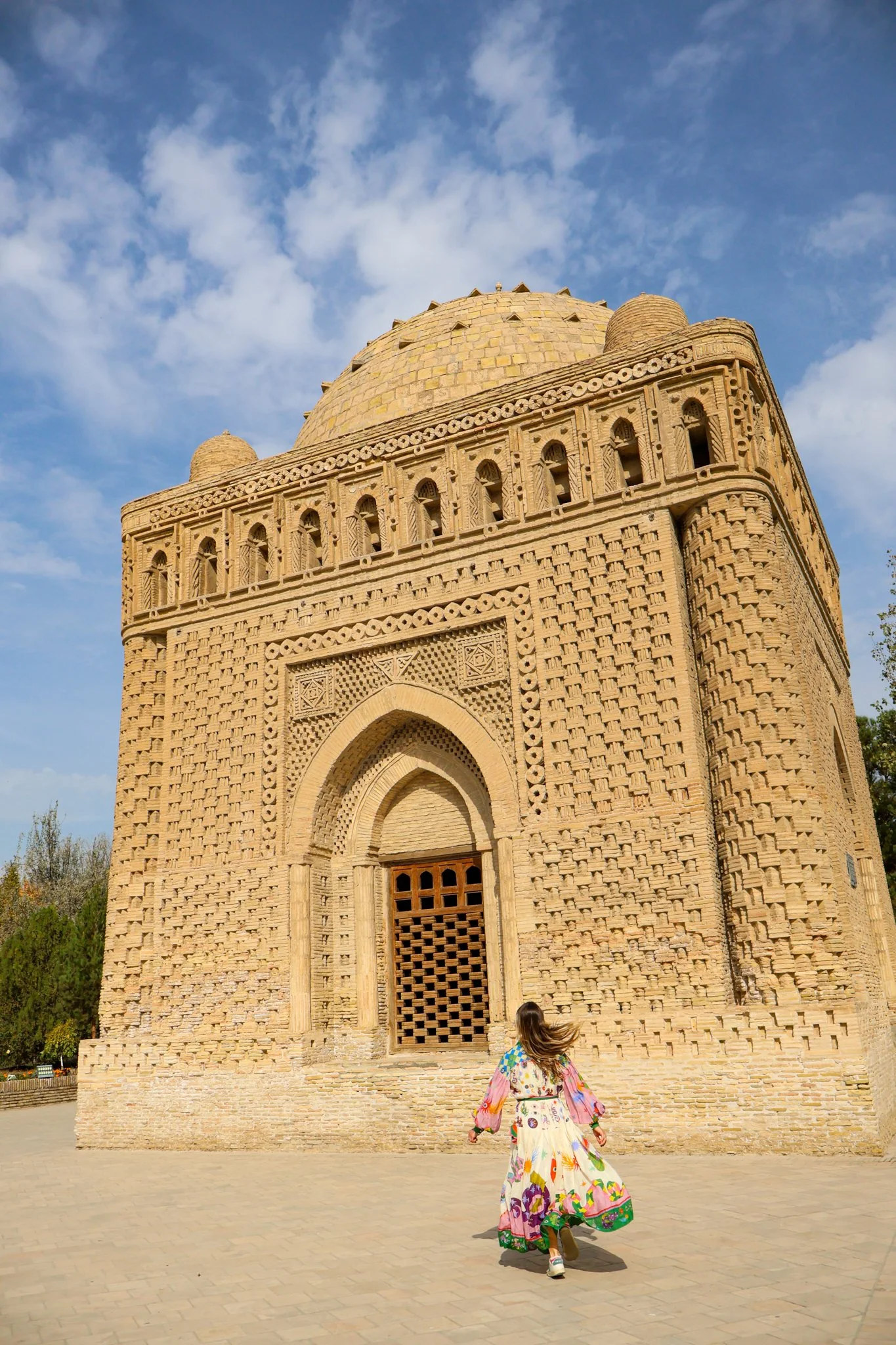
Ismail Samani Mausoleum: One of Central Asia’s oldest architectural gems, known for its intricate brickwork.
If you prefer being guided around check out this Bukhara: Old Town Guided Walking Tour
Donuts & Coffee: A cute little stop for a sweet treat and caffeine fix between exploring.
Silk Road Tea House: A cosy, traditional spot to sip local teas and slow down after a day of wandering.
Dinner at Zaragon Restaurant Terrace: we had the best shakshik here.
Sunset at this incredible location: There’s a shop selling leather notebooks across from the Po-i-Kalyan complex and if you go upstairs it’s got the most gorgeous spot for a cup of tea and one further floor up you are treated to the most magnificent sunset views.
Where to stay in Bukhara
Try to stay in the centre of the old town. We stayed at a gorgeous hotel called Zargaron Bukhara and it was so stunning with a gorgeous outdoor courtyard and incredible restaurant.
Your Guide To Samarkand
Samarkand is the crown jewel of Uzbekistan - once a key stop along the Silk Road and still full of that wonder today. From the grandeur of Registan Square to the peaceful beauty of Shah-i-Zinda, this city truly feels timeless!
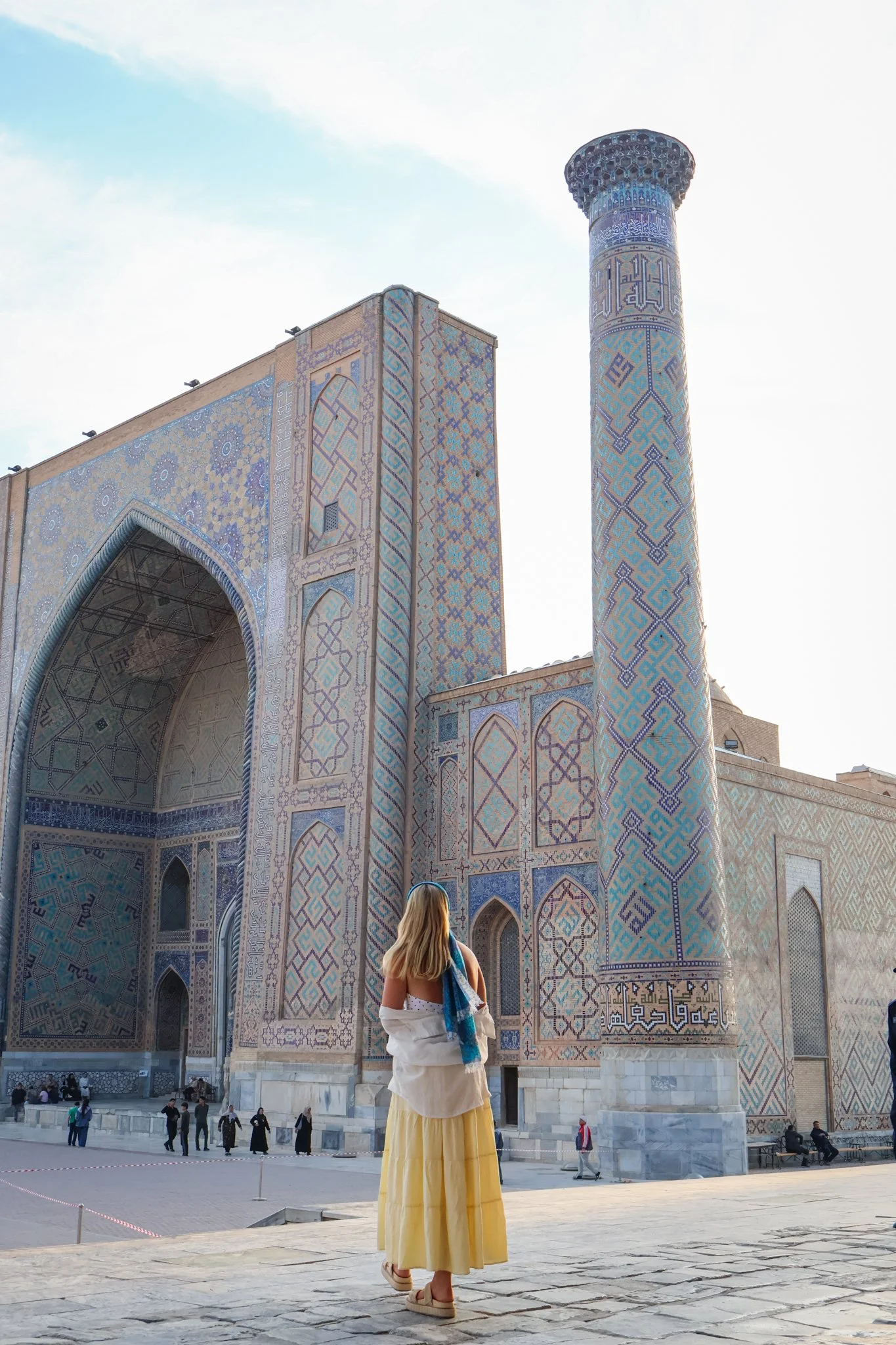
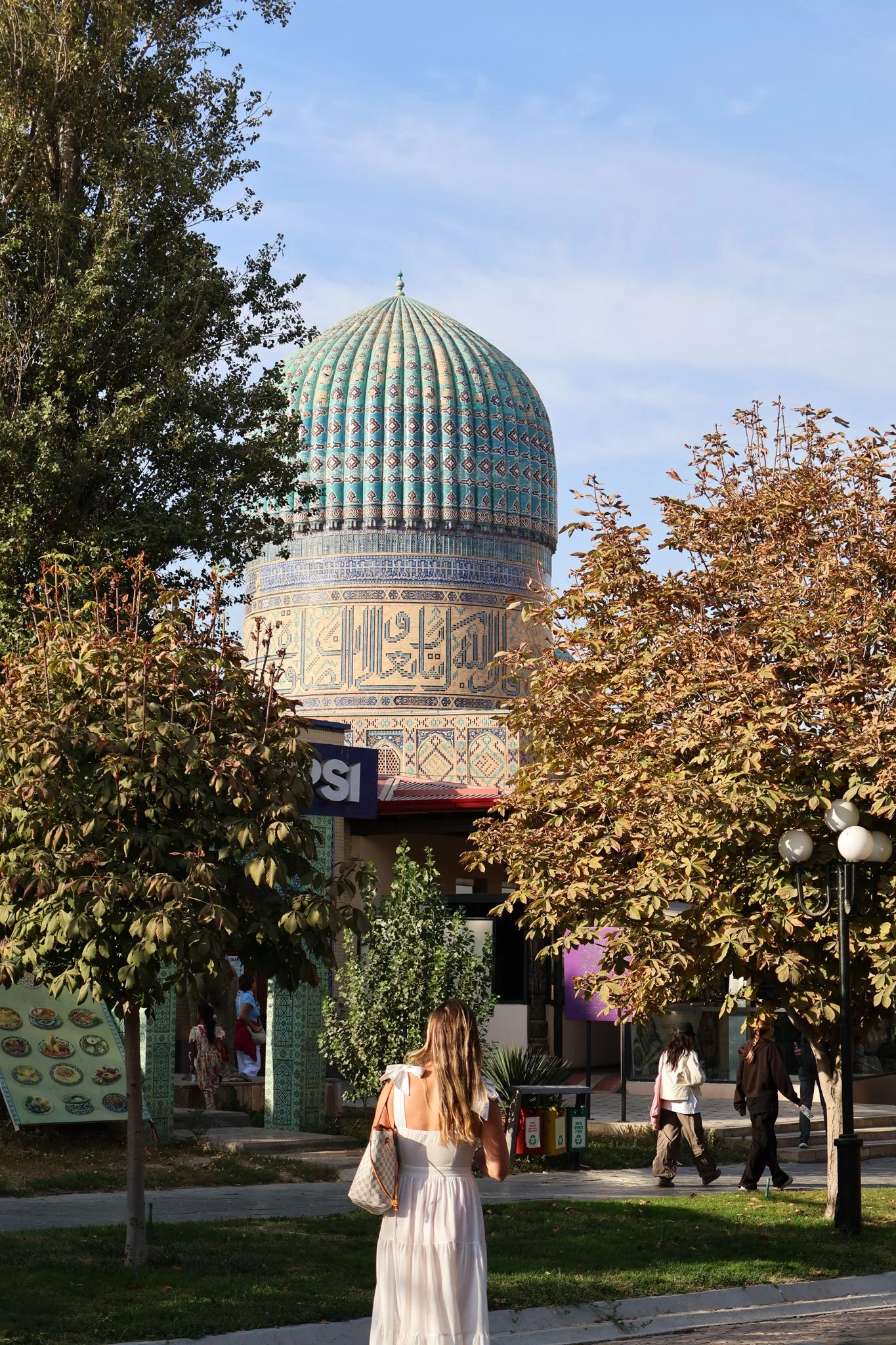
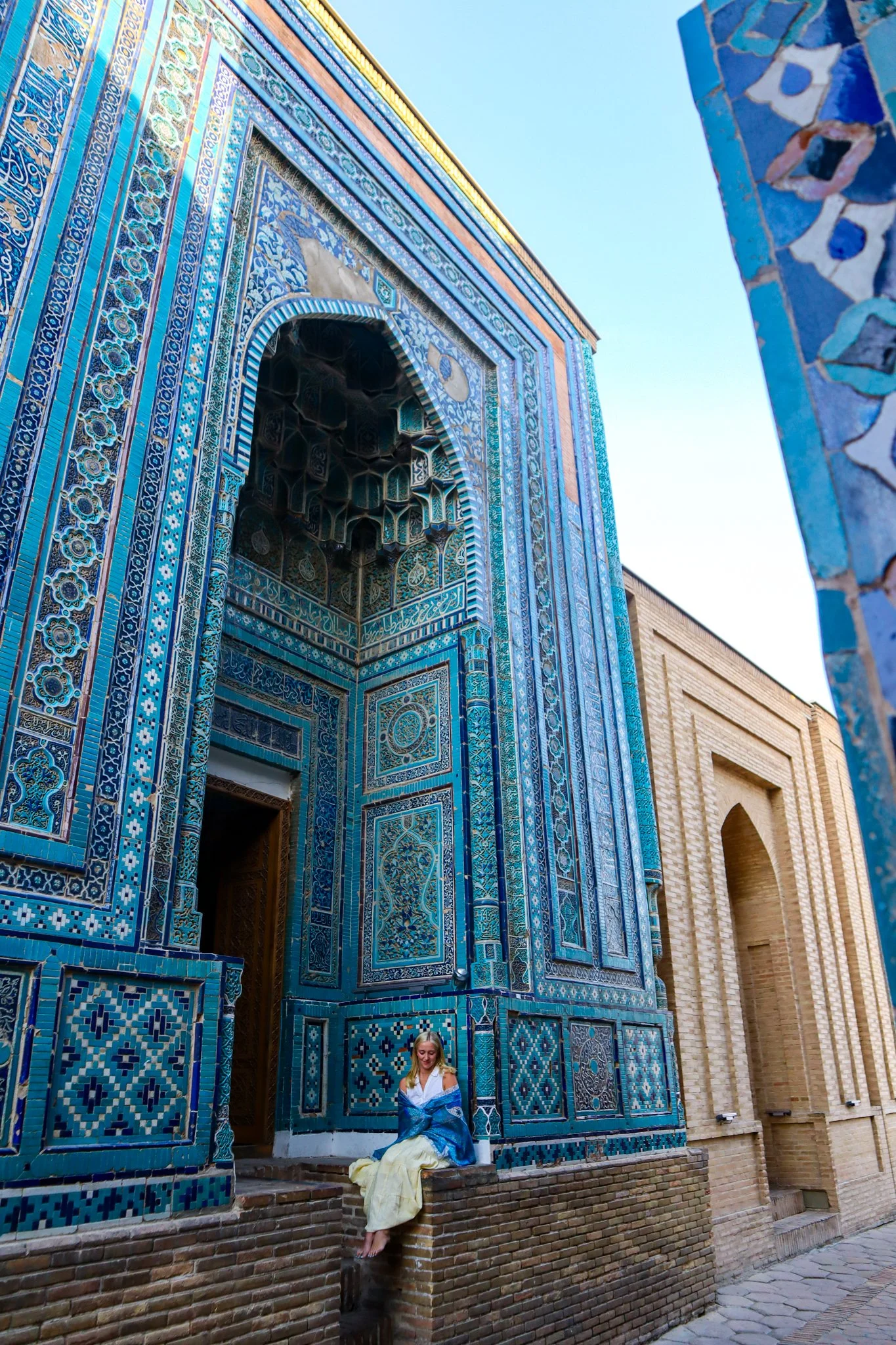
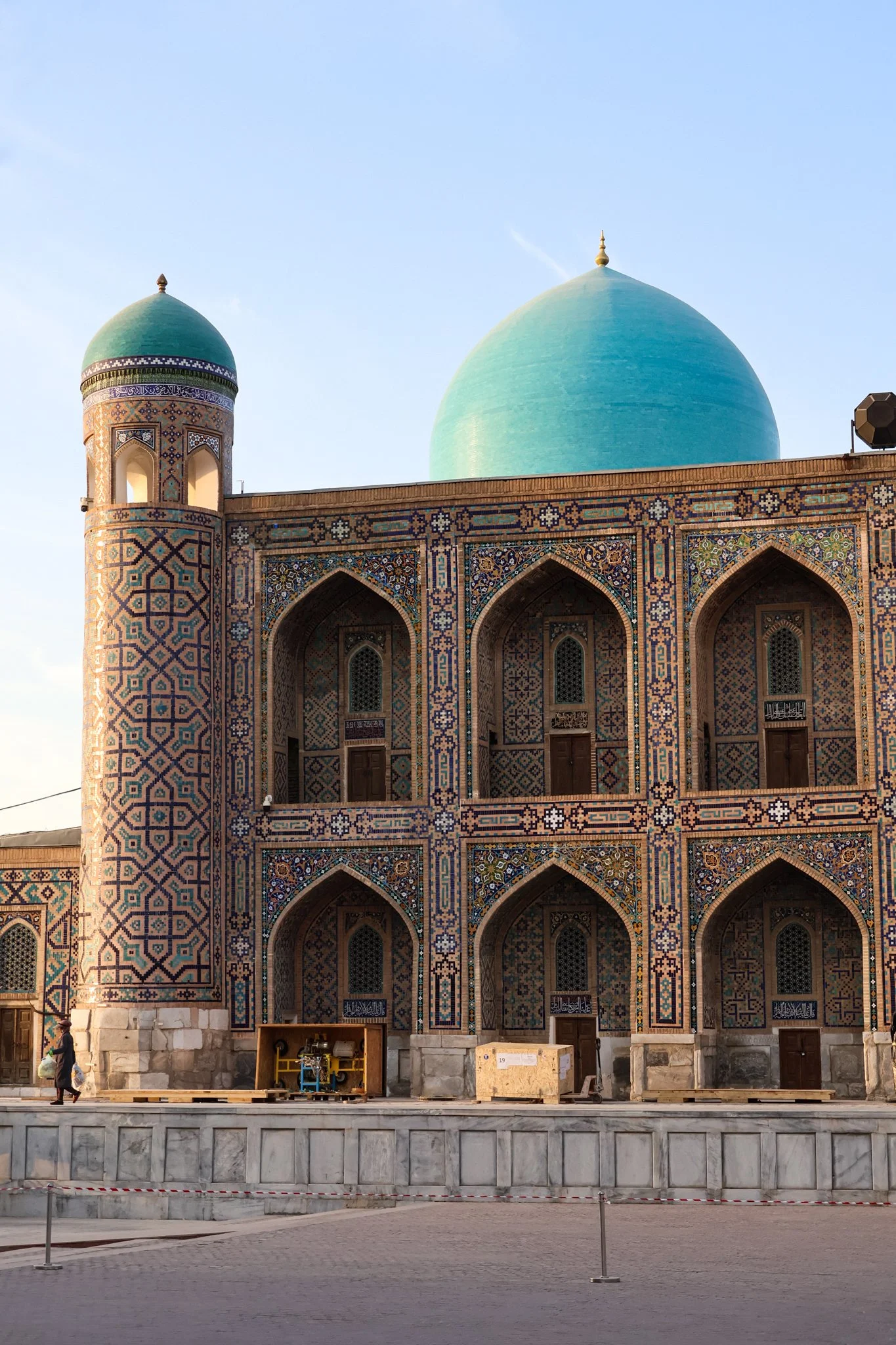
Things to do in Samarkand
The Registan/Registan Square : one of the most magnificent examples of Islamic architecture in Central Asia. The square is framed by 3 grand madrasas each with their own intricate tilework, calligraphy & design. The Registan represents Timurid architecture which blends Persian, Turkic & Islamic influences. It’s a UNESCO World Heritage Site and a symbol of Uzbekistan’s cultural pride. It’s the most famous tourist attraction in Uzbekistan and can get busy, but the vibe here is so special, particularly at night! After sunset, the Registan comes alive! The three famed madrasas become the canvas for a light and sound show - light, narration & music bring the architecture and the history of Samarkand to life.
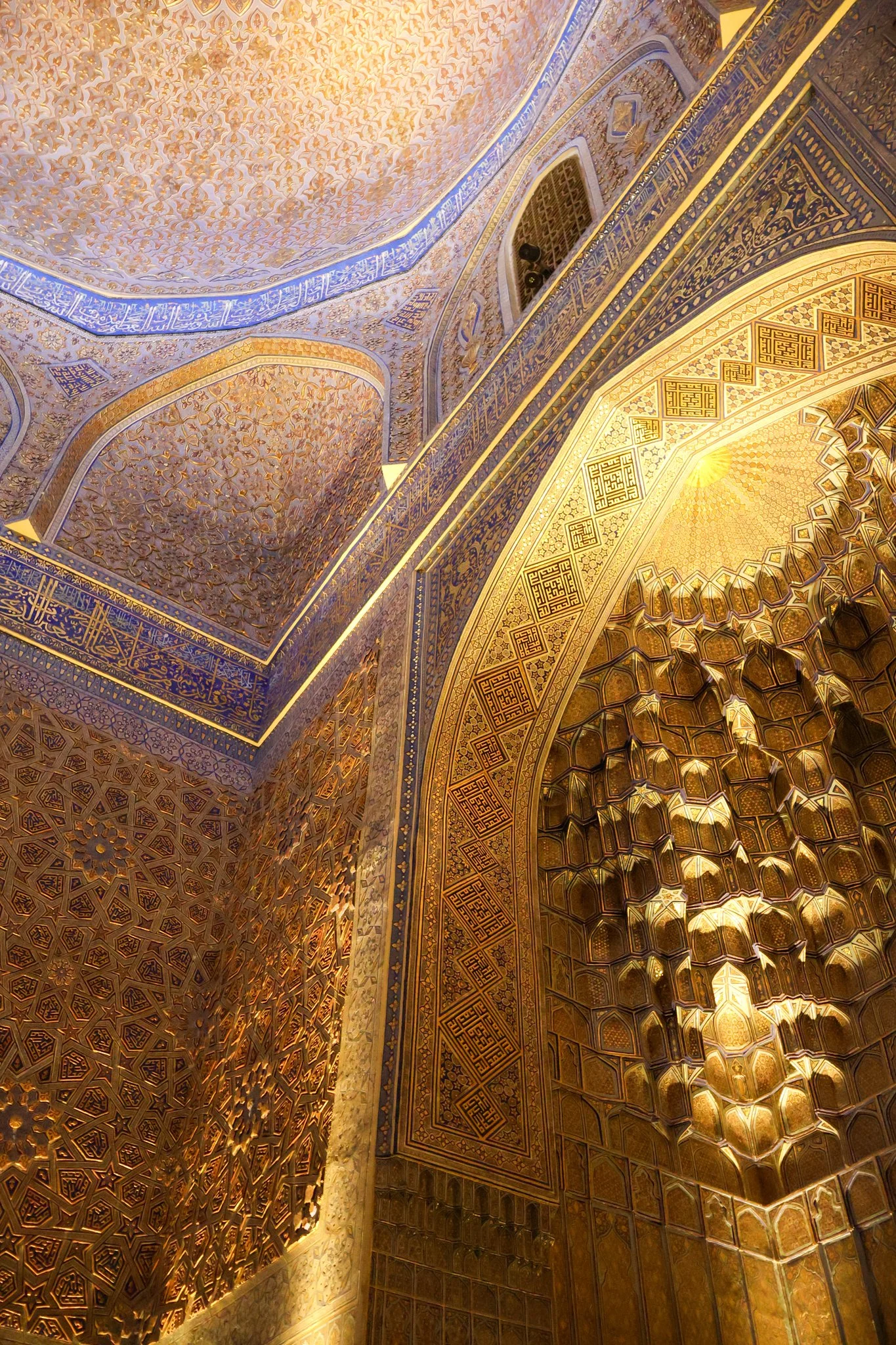
Amir Temur Mausoleum Gur-i Amir Complex: The final resting place of Timur, this place is known for its striking turquoise dome and intricate interiors that feel truly majestic.This ceiling is decorated with gold leaf, onyx & jade. The mosaic work is a literal masterpiece of Timurid artistry!
Siyob Bazaar: A vibrant local market bursting with fresh produce, spices, and traditional breads, offering a true taste of everyday Uzbek life. Shop spices, drink pomergranate juice and all the uzbek bread.
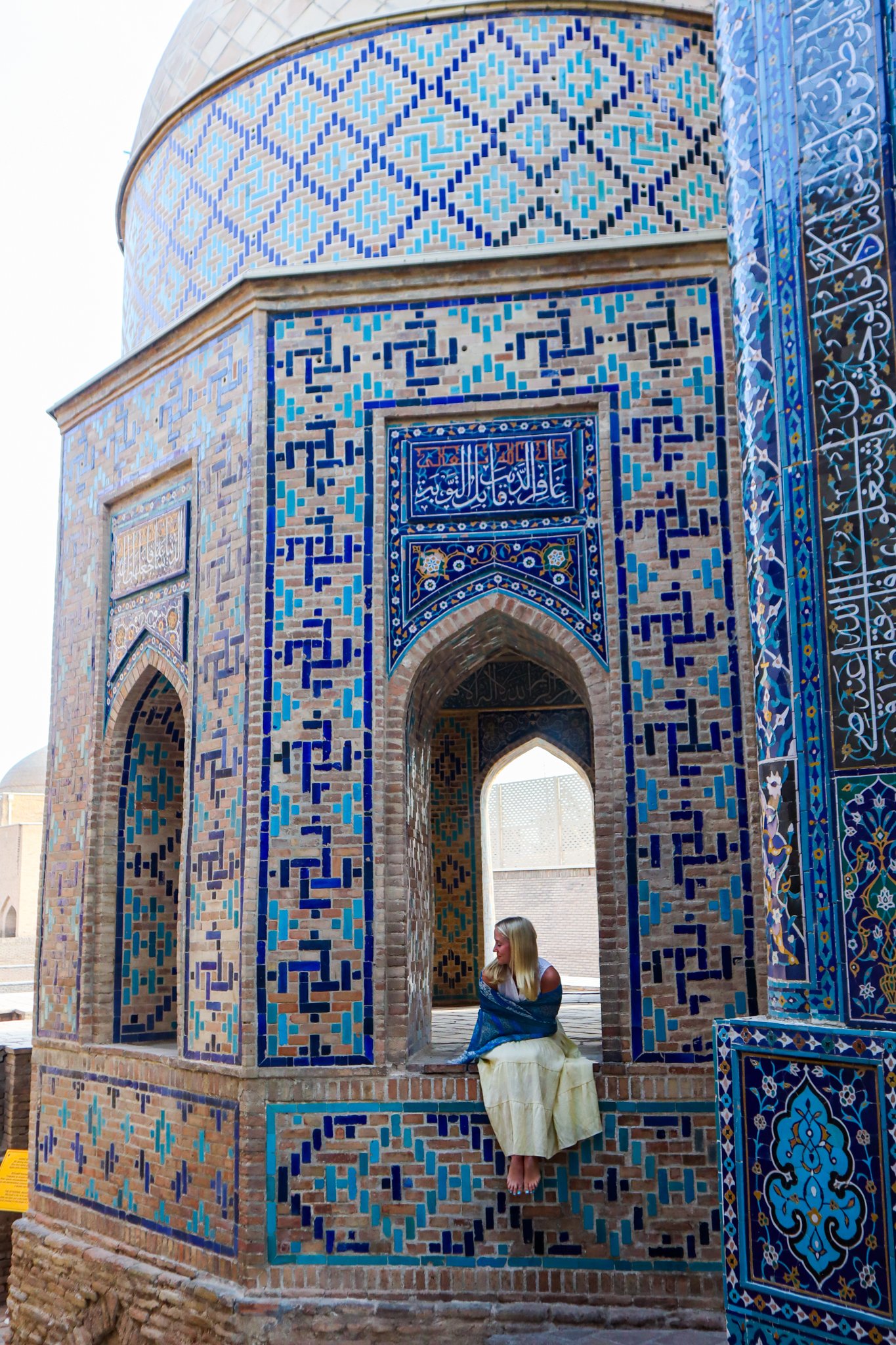
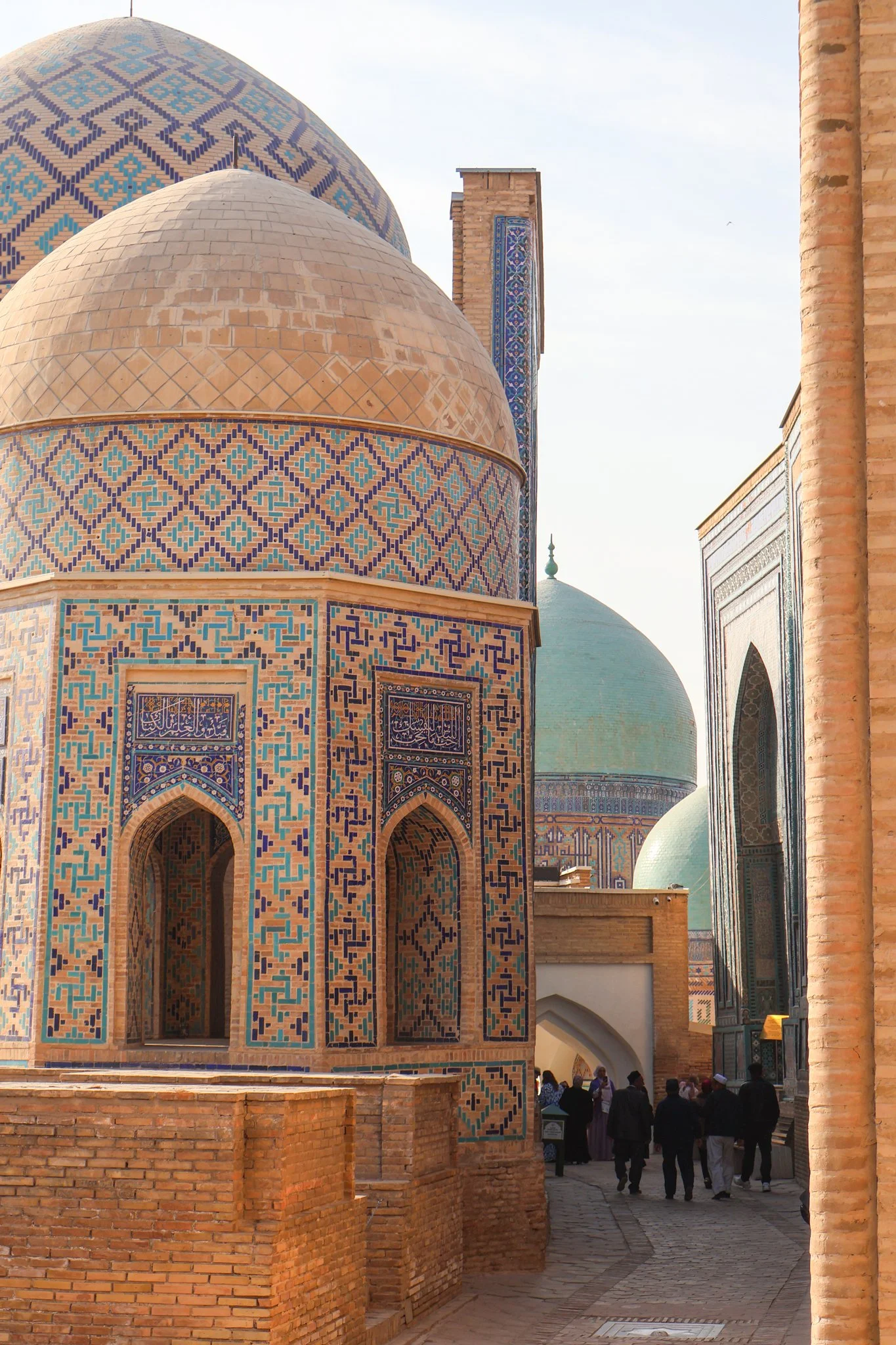
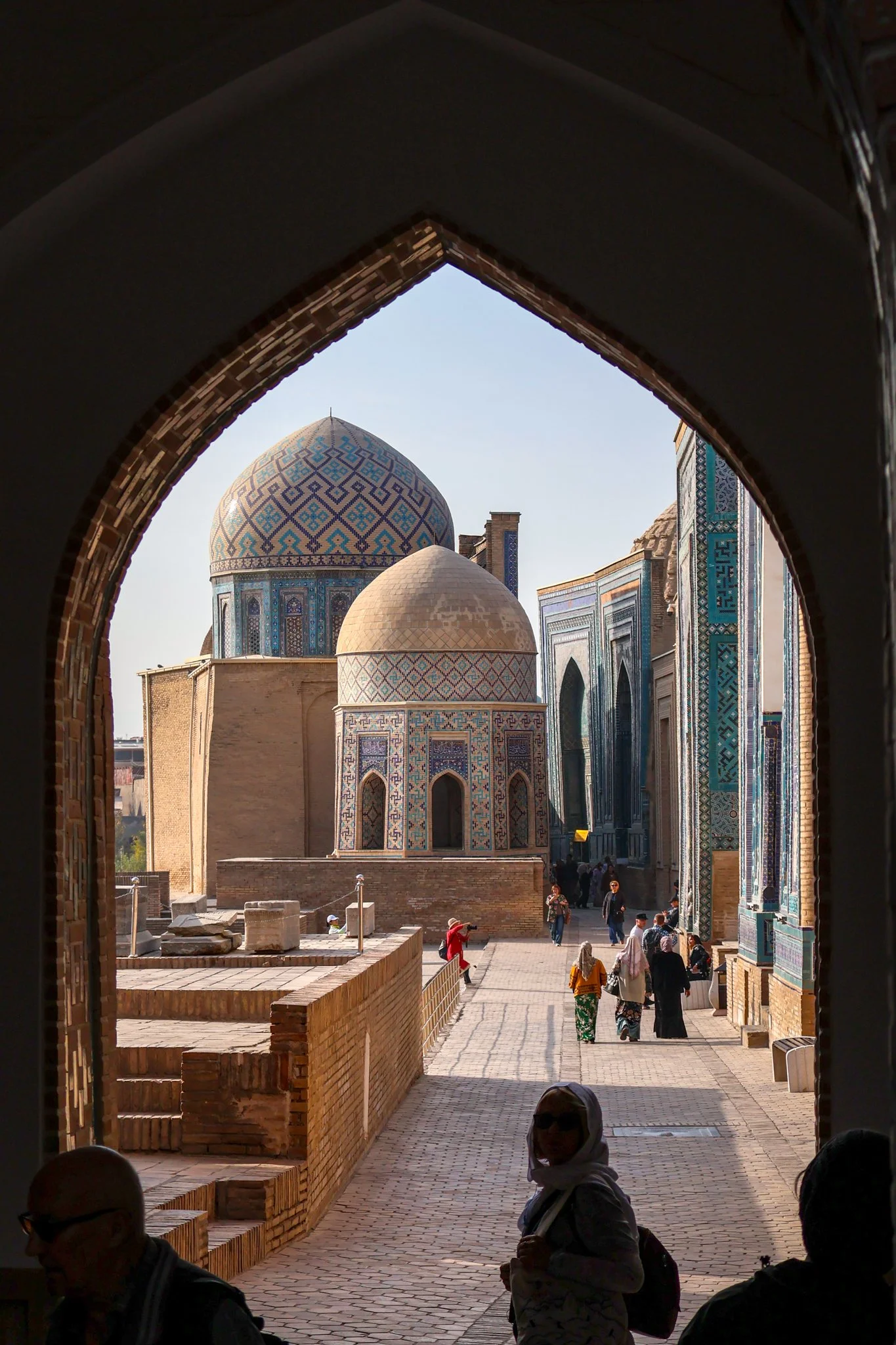
Shah-i-Zinda: They call it the “Street of the Dead,” but honestly, it’s one of the most alive places I’ve ever seen. This ancient necropolis dates back over 1,000 years, and every inch is covered in the most intricate turquoise tiles you can imagine. This place is like stepping into a mosaic dream - the colours and craftsmanship is a feast for the eyes! If you visit just one place in Samarkand, make it this one. Go early morning to catch that golden light dancing off the blue domes, it’s out of this world!
Bibi Khanym Mosque: A grand and historic mosque once among the largest in the Islamic world, known for its impressive scale and intricate details.
If you prefer being guided around check out this Samarkand: Historical Monuments Guided Walking Tour which will bring you to all of the above and teach you all about Samarkands incredible history.
Emirhan Restaurant: A beautiful spot to dine with sweeping views over Samarkand, perfect for a relaxed meal with a view. Emirhan Restauarnt for a gorgeous view. Note: This place is western prices but worth it if you like a fancy drink with a view.
Baklava: There are SO many baklava shops along the main street beside the Registan, it’s honestly the nicest Baklava I’ve ever had so make sure to treat yourself.
Where to stay in Samarkand
I recommend staying as close to the Registan Square as possible. This is the heart of the city and puts you within walking distance of most of Samarkand’s iconic sights. Tip: If it’s your first time, staying in the historic centre makes everything easier, you can explore early mornings and sunset without relying on taxis, and the atmosphere is unreal.
Your Guide To Tashkent
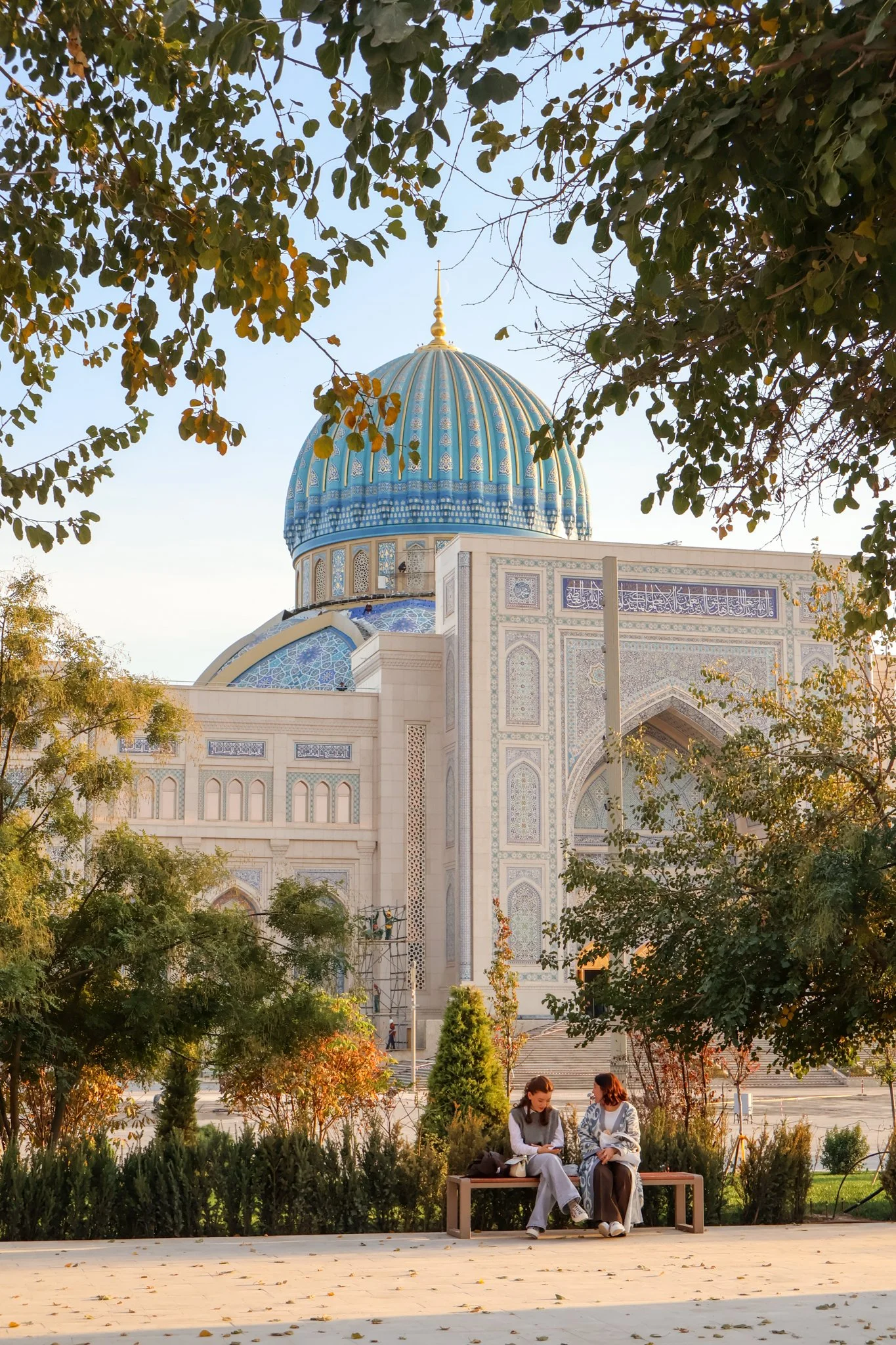
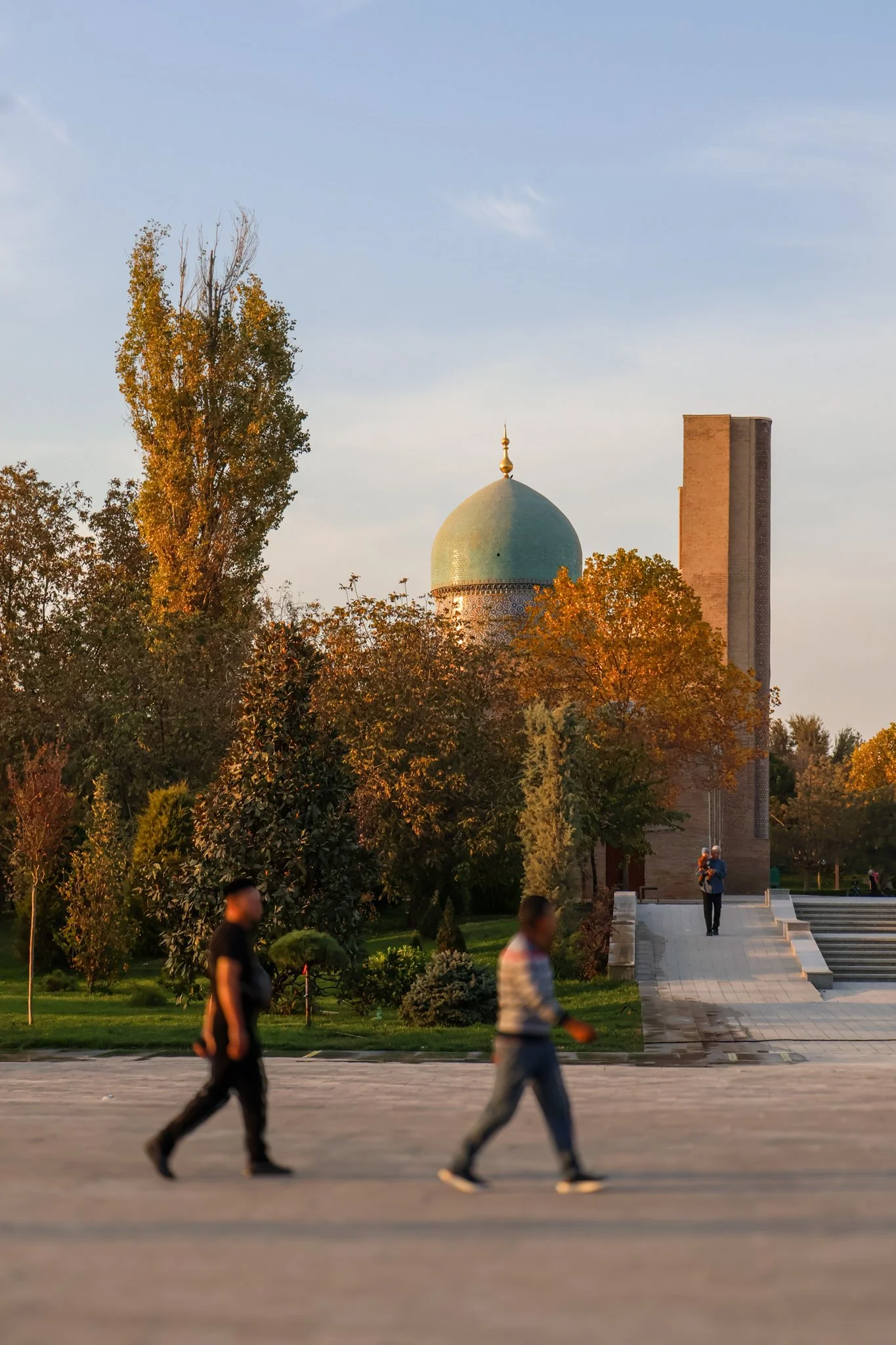
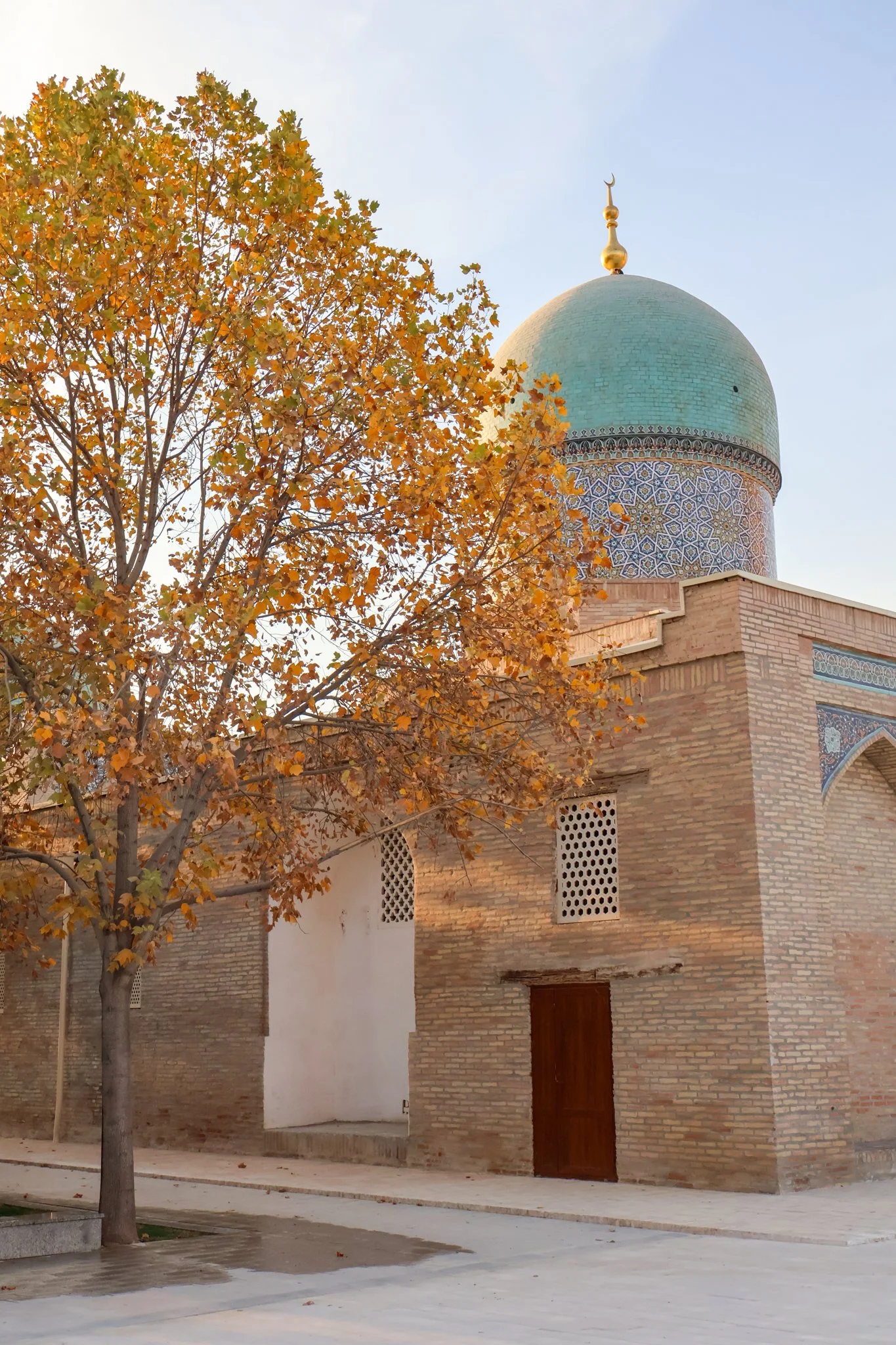
Tashkent is the capital of Uzbekistan and will generally serve as your entry point into the country. This is a city where Soviet architecture meets ancient history, from ornate metro stations to bustling bazaars and incredible food. It’s modern, welcoming, and full of depth and culture, but it doesn’t quite have the same “wow” factor as cities like Bukhara or Khiva. Because of that, I recommend not spending too much time here, 1–2 nights is perfect to tick off the highlights before moving on to the more atmospheric Silk Road cities.
Things to do in Tashkent
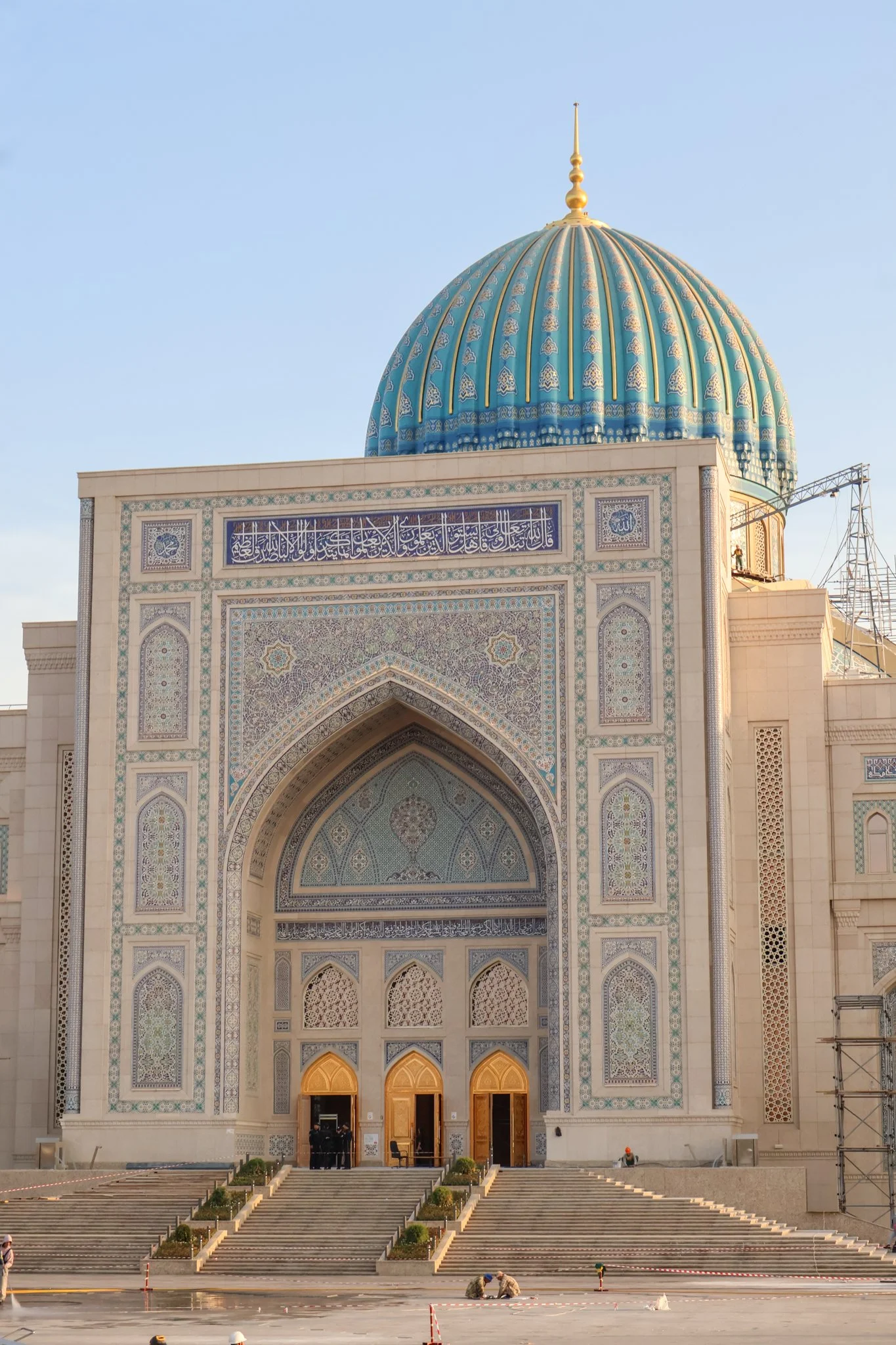
Khast-Imam Complex: the spiritual heart of Tashkent and home to the world’s oldest Quran.
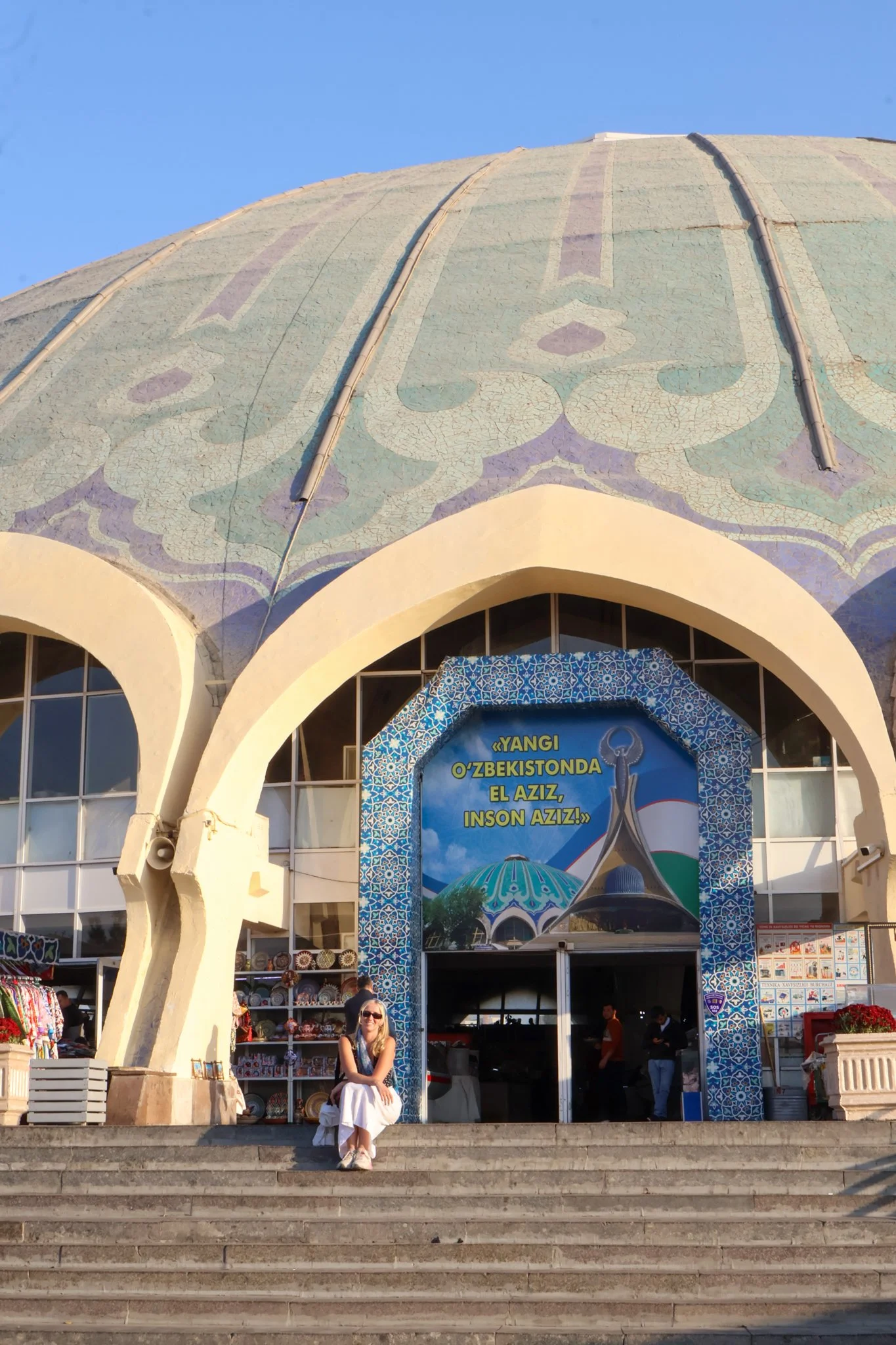
Chorsu Bazaar: A must-visit for fresh produce, spices, sweets & samsas - come hungry!
Museum of Applied Arts: Showcasing traditional craftsmanship, colourful ceramics & textiles.
Plov Centre (Besh Qozon Restaurant): where giant woks of Uzbekistan’s national dish are cooked right in front of you, the ultimate local experience. Hotel Uzbekistan: a retro icon of 1970s Soviet architecture and one of the best viewpoints in the city.
Sailgokh Street (aka Broadway): buzzing nightlife, street performances and a great spot to people-watch.
Hoja Ahror Valiy Mosque & Kukeldash Madrasah: steeped in history & beautifully restored.
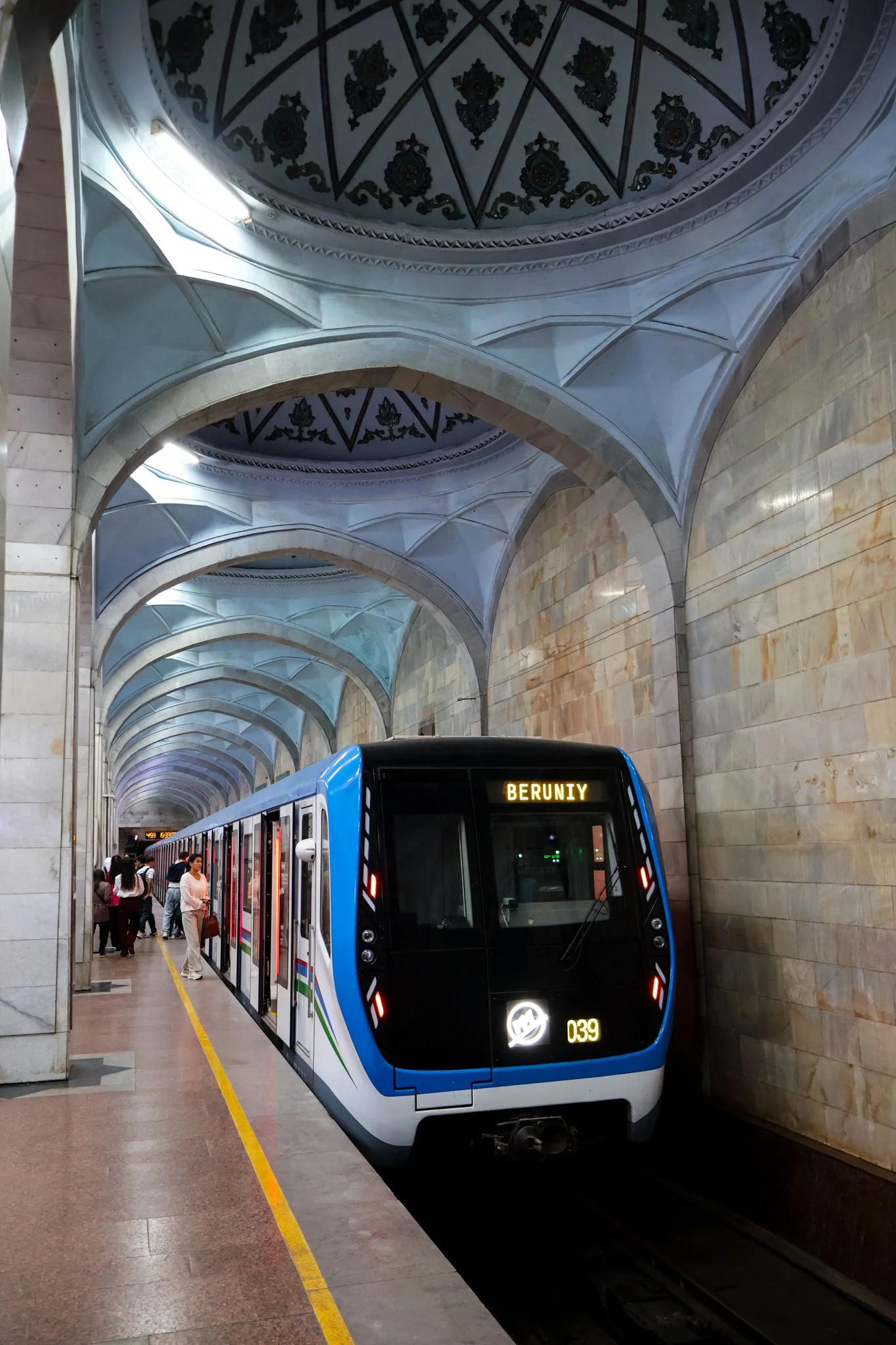
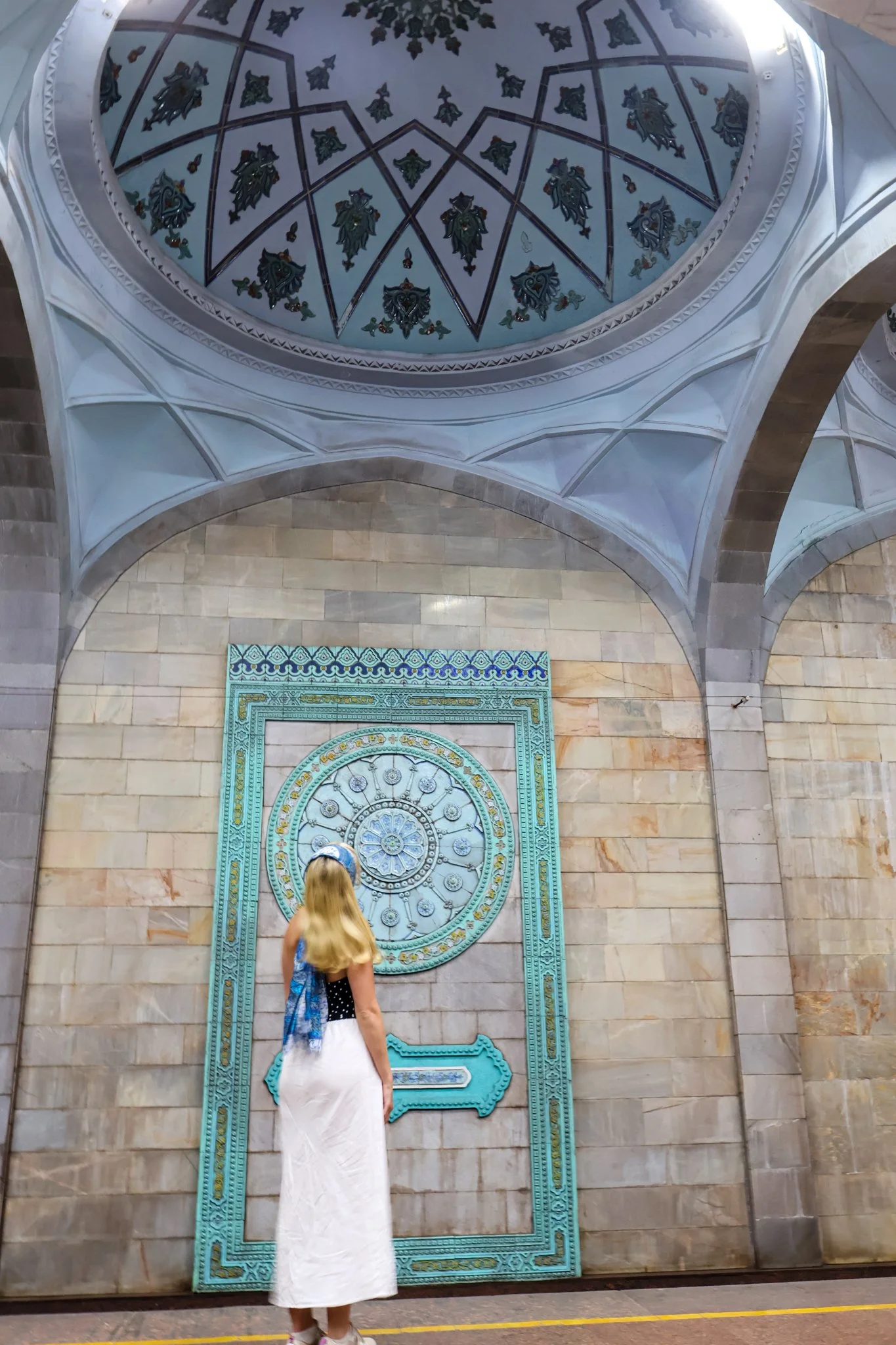
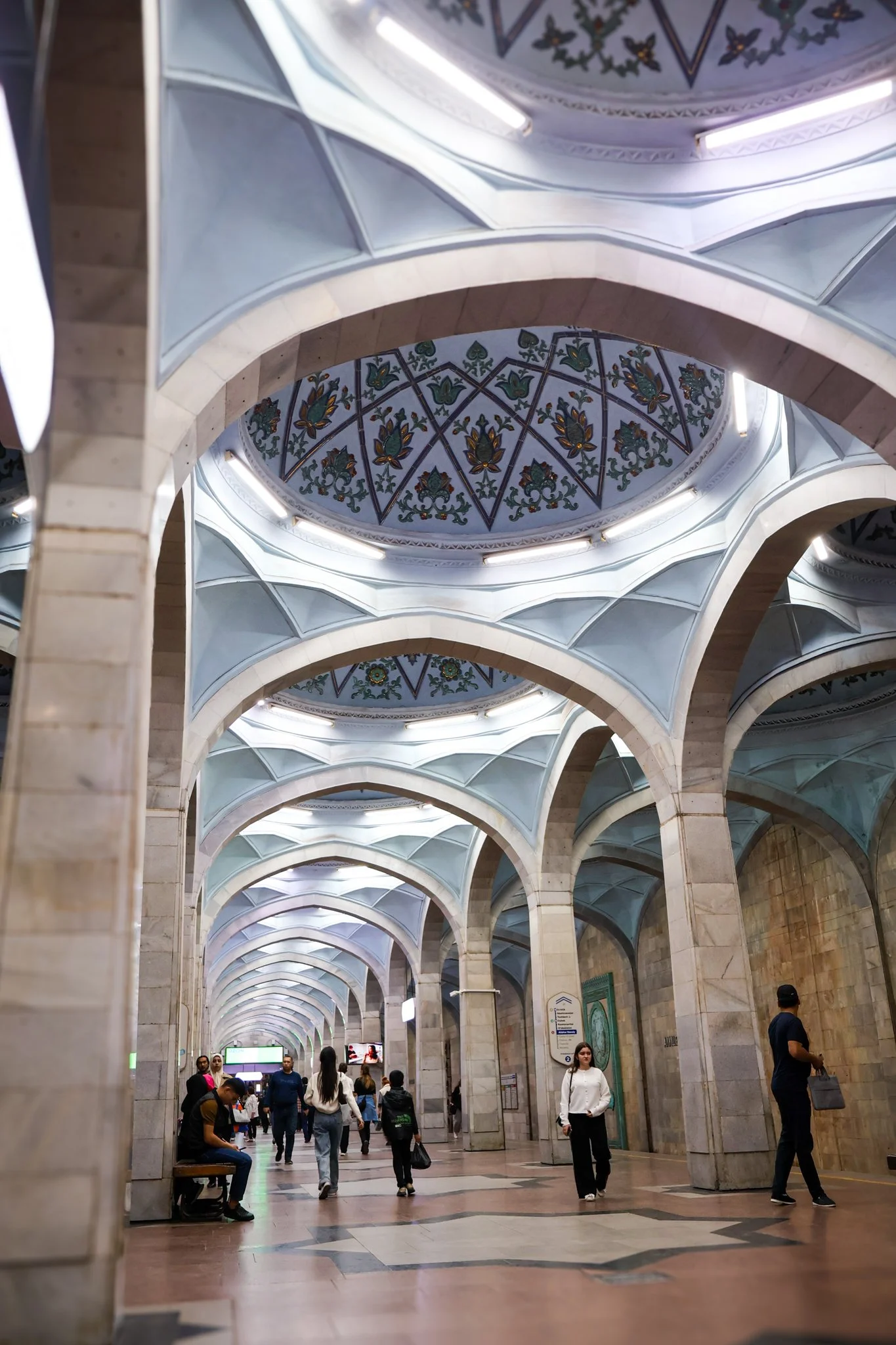
Tashkent’s metro doubles as an underground art gallery! Stop at: Kosmonavtlar • Alisher Navoi • Mustakillik • Toshkent
Breakfast at Safia Café & Bakery for great coffee & pastries.
Lunch at SalSal for fresh salads or traditional samsas
Besh Quozon for the PLOV!
Go for dinner at Caravan or Sato for traditional Uzbek dishes (baklava & green tea!)
If you are planning on spending longer in Tashkent, do a day trip to the mountains. If you love the outdoors, make time for Charvak Reservoir (1 hr 45 mins away). Turquoise lakes, fresh air & scenic views, it’s the perfect escape from the city.
Where to stay?
Tashkent is more modern than the other Silk Road cities, so where you stay matters a bit less, but I’d still recommend being central for easy access to restaurants, cafes, and the metro.
Mirzo Boutique Hotel: A charming boutique stay right on the edge of old Tashkent, known for its beautiful courtyard, traditional design, and unbeatable location near Chorsu Bazaar and the metro.
Hotel Uzbekistan: An iconic Soviet-era hotel right in the heart of the city, worth it for the experience, but more about location than luxury.
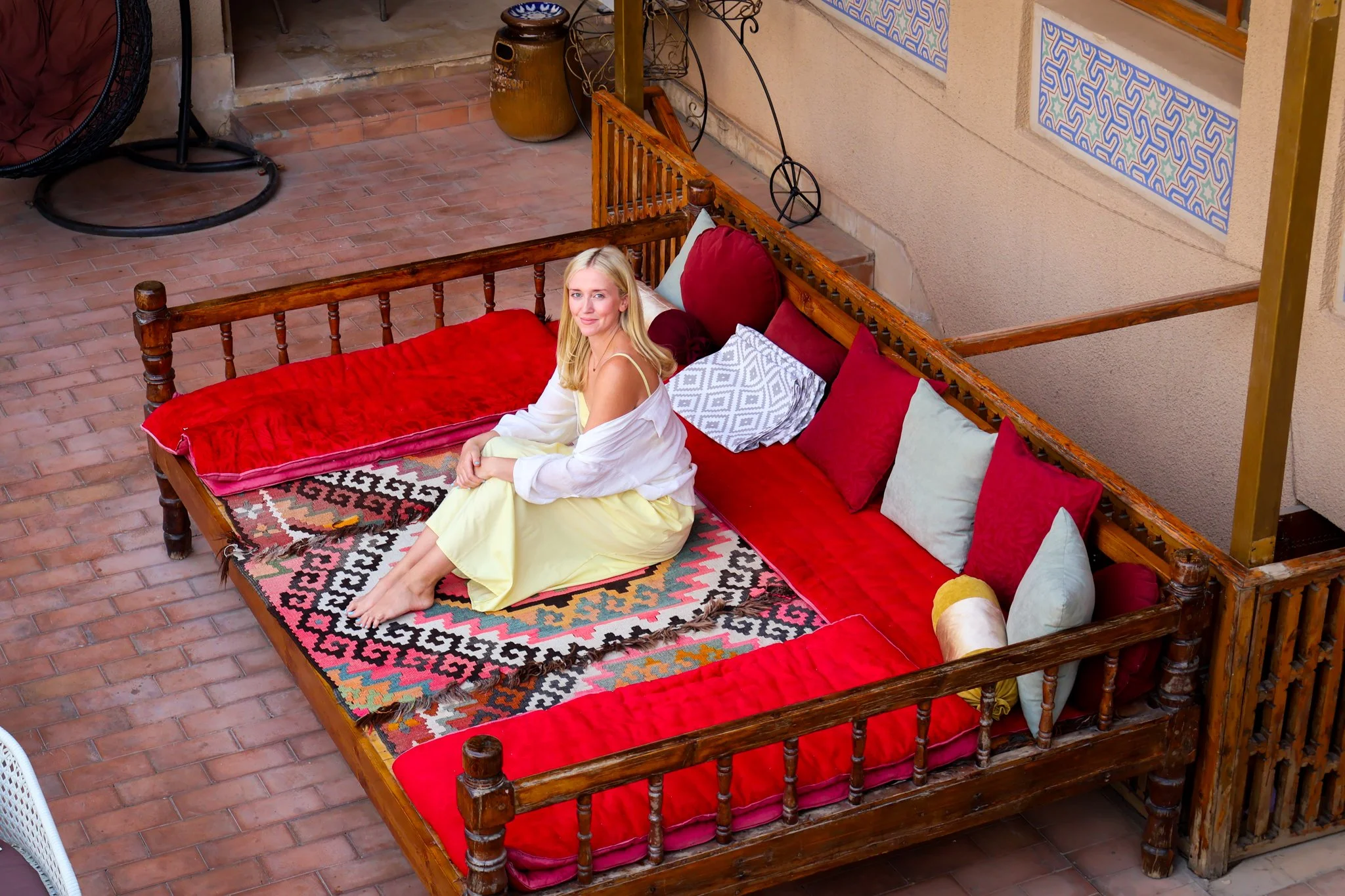
Uzbekistan is one of those places that will make you fall in love with travel all over again. It’s affordable, authentic, and full of soul.
I hope this guide helps you plan the perfect trip to one of the world’s most underrated destinations. Make sure to follow @evaseeks on Instagram to stay up to date with new travel destinations from around our beautiful world.
PS .This trip was a pinch me moment from start to finish and a pretty monumental moment in my creator journey! This was my first international tourism trip/partnership with Air Asia and it was the trip of a lifetime! I have to pinch myself that this became possible through my hobby of travel content creation, photography and blogging.
THIS IS YOUR SIGN:
If you’re passionate about something, don’t doubt yourself and go for it because you never know what might happen.